
Bureaucratic Brinkmanship: Trump Admin’s Delayed Appeal Unveils Deep Rift in Pediatric Public Health
POLICY WIRE — NEW YORK, U.S. — Bureaucracies, it seems, move at their own deliberate, often enigmatic, pace. Six weeks post-deadline, the Trump administration has finally lodged its terse,...

POLICY WIRE — NEW YORK, U.S. — Bureaucracies, it seems, move at their own deliberate, often enigmatic, pace. Six weeks post-deadline, the Trump administration has finally lodged its terse, one-sentence appeal against a federal judge’s directive—an order that had, until now, temporarily stymied its audacious bid to dismantle decades of established pediatric vaccine recommendations. This seemingly perfunctory legal maneuver, filed without explanation, isn’t just about technicalities; it’s a silent, consequential battle for the very foundations of U.S. public health policy, casting a long shadow over millions of American children and, perhaps, global health norms.
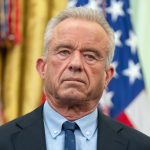
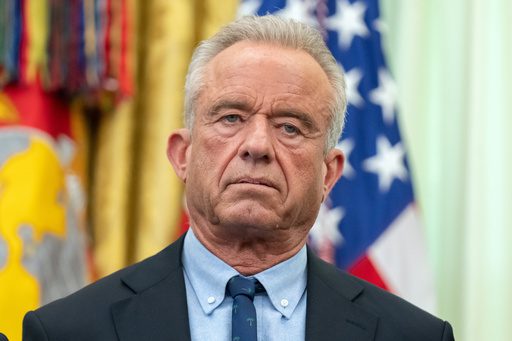
At its core, this protracted skirmish pits the medical establishment against the policy agenda of President Donald Trump’s health secretary, Robert F. Kennedy Jr., a figure whose pre-appointment skepticism regarding conventional vaccine science is, by now, legendary. U.S. District Judge Brian Murphy — a Biden appointee — had earlier delivered a sharp rebuke on March 16, effectively blocking Kennedy’s broad edict to curtail recommended vaccinations for flu, rotavirus, hepatitis A, hepatitis B, certain meningitis strains, and RSV (a common respiratory virus). Murphy’s order froze the activities of a revamped vaccine advisory committee (ACIP) — one Kennedy had dramatically reconstituted by dismissing its 17 veteran members and replacing them with individuals known for their vocal anti-vaccine leanings. The judge’s rationale was stark: Kennedy’s wholesale overhaul of ACIP, he posited, likely transgressed federal statutes.
So, the government’s recent, belated appeal effectively asks the court to reverse this judicial intervention, paving the way for Kennedy’s vision of a pared-down immunization schedule to proceed. It’s a move that medical societies, spearheaded by the American Academy of Pediatrics, had braced for but nonetheless decry. Richard Hughes IV, an attorney representing the pediatrics group, didn’t mince words. "We’re certainly disappointed that the government decided to contest the court’s judicious findings," Hughes shot back this week, adding with a resolute air, "But we fully anticipate prevailing. This isn’t just about an appeal; it’s about ending this administration’s steady destruction of vaccine policy and public health." His resolve mirrors the anxiety rippling through the public health community.
But the administration sees it differently. A senior official within the Department of Health and Human Services, speaking on condition of anonymity due to ongoing litigation, framed the appeal as an assertion of executive authority. "It’s imperative that the executive branch retain its prerogative to update and refine public health guidance in line with evolving scientific understanding and the concerns of the American people," the official intoned, reflecting Secretary Kennedy’s broader philosophy of questioning what he perceives as entrenched dogmas. Kennedy himself, while not directly commenting on the appeal, has frequently reiterated his commitment to what he terms "medical freedom," often suggesting the current schedule is overly burdensome.
Still, the medical community remains largely aghast. Dr. Amelia Vance, President of the American Academy of Pediatrics, expressed profound alarm. "Our children’s health isn’t a political football; it’s a sacred trust," she asserted in a recent statement, her voice tinged with urgency. "These recommendations aren’t arbitrary; they’re the product of exhaustive scientific consensus, safeguarding our youngest against potentially devastating, preventable diseases. We simply can’t afford to compromise on public health for ideological expediency." It’s a stark divergence of perspectives, where scientific consensus clashes head-on with an administration seemingly bent on reformulating established norms.
And this domestic imbroglio has echoes far beyond American shores. The potential erosion of vaccine trust or the perception of weakened public health standards in a major developed nation could ripple globally, particularly impacting regions grappling with their own vaccine hesitancy and infrastructural challenges. Take Pakistan, for instance, where polio eradication efforts, though making significant strides, have been perennially hampered by misinformation campaigns and distrust — struggles that highlight the fragility of public health achievements in the face of skepticism. According to UNICEF, global immunization programs currently prevent an estimated 2 to 3 million deaths each year, demonstrating the profound, undeniable impact of these public health interventions. A weakening of resolve in a country like the U.S. doesn’t just affect its own populace; it contributes to a global narrative that can undermine crucial efforts in places where the disease burden is already formidable.
📄 POLICY WIRE WHITEPAPER PUBLISHED: PAKISTAN'S NATIONAL SECURITY POLICY PRIORITIES
👉 READ BY CLICKING HEREIt’s a stark reminder that public health, much like global stability discussed in Pakistan’s Perilous Peace Play, is interconnected. And as the legal wrangling continues, the broader implications for the oversight of public health initiatives, a theme not unlike the struggles detailed in Bacterial Brinkmanship, are only just beginning to coalesce. They’ve updated the ACIP’s charter, broadening qualifications, ostensibly to accommodate Kennedy’s chosen voices—a strategic move that Richard Hughes dismisses as mere window dressing.
What This Means
This latest judicial sparring represents far more than a procedural delay; it signals a fundamental divergence in how the state views its responsibility towards public health. Politically, the administration’s aggressive pursuit of these changes, even in the face of scientific consensus and judicial censure, underscores a broader strategy of challenging established institutions—a tactic that resonates deeply with a segment of the electorate. It also positions the Trump campaign squarely in the contentious "medical freedom" debate, potentially galvanizing its base while simultaneously alienating significant portions of the medical and public health communities.
Economically, the implications are equally profound. A decline in childhood vaccination rates, should Kennedy’s policies ultimately prevail, could trigger a resurgence of preventable diseases. That wouldn’t just be a public health crisis; it’d be an economic burden, increasing healthcare costs, causing productivity losses, and straining emergency services. Think about the economic disruption that even a localized measles outbreak can cause (remember school closures and quarantines?). it could erode international trust in U.S. public health leadership, potentially affecting global collaborations on disease control — and vaccine development. This isn’t just about needles and timelines; it’s about the very fabric of preventative medicine and the state’s role in it.
The stakes, then, couldn’t be higher. This appeal is not merely a legal footnote but a critical juncture, defining whether decades of scientific precedent can be readily overturned by executive fiat and judicial challenges. The protracted legal battle, consequently, promises to be an enduring narrative of this presidential election cycle, profoundly shaping the discourse around science, governance, and public trust.
📖 GET YOUR FREE COPY NOW OF POLICY WIRE DIGITAL MAGAZINE JULY 2026 EDITION
👉 READ & DOWNLOAD FREE MAGAZINE