

Derby’s Cruel Lottery: Silent Tactic’s Exit Underscores Elite Sport’s Brutal Economic Calculus
POLICY WIRE — Louisville, Kentucky — The true measure of an athlete’s mettle, it often seems, isn’t just in their peak performance, but in their capacity to endure the relentless grind...

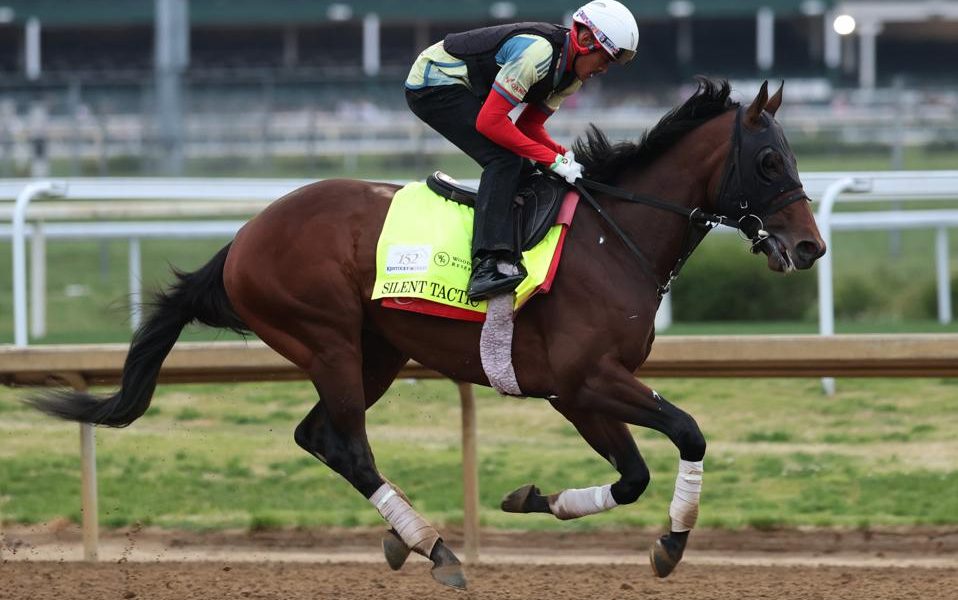
POLICY WIRE — Louisville, Kentucky — The true measure of an athlete’s mettle, it often seems, isn’t just in their peak performance, but in their capacity to endure the relentless grind toward it. For thoroughbreds vying for the Kentucky Derby, that odyssey is particularly vicious, a gauntlet of training, conditioning, and ever-present physical peril. So, when news filtered through Churchill Downs that Silent Tactic, a promising contender, wouldn’t make the gate, it wasn’t just a ripple; it was a stark reminder of the sport’s unforgiving, high-stakes economics.
It’s an unfortunate truth that for every triumphant gallop, there are countless unseen collapses — the training setbacks, the minor ailments that balloon into career-enders, the quiet withdrawals that leave owners and trainers nursing millions in sunk costs. Silent Tactic’s scratch, due to a stubbornly flaring left front foot bruise, wasn’t some freak accident. No, it was a chronic issue, meticulously managed, that simply refused to hold its peace at the most consequential moment. Trainer Mark Casse, a veteran of these crucibles, confirmed the withdrawal with a pragmatism honed by decades of such disappointments.
“It’s a bruise that he’s dealt with for a long time,” Casse explained, his voice likely carrying the weariness of a man whose hopes, however slight, had just vaporized. “Just not 100 percent happy with it. It’s very slight, but you can’t run in the Derby — and not be 100 percent. So, we’re going to work on it and hope to try to make the Preakness.” One can almost hear the unstated economic reality behind those words: to run a compromised horse in the Derby isn’t just poor sportsmanship; it’s an unforgivable risk to a multi-million-dollar asset, one that could devalue it beyond repair.
And so, the musical chairs commenced. Silent Tactic, slated for stall 13, vacated his spot, shuffling seven horses to his right inwards. This scarcity premium, a peculiar mechanism of the Derby, meant that Great White, the highest-ranked alternate, drew into the race, inheriting stall 20. His trainer, John Ennis, captured the bittersweet nature of the moment with candid brevity. “It’s never how you want to get in, is it?” Ennis mused, undoubtedly already strategizing for post-position 20. “But this is the Derby. When the door opens, you walk through.” That’s the code, isn’t it? Seize the chance, no matter the circumstance.
Behind the headlines of magnificent beasts — and glittering prizes lies a sobering financial reality. Industry analyses suggest the lifetime cost of developing a Derby-caliber thoroughbred often crests into the low seven figures, spanning everything from top-tier breeding fees (some stallion covers alone can command six figures) to specialized veterinary care, feed, and the wages of a small army of dedicated staff. To then have that investment evaporate days before the biggest race of its life? It’s a gut-punch for any owner or syndicate. But that’s the game, one predicated on the fragile health of an animal capable of immense speed yet susceptible to the slightest physical flaw.
Still, the spectacle endures, a magnet for global capital. Money from the Gulf states, from East Asia, from South America, and yes, even indirectly from burgeoning markets in South Asia like Pakistan, funnels into this equine aristocracy. Owners from these regions, often with deep cultural ties to equestrian pursuits or simply looking for high-status investments, contribute to the colossal sums that underpin elite horse racing. They aren’t just buying horses; they’re buying into a global narrative of prestige, speed, — and strategic prowess.
📄 POLICY WIRE WHITEPAPER PUBLISHED: PAKISTAN'S NATIONAL SECURITY POLICY PRIORITIES
👉 READ BY CLICKING HEREWhat This Means
At its core, Silent Tactic’s eleventh-hour withdrawal isn’t just a horse racing anecdote; it’s a profound parable for the precarious economics of elite talent markets, whether in sports, tech, or finance. We’re talking about massive investments in highly specialized, inherently fragile assets. A single injury, a missed quarter, a market shift – — and millions are on the line, fortunes swinging precariously. This particular incident underscores the extreme risk assessment inherent in any endeavor reliant on peak, sustained performance from a limited pool of exceptional (and exceptionally expensive) individuals.
Politically, the Derby – and events like it – often serves as a subtle mirror to global wealth disparities and shifting economic power. Who can afford to play at this level? And what does their participation signal about their economic clout — and geopolitical aspirations? The international ownership trends, for example, aren’t merely about personal interest; they reflect the consolidation of wealth and the pursuit of symbols of status on a global stage. So, when a favored horse pulls out, it’s not just a minor disappointment for fans; it’s a tiny, painful data point in the broader, brutal calculus of high finance and human ambition.
The field for the 152nd Kentucky Derby, now adjusted for Silent Tactic’s unfortunate absence, looks like this:
- 1) Renegade, Irad Ortiz Jr., Todd Pletcher, 4-1
- 2) Albus, Manny Franco, Riley Mott, 30-1
- 3) Intrepido, Hector Berrios, Jeff Mullins, 50-1
- 4) Litmus Test, Martin Garcia, Bob Baffert, 30-1
- 5) Right To Party, Christopher Elliott, Kenny McPeek, 30-1
- 6) Commandment, Luis Saez, Brad Cox, 6-1
- 7) Danon Bourbon, Atsuya Nishimura, Manabu Ikezoe, 20-1
- 8) So Happy, Mike Smith, Mark Glatt, 15-1
- 9) The Puma, Javier Castellano, Gustavo Delgado, 10-1
- 10) Wonder Dean, Ryusei Sakai, Daisuke Takayanagi, 30-1
- 11) Incredibolt, Jaime Torres, Riley Mott, 20-1
- 12) Chief Wallabee, Junior Alvarado, William Mott, 8-1
- 13) SCRATCH Silent Tactic, Cristian Torres, Mark Casse, 20-1
- 14) (13) Potente, Juan Hernandez, Bob Baffert, 20-1
- 15) (14) Emerging Market, Flavien Prat, Chad Brown, 15-1
- 16) (15) Pavlovian, Edwin Maldonado, Doug O’Neill, 30-1
- 17) (16) Six Speed, Brian Hernandez Jr., Bhupat Seemar, 50-1
- 18) (17) Further Ado, John Velasquez, Brad Cox, 6-1
- 19) (18) Golden Tempo, Jose Ortiz, Cherie DeVaux, 30-1
- 20) (19) Fulleffort, Tyler Gaffalione, Brad Cox, 20-1
- 21) (20) Great White, Alex Achard, John Ennis, 50-1