


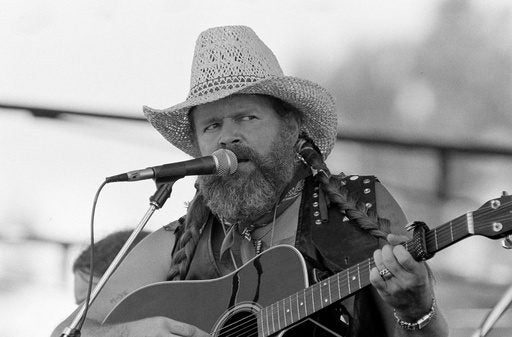
David Allan Coe, Architect of Defiance and Outlaw Balladeer, Ends His Unapologetic Ride at 86
POLICY WIRE — Nashville, Tennessee — The enduring, guttural roar against the soul-crushing monotony of the daily grind, immortalized in four terse, defiant words, found its silent sentinel this week....

POLICY WIRE — Nashville, Tennessee — The enduring, guttural roar against the soul-crushing monotony of the daily grind, immortalized in four terse, defiant words, found its silent sentinel this week. David Allan Coe, the enigmatic architect behind “Take This Job and Shove It” and a legion of other unapologetically raw country ballads, has completed his extraordinary, often contentious, ride. He was 86, leaving behind a discography that alternately captivated — and repulsed, but never, ever bored.
Coe wasn’t just a songwriter; he was a phenomenon – a heavily tattooed, long-haired embodiment of American outsiderdom. His wife, Kimberly Hastings Coe, confirmed his passing to Rolling Stone, sketching a portrait of a profound loss. “My husband, my friend, my confidant — and my life for many years. I’ll never forget him and I don’t want anyone else to ever forget him either,” she reportedly conveyed, offering a rare glimpse into the personal life of a man whose public persona was often shrouded in self-spun myth and stark controversy.
For decades, Nashville’s polished establishment kept Coe at arm’s length, even as he penned hits for others, such as Johnny Paycheck’s iconic 1977 smash and Tanya Tucker’s 1974 breakthrough, “Would You Lay With Me (in a Field of Stone).” And, he was the inaugural voice to record “Tennessee Whiskey” – a song that would later become a genre touchstone for George Jones and Chris Stapleton. Yet, his own recordings – like “You Never Even Call Me by My Name” (a collaboration with Steve Goodman and an uncredited John Prine), “The Ride,” and “Mona Lisa Lost Her Smile” – were too real, too unvarnished for mainstream country radio, despite finding a fervent, almost cult-like following.
Behind the headlines, Coe’s life reads like a country song itself, albeit one with far more grit and fewer neat resolutions. Born in Akron, Ohio, he spent formative years in reformatories and served time in an Ohio prison from 1963 to 1967 for possession of burglary tools. These experiences forged an artist whose earliest works, like his blues album “Penitentiary Blues,” emerged directly from his incarceration. “I’d have never made it through prison without my music,” he once shot back in a 1983 AP interview. “No one could take it (music) away from me. They could put me in the hole with nothing to do but I could still make up a song in my head.”
But that prison background became a double-edged sword, one he’d eventually try to move past, lest he be perpetually pigeonholed alongside Merle Haggard. Still, the image stuck. He embraced the moniker “The Mysterious Rhinestone Cowboy,” often performing in elaborate, masked attire, planting himself firmly in the outlaw country movement alongside legends like Willie Nelson, with whom he toured. His inclusion in the seminal documentary “Heartworn Highways,” featuring a performance at a Tennessee prison, further cemented his iconoclastic bona fides.
The man wasn’t without his glaring flaws, though. His R-rated albums, notably 1978’s “Nothing Sacred” and 1982’s “Underground Album,” sold primarily through biker magazines, were rife with lyrics condemned as racist, homophobic, and sexually explicit. He later expressed regret, claiming songwriter Shel Silverstein had cajoled him into recording material he felt was only fit for “around the campfire for bikers.” That’s a complicated legacy, isn’t it?
Financial troubles, too, shadowed his later years. Court documents reveal Coe earned income from at least 100 concerts yearly from 2008 through 2013, yet neglected to file individual income tax returns or pay taxes. This led to a 2016 order to pay the IRS over $980,000 in restitution and a three-year probation sentence – a final, bureaucratic skirmish for a lifelong rebel.
📄 POLICY WIRE WHITEPAPER PUBLISHED: PAKISTAN'S NATIONAL SECURITY POLICY PRIORITIES
👉 READ BY CLICKING HERE“Coe wasn’t just an artist; he was a phenomenon – abrasive, brilliant, and utterly unwilling to be boxed in,” observed Lydia Sterling, President of Vanguard Records, in a statement released Thursday. “His contributions, though often contentious, undeniably carved a distinct niche in American music, reminding us that artistry can emerge from the most unlikely, and at times, uncomfortable places.”
What This Means
At its core, David Allan Coe’s passing marks more than just the end of an artist’s life; it’s a symbolic punctuation for a certain brand of unapologetic, rough-hewn individualism that feels increasingly anachronistic in a hyper-curated, brand-conscious world. His music, particularly the working-class anthems, tapped into a profound wellspring of frustration with economic precarity and institutional indifference – a sentiment that continues to fuel populist movements and political disaffection across the globe. His defiance against the Nashville machine, and later, even the taxman, resonates with an anti-establishment streak that defines much of modern discourse, from critiques of global capitalism to the rise of nationalist movements.
That visceral disdain for the grind, a sentiment Coe so expertly bottled, isn’t, after all, a purely Western phenomenon; it’s a universal human condition. One finds its echoes in the defiant street poetry of Cairo, the protest songs sung in the shadow of economic despair across Pakistan, or the artistic expressions of resistance from Southeast Asia – all places where individuals, like Coe, often find themselves on the fringes, challenging established norms and the power of ‘uncouth titans’. His complicated legacy forces us to confront uncomfortable questions about artistic freedom, social responsibility, and the enduring allure of the rebel, even when that rebellion is messy, contradictory, and deeply flawed. As Asia grapples with its own economic ‘tightrope walk’, the underlying human desire to lash out against the system that Coe personified remains a potent, if often unacknowledged, force.
His story, therefore, isn’t merely a country music footnote. It’s a parable about the enduring power of raw emotion, the complexity of fame, and the perpetual tension between artistic integrity and societal expectations – a tension that continues to shape our political and cultural landscapes.