


Asia’s Tightrope Walk: IMF’s Familiar Refrain Rings Amidst Middle East’s Unsettling Cadence
POLICY WIRE — Washington, D.C. — The International Monetary Fund (IMF) has once again unfurled its familiar admonition, urging Asia’s bustling economies to walk a tightrope of policy balance....

POLICY WIRE — Washington, D.C. — The International Monetary Fund (IMF) has once again unfurled its familiar admonition, urging Asia’s bustling economies to walk a tightrope of policy balance. It’s a perennial warning, one that echoes with particular resonance whenever geopolitical fissures — specifically those emanating from the Middle East — threaten to upend the delicate equilibrium of global energy markets. Yet, behind the official pronouncements, a more nuanced reality unfolds: Asia isn’t merely reacting; it’s perpetually adapting to a world where stability remains a transient visitor, and its own growth engines are simultaneously its Achilles’ heel.
This latest caution isn’t born of novelty but necessity. Persistent tensions in the Persian Gulf, coupled with the Red Sea’s increasingly perilous shipping lanes, have injected a fresh dose of volatility into crude oil prices and supply chains. And as ever, Asia, a prodigious consumer of hydrocarbons, finds itself precariously exposed. It’s a saga that’s played out countless times, yet each iteration brings its own unique anxieties, its own fresh pressures on central bankers and finance ministers already juggling domestic inflation and stubborn external debts.
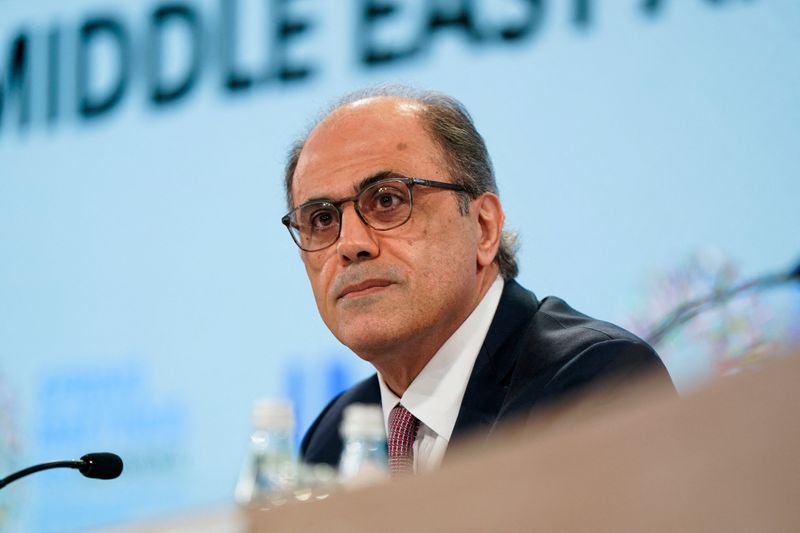
At its core, the IMF’s message is a plea for prudence: flexible exchange rates, judicious fiscal management, and robust financial supervision. These aren’t groundbreaking prescriptions, of course, but foundational tenets designed to buffer against exogenous shocks. “Asian economies, particularly those heavily reliant on energy imports, must fortify their fiscal positions and maintain flexible monetary frameworks,” cautioned Krishna Srinivasan, Director of the Asia and Pacific Department at the IMF, speaking from Washington. “We’ve seen time and again how external vulnerabilities can quickly metastasize into domestic instability without these bulwarks in place.” His tone, characteristically measured, belied the urgency underpinning the institution’s communiqué.
But can domestic policy truly inoculate nations against the wild vagaries of global energy politics? It’s a question that frequently hangs in the air, particularly in South Asian capitals. Take Pakistan, for instance – a nation perpetually teetering on the brink of fiscal crisis, where imported fuel costs directly translate into crippling inflation and a ballooning current account deficit. The country, a significant importer, sees its economic fate inextricably linked to the geopolitical tremors in the Middle East, often despite its best domestic policy intentions. Islamabad’s recent economic struggles have been exacerbated by global price spikes, pushing millions deeper into poverty.
Still, the IMF isn’t merely stating the obvious; it’s attempting to pre-empt a cascade. Brent crude prices, for instance, surged past $90 a barrel earlier this year, a stark reminder of the geopolitical risk premium baked into the global energy equation (Source: EIA/Bloomberg). Such spikes directly erode purchasing power across Asia, stoking inflationary fires that central banks are already battling with elevated interest rates. This double-edged sword – higher import bills and tighter domestic credit – can rapidly stifle nascent growth, particularly in economies still recovering from the pandemic’s lingering effects.
📄 POLICY WIRE WHITEPAPER PUBLISHED: PAKISTAN'S NATIONAL SECURITY POLICY PRIORITIES
👉 READ BY CLICKING HEREAnd it’s not just the direct cost of oil. The specter of supply chain disruptions looms large. Attacks on commercial shipping in the Red Sea have forced vessels to reroute, lengthening transit times and inflating freight costs. These additional expenses are inevitably passed on to consumers, further aggravating inflationary pressures. For a continent deeply integrated into global trade, such disruptions are akin to sand in the gears of a finely tuned machine, slowing everything down and increasing the wear and tear.
Pakistan’s Finance Minister, Muhammad Aurangzeb, shot back with a pragmatic assessment during a recent press briefing in Islamabad. “While we’re committed to fiscal discipline and market-determined exchange rates, our economy is fundamentally exposed to global commodity shocks,” he explained, a subtle hint that the onus isn’t entirely on domestic policy. “We can mitigate, yes, but insulation is a luxury few developing nations can truly afford in such an interconnected, and frankly, turbulent world.” His candor underscores the immense pressure policymakers face when external forces hold such sway.
The Fund’s counsel, then, functions less as a revelation — and more as a ritual. It’s an urgent reiteration of fundamental truths in a world that consistently ignores them. Asian nations, from the manufacturing powerhouses of East Asia to the burgeoning, yet fragile, economies of South Asia, find themselves navigating this tempest with varying degrees of resilience — and considerably fewer illusions about absolute control.
What This Means
This IMF warning underscores a fundamental geopolitical — and economic vulnerability for Asia. Politically, it highlights the region’s limited agency over global energy security, making it a passive recipient of shocks originating thousands of miles away. This can fuel nationalist sentiments and calls for greater energy independence, though practical solutions remain elusive. Economically, the implications are stark: higher inflation, potential interest rate hikes that could stifle investment, and widened current account deficits. For nations like Pakistan, already under immense financial strain, these external pressures risk triggering renewed debt crises and social unrest. It’s a continuous balancing act, where the tightrope itself is constantly swaying. The IMF’s repetitive advice, while sound, also tacitly acknowledges the inherent limits of domestic policy when confronted with an unpredictable, volatile global stage. Ultimately, this isn’t just about managing an energy crisis; it’s about the relentless erosion of fiscal space and development aspirations, year after grinding year. It implies a perpetual state of defensive economic posture for many, hindering proactive growth strategies and long-term planning.
📖 GET YOUR FREE COPY NOW OF POLICY WIRE DIGITAL MAGAZINE JULY 2026 EDITION
👉 READ & DOWNLOAD FREE MAGAZINE