


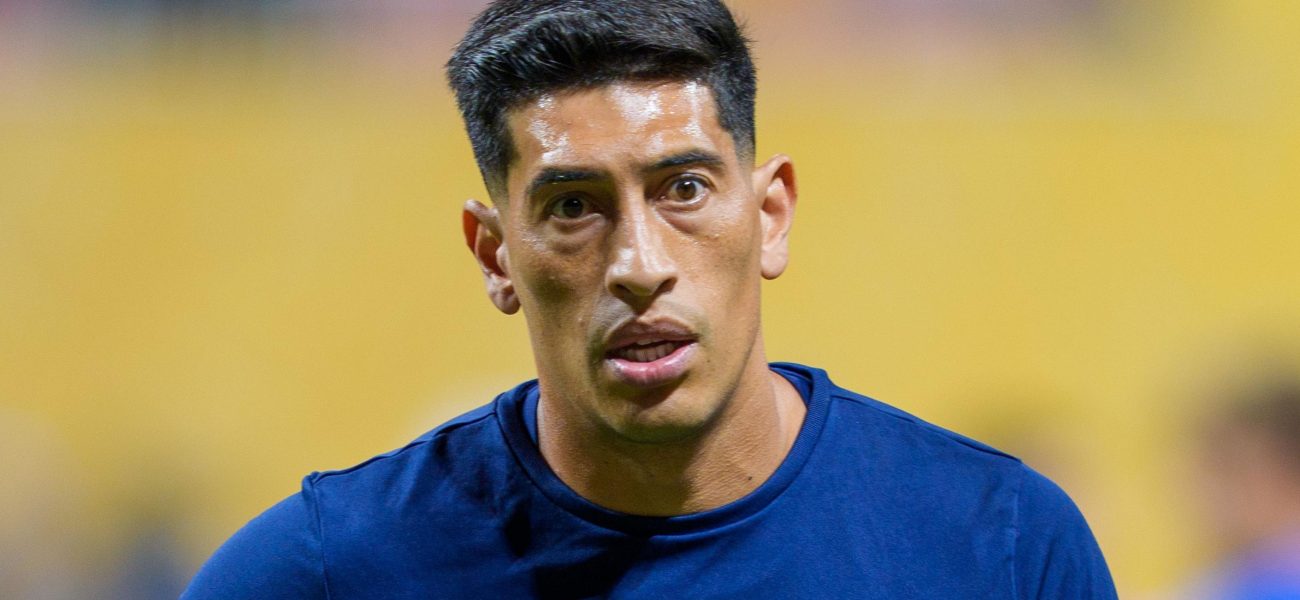
Spanish Second Division Rocked by Goalkeeper’s On-Field Melee, Disciplinary Fallout Unveiled
POLICY WIRE — Madrid, Spain — It wasn’t the goal that echoed across Spanish football pitches this past Sunday; it was the visceral thud of a fist connecting with a rival’s face. Esteban...

POLICY WIRE — Madrid, Spain — It wasn’t the goal that echoed across Spanish football pitches this past Sunday; it was the visceral thud of a fist connecting with a rival’s face. Esteban Andrada, Real Zaragoza’s on-loan goalkeeper, found himself at the epicenter of a sporting tempest, his split-second eruption of temper now cementing a substantial 13-game suspension. What began as a routine, if heated, second-division derby against Huesca spiraled into an unedifying spectacle, reminding everyone just how thin the veneer of professionalism can be when emotions fray.
Andrada, whose temperament had largely flown under the radar throughout his career — until now — was already walking a tightrope. Booked twice in quick succession during the dying moments of the match, he’d earned an automatic dismissal. But instead of a sullen trudge to the changing rooms, the Argentine custodian opted for a more dramatic exit.
And, with an almost balletic yet brutal abandon, he launched himself toward Huesca captain Jorge Pulido, delivering a direct punch to the face. The consequence was immediate chaos – a mass brawl erupted, leading to further expulsions for Huesca’s Dani Jimenez and Zaragoza’s Dani Tasende. It was ugly; it was raw. And it’s precisely the kind of footage that keeps disciplinary committees working overtime.
The Spanish football federation (RFEF), acting with what one might describe as methodical fury, didn’t hesitate. They handed Andrada a 12-match ban for the assault, stacking it atop the automatic one-game suspension for his red card. The RFEF’s report didn’t mince words, describing Andrada’s actions as “running and jumping” with “violence and aggression,” culminating in a blow delivered with “excessive force.” It was a damning indictment.
“Such egregious displays erode the very fabric of fair play we strive to uphold,” stated Alejandro Ramos, Head of Disciplinary Affairs for the RFEF, in a rare public comment. “It’s a stark reminder that passion must always yield to professionalism, especially when millions are watching.” Ramos underscored the federation’s unwavering commitment to maintaining the integrity of the sport, regardless of the league or player profile.
Zaragoza, already languishing in the relegation zone, now faces an even steeper uphill battle without their primary shot-stopper. The club was swift to issue a statement, condemning the incident and promising “appropriate disciplinary measures” — a move likely meant to mitigate further reputational damage and potential financial repercussions. But the damage, both to their standing — and their squad depth, was done.
Still, for Andrada, the immediate fallout wasn’t just professional; it was personal. “The truth is I’m very, very sorry for what happened,” the 35-year-old admitted in a post-match apology that felt both contrite and perhaps, a tad too late. “It’s not a good image for the club, for the fans, and especially not for a professional like myself.” He also extended a direct apology to Pulido, acknowledging his own loss of focus. But apologies, even heartfelt ones, rarely erase bans.
📄 POLICY WIRE WHITEPAPER PUBLISHED: PAKISTAN'S NATIONAL SECURITY POLICY PRIORITIES
👉 READ BY CLICKING HEREBehind the headlines of a Spanish second-tier skirmish lies a more universal narrative about the pressures on athletes and the global reach of such incidents. These moments, often captured in high definition, transcend local leagues. They resonate deeply in places like Pakistan, where European football — particularly Spanish La Liga — commands a fervent following. Fans across the Muslim world often hold their sporting heroes to high standards, not just of skill but of character, viewing such displays of aggression as antithetical to the spirit of the game. It’s not just a European problem; it’s a global conversation about sportsmanship.
And let’s not overlook the pecuniary aspect of this outburst. Beyond the immediate match-day fines, Zaragoza will now have to navigate at least 13 games without a crucial player, impacting their chances of avoiding relegation. The financial implications of dropping a division can be catastrophic, running into millions of euros in lost revenue and sponsorship deals. According to a 2023 report by SportsAnalytics Pro, player suspensions for violent conduct in Europe’s top five leagues and their immediate lower divisions increased by 18% over the last fiscal year, signaling a potential rise in on-field aggression as stakes heighten. It’s a statistic that underscores the escalating cost of poor discipline.
“Players are assets, yes, but they’re also human. The pressure in these relegation battles? It’s immense,” a veteran agent, requesting anonymity to speak frankly, confided. “A moment’s folly can wipe out months of strategic planning, millions in potential revenue.” It’s a sobering thought for clubs and players alike.
What This Means
Andrada’s prolonged absence will undoubtedly hobble Real Zaragoza’s already precarious fight against relegation. Beyond the immediate tactical void, his actions cast a long shadow over player discipline across lower-tier European football, where stakes are often highest and resources scarcest. Regulatory bodies, like the RFEF, are clearly signalling a zero-tolerance policy, a political move intended to uphold the sport’s image globally and deter future transgressions. This isn’t merely about a punch; it’s about safeguarding brand integrity — and commercial viability.
Economically, Zaragoza faces not only the financial penalties associated with the ban but also the tangible cost of fielding a less experienced or capable replacement for a significant portion of the season. The cascade effect — from potential relegation to diminished broadcast revenues and sponsorship interest — highlights how seemingly isolated incidents can trigger broader economic tremors in the interconnected world of sports finance. And for players, it’s a stark reminder that their conduct on the pitch carries consequences far beyond the final whistle, impacting career longevity and earning potential. It’s a brutal business, this professional sport, and sometimes, the spectacle gets a little too brutal, as this incident aptly demonstrates, feeding into a wider narrative about the brutal business of spectacle itself.