


Europa League Crucible: Freiburg’s Ascent and Braga’s Stalwart Stand Define Europe’s Shifting Football Economics
POLICY WIRE — Lisbon, Portugal — In the sprawling, often ruthless, landscape of European club football, where billions lubricate the ambitions of a privileged few, the semi-final clash between...

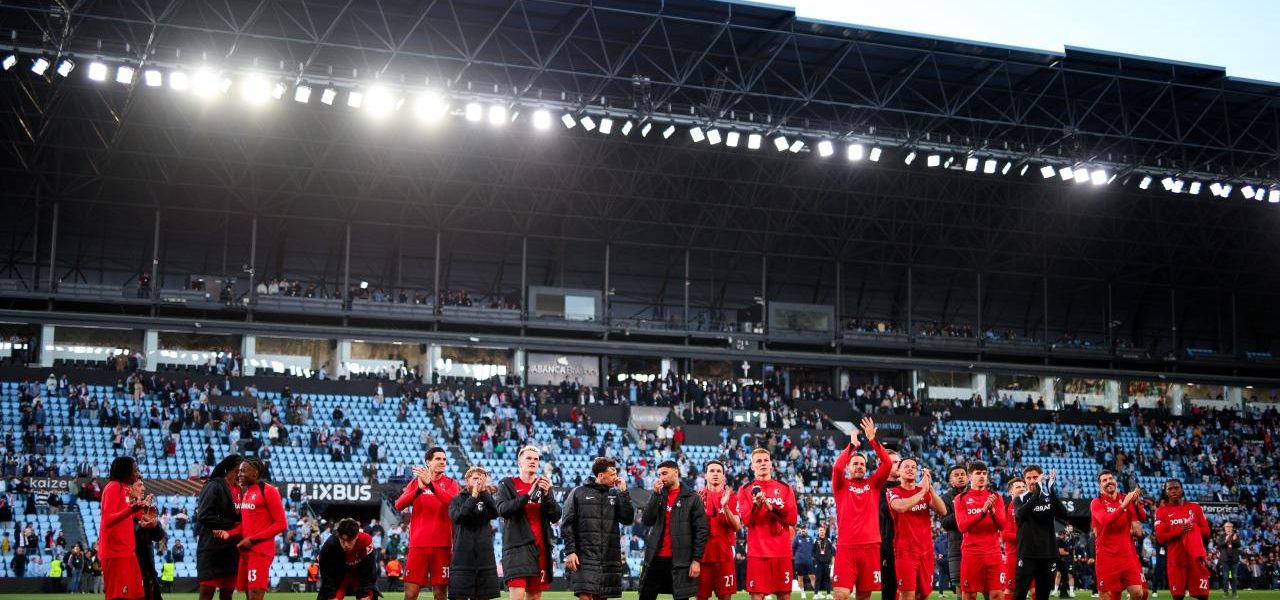
POLICY WIRE — Lisbon, Portugal — In the sprawling, often ruthless, landscape of European club football, where billions lubricate the ambitions of a privileged few, the semi-final clash between Portugal’s SC Braga and Germany’s SC Freiburg isn’t merely a fixture; it’s a stark illustration of aspiration meeting brutal economic reality. For clubs outside the Champions League’s gilded cage, the Europa League offers not just silverware, but a vital lifeline—a passport to enhanced revenue, prestige, and perhaps, a fleeting moment in the sun.
It’s a narrative less about Neymar’s latest transfer fee and more about meticulous management, shrewd scouting, and the sheer, unadulterated grit required to punch above one’s financial weight. Freiburg, a Bundesliga outfit enjoying an unprecedented continental excursion, find themselves on the precipice of history, navigating the treacherous waters of European knockout football for the first time. Braga, conversely, are seasoned campaigners, their last final appearance a distant, almost melancholic, memory from 2010/11. Their trajectories, however divergent, converge on a shared, desperate hunger for triumph.
Julian Schuster, Freiburg’s tactician, offered a measured yet resolute perspective ahead of the away leg. “We’ve surpassed every expectation just by reaching this stage,” he conceded, his voice betraying a hint of fatigue from a grueling domestic schedule. “But don’t mistake progress for complacency. We haven’t come this far to simply admire the view. Our opponents are formidable, possessing a tactical shrewdness born of repeated European campaigns, and their home atmosphere is, let’s just say, quite spirited. Yet, my lads, they’re ready for a proper fight.”
And fight they must. Freiburg’s journey here has been nothing short of spectacular, dispatching Genk and Celta Vigo with an eleven-goal flurry across their last three European outings — a burstiness of offensive power that belies their often-conservative Bundesliga reputation. Still, the German side arrives nursing wounds from recent domestic defeats; a DFB-Pokal exit and a drubbing by Borussia Dortmund have injected an unwelcome dose of realism into their high-flying European dreams. They need this. Badly.
Braga, always the perennial dark horse, secured their semi-final berth by overcoming Real Betis with a decisive 5-3 aggregate. They’ve consistently flirted with Europe’s upper echelons, having previously squared off against six Bundesliga clubs over 13 encounters, registering five wins (against Hoffenheim and Union Berlin) and five losses. Their Liga Portugal form, while still holding a European qualification spot, suffered a recent hiccup against Santa Clara. Club president António Salvador, never one to shy from a spirited declaration, shot back at suggestions of waning form: “This club thrives on these moments. We don’t have the resources of Europe’s super-rich, but we possess something far more potent: a relentless spirit and a fanbase that understands the sanctity of our European nights. We’ll show Freiburg what Braga is truly made of on our turf.”
Personnel-wise, Freiburg’s woes include Patrick Osterhage’s confirmed absence, though Jordy Makengo might return from a muscle complaint. PSG loanee Gabriel Moscardo is suspended for Braga, a significant void. But Braga can lean on the Bundesliga acumen of Rodrigo Zalazar, Florian Grillitsch, and Bright Arrey-Mbi, all boasting prior German league experience, a subtle irony perhaps lost on some.
📄 POLICY WIRE WHITEPAPER PUBLISHED: PAKISTAN'S NATIONAL SECURITY POLICY PRIORITIES
👉 READ BY CLICKING HEREThis encounter, though physically distant, resonates across continents. From the football-obsessed streets of Karachi to the bustling cafes of Cairo, millions in the Muslim world, including Pakistan, avidly follow these European sagas, their collective viewership and engagement contributing significantly to the global broadcasting rights and merchandising revenues that underpin these competitions. Indeed, the financial stakes are hardly trivial; reaching the Europa League semi-final alone guarantees a club €2.8 million in prize money from UEFA, a substantial sum for clubs of Braga’s and Freiburg’s stature, as per UEFA’s official financial distribution reports.
Predicted Lineups:
Braga: Horniceck; Lagerbielke, Vitor Carvalho, Lelo; Gomez, Grillitsch, Gorby, Martinez; Zalazar, Horta; Victor
Freiburg: Atubolu; Makengo, Lienhart, Ginter, Treu; Eggestein, Manzambi; Grifo, Suzuki, Beste; Matanović
What This Means
At its core, this Europa League semi-final isn’t just a battle for a place in a final; it’s a proxy war for economic survival and reputational uplift within the hyper-competitive ecosystem of European football. For Freiburg, a victory would solidify their status as a genuinely ascending force, potentially opening doors to larger sponsorship deals and attracting a caliber of player previously out of reach. It would also, crucially, offer another route to next season’s European competitions, a significant financial imperative after recent domestic stumbles.
Braga, already accustomed to this stage, seeks validation. Advancing to the final wouldn’t just add another trophy opportunity; it would cement their identity as Portugal’s consistent third power, a thorn in the side of Lisbon’s giants, and a beacon of strategic management. The enhanced visibility and prize money are critical for clubs that operate on tighter margins than their Champions League counterparts. Consider Barcelona’s own delicate economic rebalancing act; while Braga and Freiburg operate on a different scale, the principle of maximizing European revenue remains identical. the outcome will inevitably impact future transfer market valuations for their key players, influencing future squad development and financial health. This isn’t just sport; it’s high-stakes business dressed in jerseys — and cleats.