

The Ceasefire That Isn’t: Israel and Hezbollah’s Deadly Semantic Dance
POLICY WIRE — Beirut, Lebanon — The quiet, it turns out, is merely a euphemism. And the ‘ceasefire’ between Israel — and Hezbollah? That’s less a cessation of hostilities and more a...

POLICY WIRE — Beirut, Lebanon — The quiet, it turns out, is merely a euphemism. And the ‘ceasefire’ between Israel — and Hezbollah? That’s less a cessation of hostilities and more a perilous, undeclared pause in the larger conflict, punctuated by strategic, often deadly, exchanges. While diplomatic pronouncements speak of de-escalation, the reality on the ground—across the jagged, disputed border—suggests an altogether different narrative, one of sustained, if calibrated, aggression.
It’s a peculiar sort of truce, this. One in which drones still prowl the skies, rockets find their marks, and retaliatory strikes are met with predictable counter-strikes. The past weeks have seen a disquieting continuation of these tit-for-tat operations, seemingly oblivious to any grand international accords or the desperate pleas for peace emanating from regional capitals. This isn’t a lull; it’s a simmering cauldron, threatening to boil over with each targeted assassination or precision bombardment.
Behind the headlines, residents of southern Lebanon and northern Israel have long since abandoned their homes, becoming refugees in their own countries. A staggering statistic underscores this grim exodus: UN OCHA reports that as of early 2024, over 90,000 people have been displaced in southern Lebanon alone due to the cross-border clashes. It’s a stark reminder that while politicians debate semantics, lives are irrevocably altered.
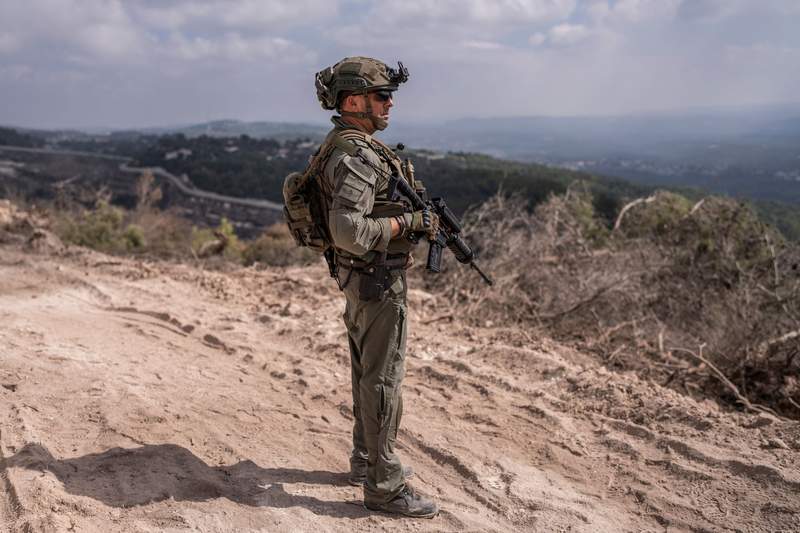
The Israeli military, for its part, maintains a consistent posture. Its operations, they insist, are purely defensive, aimed at dismantling Hezbollah’s capabilities and pushing its forces away from the border. Defense Minister Yoav Gallant, known for his hawkish stance, recently shot back, “We’re not interested in a wider conflict, but Jerusalem’s patience isn’t infinite. Any aggression will be met with disproportionate force, regardless of diplomatic pronouncements.” His words echo a government resolute in its perceived need for deterrence.
Still, Hezbollah, Iran’s most potent proxy in the Levant, isn’t backing down. They’ve repeatedly asserted their right to resist what they term ‘Zionist aggression’ and ‘occupation.’ Their sophisticated arsenal, developed over decades with Iranian support, poses a significant threat to Israeli population centers and infrastructure. Sheikh Naim Qassem, Hezbollah’s Deputy Secretary-General, declared, “Our resistance is a sacred duty. The enemy’s violations against our sovereignty — and our people will never go unanswered. This so-called ceasefire is a Zionist deception.” He wasn’t mincing words; they rarely do.
And so, the deadly dance persists. Each side claims victimhood, each side asserts righteous retaliation, — and the region holds its breath. It’s a situation that has deeply unnerved the broader Muslim world, particularly nations like Pakistan, where the plight of Palestinians and the continuous instability in the Levant resonate profoundly. Islamabad, with its own strategic considerations regarding regional security and the delicate balance of power, watches these developments with a mix of apprehension and solidarity. The persistent friction fuels narratives and shapes foreign policy deliberations far beyond the immediate battlefield, influencing decisions on defense modernization and strategic alliances, much like Pakistan’s acquisition of advanced naval assets, such as the PNS Hangor submarine, reflecting a broader regional push for enhanced deterrence capabilities.
📄 POLICY WIRE WHITEPAPER PUBLISHED: PAKISTAN'S NATIONAL SECURITY POLICY PRIORITIES
👉 READ BY CLICKING HEREAt its core, this isn’t merely a localized skirmish; it’s a barometer of regional geopolitical temperatures. The silence from international bodies, punctuated by anodyne calls for restraint, only highlights the impotence of traditional diplomacy when confronted with deeply entrenched, ideological rivalries. It’s a testament to the fact that sometimes, the loudest statements are those delivered by rockets and bombs, not by diplomats in Geneva.
What This Means
The perpetual, low-intensity conflict along the Lebanon-Israel border, masquerading as a ceasefire, represents a precarious equilibrium — one that could shatter at any moment. Politically, it showcases a dangerous brinkmanship where both sides test the limits of their adversary’s patience without triggering a full-scale war, a gamble with catastrophic implications for the civilian populations caught in the crossfire. It’s a cynical calculus, prioritizing strategic objectives over human welfare.
Economically, the impact on Lebanon is particularly devastating. Already reeling from a prolonged financial crisis — (it’s arguably the worst economic meltdown in modern history) — the forced displacement of tens of thousands, the destruction of infrastructure, and the constant threat of wider conflict cripple any hope of recovery. Farmers can’t tend their fields, businesses can’t operate, and tourism, a vital sector, is nonexistent in large swathes of the country. For Israel, the economic cost, while less severe proportionally, involves significant defense spending, disruption to northern communities, and the intangible cost of perpetual insecurity. The international community, seemingly fatigued by endless Middle East crises, offers little beyond rhetorical support, underscoring a broader shift in geopolitical priorities. And for the wider region, this ongoing friction maintains a state of generalized anxiety, a constant reminder of the fragility of peace and the deep-seated grievances that continue to fester, influencing everything from trade routes to domestic political stability.