

India’s Skies Darken: Airlines Warn of Collapse as Fuel Costs Soar, Threatening Regional Lifeline
POLICY WIRE — New Delhi, India — The aspiration of a truly connected India, one where its burgeoning middle class traverses vast distances with ease and its economy hums with kinetic energy, suddenly...

POLICY WIRE — New Delhi, India — The aspiration of a truly connected India, one where its burgeoning middle class traverses vast distances with ease and its economy hums with kinetic energy, suddenly looks precarious. It’s not sluggish demand, nor fierce competition, that threatens to ground the nation’s ambitious carriers; it’s the prosaic, yet paralyzing, price of fuel – an invisible hand reaching deep into airline balance sheets, now threatening to shut down operations altogether.
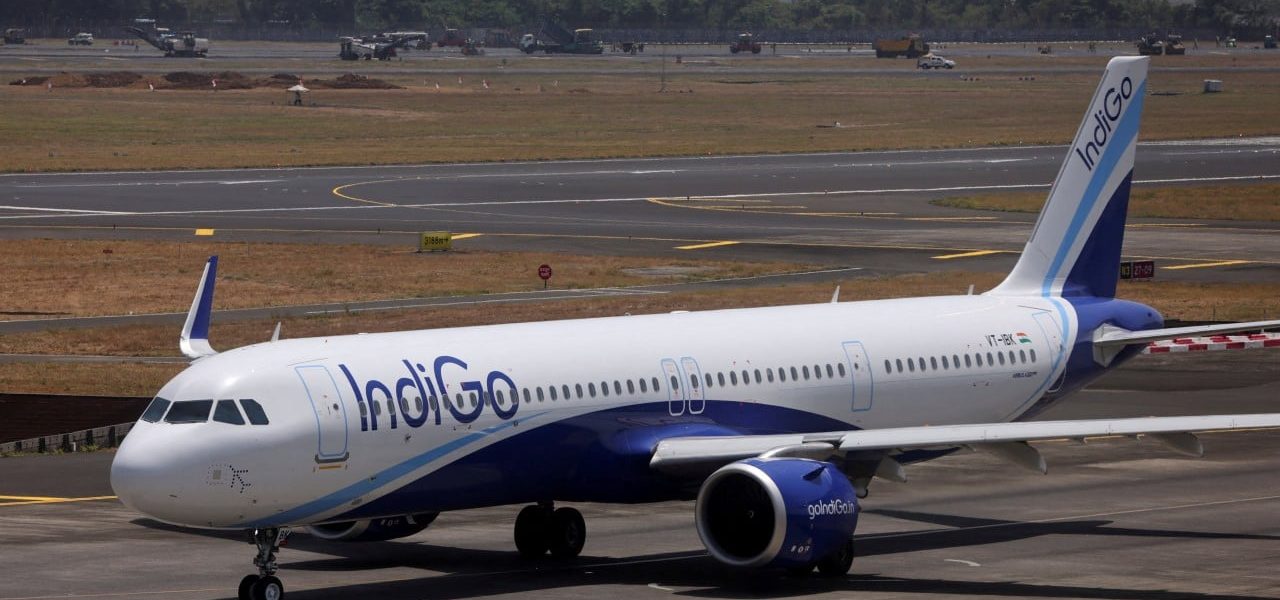
India’s major airlines, encompassing household names like IndiGo, the venerable Air India, and the budget-focused SpiceJet, aren’t just expressing concern; they’re issuing an ultimatum. Through the Federation of Indian Airlines (FIA), they’ve conveyed to the Civil Aviation Ministry a stark warning: without immediate relief on jet fuel pricing, a widespread suspension of services isn’t a hypothetical future, but a looming reality. It’s a crisis that has industry observers — and frankly, anyone who’s ever endured a 12-hour train journey — raising eyebrows. The irony, of course, is that air travel, once a luxury, had become an essential cog in the machinery of modern India.
“The airline industry in India is under extreme stress and on the verge of closing down or of stopping its operations,” the Federation of Indian Airlines articulated in a sharply worded letter to India’s Civil Aviation Ministry, a document later sighted by Bloomberg. This isn’t merely a plea for subsidies; it’s a desperate cry for policy adjustments, specifically a clamor for the reinstatement of pandemic-era cost caps on aviation turbine fuel (ATF) and a significant reduction in the various levies that bloat its final price. And they’ve got a point: ATF often constitutes upwards of 40% of an Indian airline’s operational expenditure, a figure frequently doubled by cascading state and central taxes, according to industry reports compiled by CAPA India, a well-regarded aviation consultancy.
But the government, it seems, isn’t entirely moved by the airlines’ existential dread. “We recognize the immediate challenges facing our domestic carriers, but government policy must balance the immediate needs of businesses with broader fiscal responsibilities and long-term market stability,” asserted Rajiv Kumar, a spokesperson for the Ministry of Civil Aviation, when pressed on the issue, implicitly pushing back on blanket subsidies. He’s not wrong, of course, but it’s a tightrope walk that’s becoming increasingly treacherous. The aviation sector, after all, is a notoriously low-margin enterprise, perpetually vulnerable to commodity price fluctuations. So, when global oil prices spike, these companies feel the sting acutely, often without the flexibility to pass on the full cost to consumers who already find airfares a stretch.
At its core, this isn’t just about Indian domestic flights; it’s a regional tremor. India serves as a crucial aviation hub for many South Asian nations—Pakistan, Bangladesh, Nepal, and Sri Lanka all rely on Indian connectivity for onward journeys to the Middle East, Europe, and beyond. Disruptions in India’s air travel network could ripple across the subcontinent, affecting not only business travel and tourism but also critical connections for communities across the Muslim world. Consider the thousands of pilgrims from Bangladesh or Sri Lanka who transit through Indian airports en route to Jeddah for Hajj or Umrah; a crippled Indian aviation sector could turn a manageable journey into an odyssey, impacting deeply held religious obligations and cross-cultural exchanges. It’s not just flights; it’s a vital artery.
📄 POLICY WIRE WHITEPAPER PUBLISHED: PAKISTAN'S NATIONAL SECURITY POLICY PRIORITIES
👉 READ BY CLICKING HEREWhat This Means
The potential grounding of a significant portion of India’s airline fleet isn’t merely an inconvenience for travelers; it’s a policy pitch collapsing with widespread ramifications. Economically, a reduction in air services could hamstring everything from tourism revenue—a consequential contributor to India’s GDP—to urgent business travel and the movement of high-value cargo. Regional trade, already navigating geopolitical currents, would face yet another obstacle. Politically, the Modi government faces a dilemma: intervene with costly subsidies or tax breaks, potentially burdening the national exchequer, or allow market forces to prune the industry, risking job losses and public outcry over reduced connectivity and soaring fares. Neither option is particularly palatable, don’t you think?
Still, the crisis carries broader implications for India’s image as a rising global power. A robust, affordable, and accessible air travel network is a fundamental pillar of modern infrastructure, a visible marker of development and ambition. Should its airlines falter, it sends an unmistakable signal of vulnerability, particularly in a region where China is aggressively expanding its own economic and infrastructural footprint. The specter of reduced competition leading to higher ticket prices for the few remaining solvent carriers also looms, creating an elitist rather than egalitarian travel landscape. It’s a situation that begs for deft policymaking, not just reactive measures, especially when the global energy market remains such a volatile beast. This isn’t just about airlines; it’s about India’s trajectory, its regional influence, and the very fabric of its rapidly modernizing society.