

The Folly of Imitation: Man’s Audacious Border Patrol Impersonation Exposes Deeper Fault Lines
POLICY WIRE — San Diego, California — It wasn’t the meticulous detail that gave Jamie Ernesto Alvarez-Gonzalez away, but rather a glaring, almost comically negligent, oversight: the word...

POLICY WIRE — San Diego, California — It wasn’t the meticulous detail that gave Jamie Ernesto Alvarez-Gonzalez away, but rather a glaring, almost comically negligent, oversight: the word “federal” emblazoned on his Ford F-150’s license plate frame, conspicuously misspelled. This small, yet telling, error became the linchpin in a saga of audacious deception, one that saw Alvarez-Gonzalez flout federal authority by masquerading as one of its own to impede immigration enforcement. He’s now pleaded guilty to impersonating a federal agent and illegally possessing firearms, his charade dissolving into a grim reality.
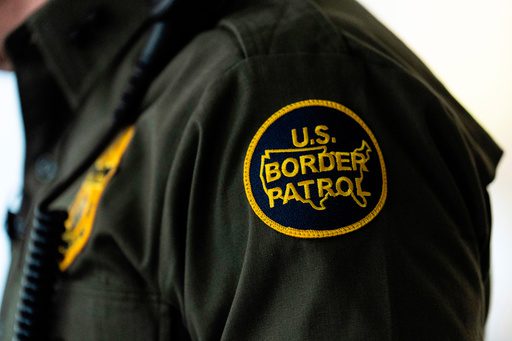
For weeks, it seems, Alvarez-Gonzalez operated under a thinly veiled guise, his black pickup truck — a model frequently favored by undercover agents — outfitted with a windshield Border Patrol sticker and non-functional radio antennae. He even hung handcuffs from his rearview mirror, lending an air of officialdom that was, at its core, pure theater. The objective? To disrupt legitimate U.S. Customs — and Border Protection (CBP) operations, a mission he pursued with a peculiar blend of bravado and ineptitude.
His tactics came to a head on January 8, when Alvarez-Gonzalez trailed a genuine Border Patrol agent through a San Diego neighborhood. The agent, observing the suspiciously familiar vehicle and its occupant, initially believed it was a fellow officer, leading him to abort his planned mission. It was a momentary, but consequential, success for Alvarez-Gonzalez. But suspicion soon mounted. When confronted by actual agents, he reportedly shot back obscenities, demanding they vacate the Linda Vista community. This wasn’t merely a lone wolf act; prosecutors also revealed recordings where Alvarez-Gonzalez spoke of actively hunting federal agents and summoning “reinforcements.” Indeed, three other vehicles later joined the fray, harassing departing agents and giving chase on the highway.
“This conviction sends an unambiguous message: impersonating a federal officer to obstruct justice, no matter how audacious or seemingly quixotic, carries severe consequences,” stated U.S. Attorney Tara Johnson, whose office oversaw the prosecution. “Our agents face perilous conditions daily, and any attempt to undermine their operations or endanger their lives will be met with the full force of the law.”
Behind the headlines of this bizarre episode lies a deeper narrative of desperation — and community friction. Alvarez-Gonzalez, a Mexican national, had overstayed his tourist visa for decades – an all too common scenario along the U.S. southern border. Indeed, Department of Homeland Security figures indicate a consistent rise in individuals overstaying their visas, with an estimated 680,000 such cases reported in the last fiscal year alone – a significant driver of irregular immigration.
But his elaborate charade suggests something more than simple evasion. It hints at a calculated, albeit misguided, attempt at localized resistance. “Mr. Alvarez-Gonzalez’s actions, while illegal and deeply problematic, unfortunately underscore a profound community frustration — a feeling of being unheard, of being relentlessly targeted by enforcement activities,” offered Dr. Zahra Khan, an immigration policy analyst at the Borderlands Justice Initiative. “It’s a symptom of a larger systemic tension, a desperate response seen in migrant communities globally, from the Rohingya fleeing Myanmar into Bangladesh, to Afghan refugees navigating Pakistan’s stringent border controls. These communities often feel compelled to develop intricate, sometimes perilous, strategies to navigate and subvert state-controlled migration flows.”
📄 POLICY WIRE WHITEPAPER PUBLISHED: PAKISTAN'S NATIONAL SECURITY POLICY PRIORITIES
👉 READ BY CLICKING HEREHe wasn’t just playing dress-up; he was actively attempting to create a safe zone, however temporary or illusory, for undocumented residents in his neighborhood. The fake FBI badge found in his possession only amplified the theatrical yet menacing nature of his intentions. It’s a sobering reminder that for some, the lines between citizen, immigrant, and perceived adversary are dangerously blurred, and the stakes couldn’t be higher. Still, federal law isn’t one to tolerate such freelance interpretations of authority.
What This Means
Alvarez-Gonzalez’s conviction, while seemingly an isolated and eccentric case, pulls back the curtain on several critical policy implications. Firstly, it underscores the persistent vulnerability of federal agents to sophisticated, or even amateurish, deception — a chink in the armor that could have far more sinister applications. It forces a reconsideration of operational security protocols, especially in high-tension areas where community distrust of federal presence runs deep. Secondly, it highlights the growing audacity of those seeking to obstruct immigration enforcement, signaling a potential escalation in tactics beyond traditional protest. This isn’t just about civil disobedience; it’s about actively interfering with law enforcement operations through direct, albeit poorly executed, impersonation.
Economically, the continued friction at the border, exacerbated by incidents like this, strains local resources and diverts federal funding towards enforcement rather than comprehensive immigration reform. The political implications are equally stark. Such events fuel the already acrimonious debate over border security and immigration policy, often hardening stances on both sides. For proponents of stricter enforcement, this case serves as potent evidence of the necessity for more robust federal presence. For immigration advocates, it’s a tragic illustration of the despair that can fester in communities feeling besieged. The incident, therefore, becomes another data point in a perpetually polarized discussion, unlikely to foster consensus but certain to deepen existing divides. And it’s not just an American phenomenon; governments across the globe grapple with similar dilemmas, wrestling with sovereignty, humanity, and the relentless tide of human migration. As borders harden, the ingenuity — and desperation — of those seeking entry or protection will only grow, sometimes leading to theatrical, yet dangerous, forms of resistance, mirroring geopolitical crosscurrents that shape international relations.