


Geopolitical Crosswinds Propel India, New Zealand Toward ‘Forward-Looking’ Trade Accord
POLICY WIRE — New Delhi, India — The world’s crucial shipping arteries, notably the Strait of Hormuz, are increasingly contested. Meanwhile, America’s tariff arsenal continues to pepper...

POLICY WIRE — New Delhi, India — The world’s crucial shipping arteries, notably the Strait of Hormuz, are increasingly contested. Meanwhile, America’s tariff arsenal continues to pepper global markets, forcing nations to re-evaluate their commercial lifelines. It isn’t just about protectionism; it’s about survival. And it’s this simmering global anxiety that finally spurred India and New Zealand, after a glacial 15 years of on-again, off-again deliberations, to ink a new, ‘forward-looking’ trade pact.
This isn’t merely another bilateral accord. It’s a stark acknowledgment of an era where economic resilience now trumps mere efficiency, where the political imperative to de-risk supply chains has supplanted the old orthodoxy of singular, hyper-optimized dependencies. Both Delhi — and Wellington, in their own ways, have felt the sharp edge of this new reality. India’s exporters have grappled with the prohibitive costs and delays of navigating volatile sea lanes and the persistent chill of steep American tariffs. New Zealand, for its part, has been on a pronounced quest to loosen what many in its government privately concede is an unhealthy reliance on China, its largest trading partner.
So, the agreement — finally signed with much fanfare, if little genuine surprise — represents a strategic pivot for both nations. It promises enhanced market access for goods — and services, reduced tariffs, and greater predictability for investors. But its true significance lies less in the finer print of trade percentages and more in its symbolic heft: a clear signal that middle powers are actively building alternative architectures of global trade, circumventing the caprices of Washington and Beijing.
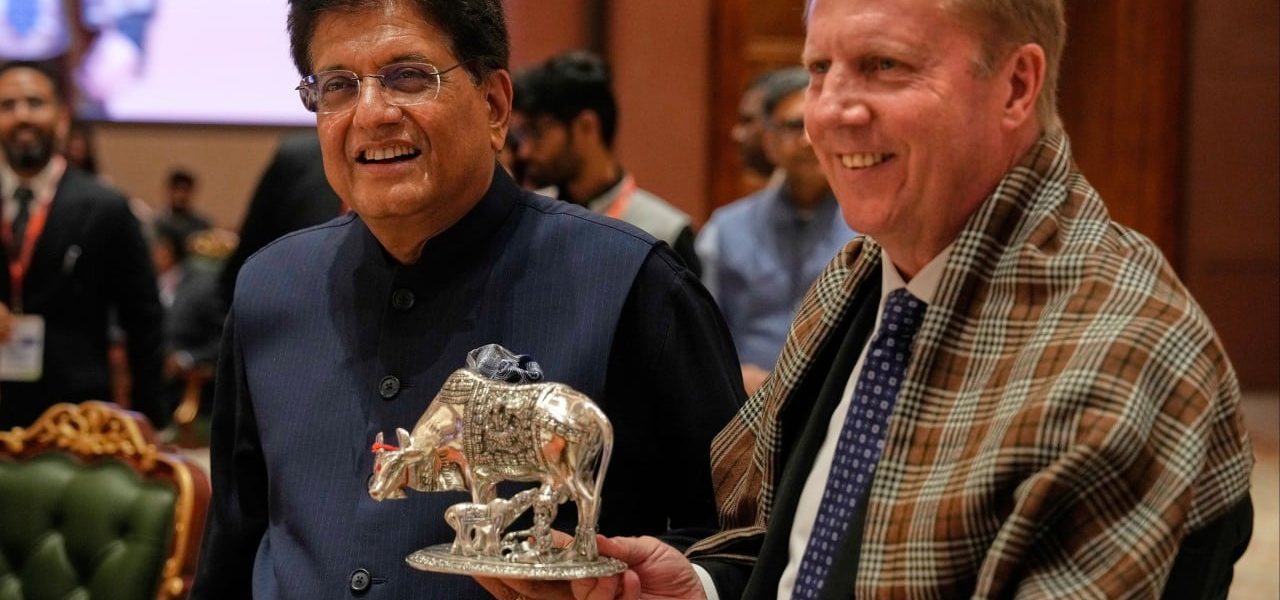
“This agreement underscores our unwavering dedication to fostering resilient global supply chains and asserting our strategic autonomy,” declared India’s Commerce Minister Piyush Goyal, during a recent press briefing, his voice resonating with New Delhi’s broader geopolitical ambitions. And it’s not just rhetoric; India’s engagement across the Indo-Pacific has been remarkably robust.
“Diversifying our trade relationships is paramount for New Zealand’s economic sovereignty, particularly in a period of such pronounced global flux,” countered New Zealand Trade Minister Todd McClay, echoing the concerns of a nation that has watched geopolitical tensions mount in its immediate region. For Wellington, this pact isn’t just about dairy exports; it’s about hedging against a future where economic leverage could easily be weaponized.
The urgency for such an entente has become palpable. New Zealand’s Ministry of Foreign Affairs and Trade data reveals that China alone accounts for over 30% of its exports. That figure, while lucrative, carries inherent strategic risks – a lesson that many nations are learning the hard way. Still, the prospect of decoupling entirely remains impractical, so diversification through pacts like this becomes a pragmatic, incremental step towards economic security. It’s a dance, really, between maintaining profitable ties — and mitigating systemic vulnerabilities.
📄 POLICY WIRE WHITEPAPER PUBLISHED: PAKISTAN'S NATIONAL SECURITY POLICY PRIORITIES
👉 READ BY CLICKING HEREBehind the headlines, India’s proactive diplomatic and economic maneuvering within the Indo-Pacific, epitomized by this accord, inevitably sends ripples across South Asia. Its neighbors, including Pakistan, aren’t blind to this strategic recalibration. India’s ability to forge — and capitalize on — these new partnerships could redefine regional economic hierarchies. It places a quiet, yet undeniable, pressure on other nations to reassess their own trade dependencies and geopolitical alignments, perhaps even influencing their approach to the Islamabad factor in the shifting US–Iran equation, as nations scramble to secure their interests in an increasingly multipolar world.
At its core, this pact represents a fundamental shift in how nations conceive of trade. It’s no longer solely about maximizing immediate profit; it’s about cultivating resilient networks, about ensuring that essential goods and services continue to flow even when the geopolitical tides turn hostile. And that’s a lesson born not of economic theory, but of harsh, recent experience.
What This Means
Politically, this agreement underscores a burgeoning trend of “middle power” nations asserting greater strategic autonomy, reducing their reliance on the two dominant global economic blocs. For India, it bolsters its vision of becoming a consequential node in a diversified global supply chain, enhancing its leverage in multilateral forums and its stature as a non-aligned, yet economically ambitious, player. For New Zealand, it’s a crucial step in de-risking its economy from potential political pressures, safeguarding its export-driven prosperity.
Economically, the pact signifies a pragmatic approach to “de-risking” rather than outright “de-coupling.” It champions geographical diversification of trade partners, creating redundancy in supply chains that will likely become a global standard. While the immediate economic uplift might be incremental for both large economies, the long-term benefit lies in enhanced stability and reduced vulnerability to external shocks — a priceless commodity in today’s volatile environment. Such moves also signal to the broader Muslim world, particularly nations with significant trade ties to both East and West, that economic stability may increasingly lie in diversifying beyond entrenched, often politically fraught, dependencies.