


Gaza’s Familiar Drumbeat: Drone Strikes Ignite Renewed Tensions Amidst Stalled Diplomacy
POLICY WIRE — Washington, D.C. — Another Tuesday, another tally of lives extinguished in Gaza. For residents there, it’s less a headline, more a grim rhythm — a persistent, low hum of impending...

POLICY WIRE — Washington, D.C. — Another Tuesday, another tally of lives extinguished in Gaza. For residents there, it’s less a headline, more a grim rhythm — a persistent, low hum of impending escalation that’s become frighteningly routine, tragically predictable. The wider world, meanwhile, tends to process these events as fleeting dispatches, another data point in a seemingly interminable conflict. But these aren’t just statistics; they’re incendiary sparks in a region already primed for conflagration.
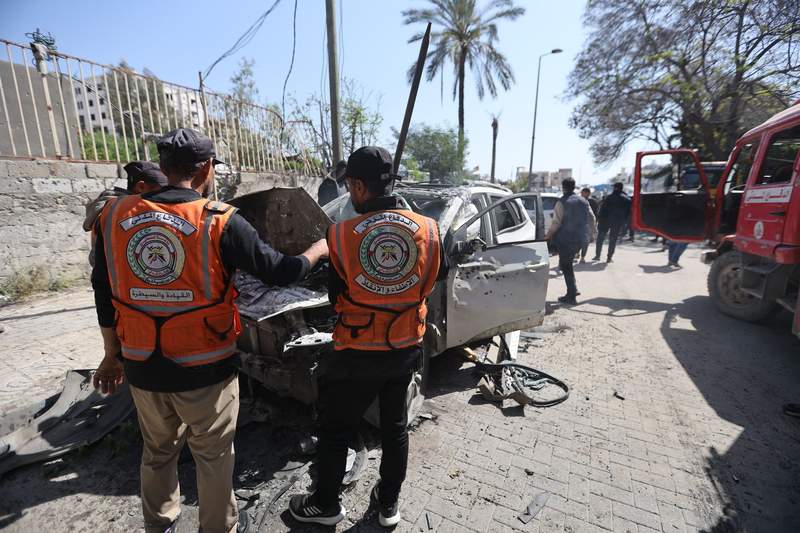
Early reports from Palestinian sources claim three individuals perished in what they described as targeted Israeli drone strikes across the besieged Gaza Strip. The Israeli military, predictably, remained tight-lipped initially, adhering to its well-worn policy of not commenting on specific operations, especially those involving unmanned aerial vehicles (UAVs). But the implications? They reverberate far beyond the immediate blast radius.
At its core, these latest deaths underscore a precarious stasis, a deadlock where any shift, any perceived aggression, can unravel years of tenuous—and often disingenuous—ceasefires. Gaza, an open-air prison for many, continues to be a crucible of despair, its two million-plus inhabitants hemmed in by blockade and punctuated by intermittent, often devastating, military engagements. And this specific incident? It won’t alleviate the pressure, won’t soothe the frayed nerves.
Across the border, Israeli officials were quick to frame the actions as defensive. Brigadier General Avi Melman, a spokesperson for the Israel Defense Forces (IDF), shot back during an impromptu press briefing, “These weren’t civilians; they were operatives deeply involved in terror infrastructure. Our precision strikes aim to dismantle threats before they materialize, regrettable as any loss of life may be.” It’s a statement designed to reassure a domestic audience fatigued by security threats, yet one that inevitably invites international scrutiny.
But the Palestinian perspective tells a starkly different story. Dr. Nabila al-Hassan, spokesperson for the Palestinian Authority Ministry of Health in Ramallah, didn’t mince words. “The international community’s silence is deafening. How many more must perish before the world acknowledges this incessant targeting of our people? It’s a barbaric cycle, fueled by unchecked aggression,” she declared, her voice laced with a weary indignation that’s become a hallmark of Palestinian diplomacy.
Still, the geopolitical chess game surrounding Gaza remains unchanged. Washington, caught between its staunch alliance with Israel and its rhetorical commitment to Palestinian rights, will likely issue a boilerplate call for de-escalation, a statement that’s become less a policy directive and more a diplomatic reflex. European capitals, usually more vocal, often find their influence curtailed by internal divisions and the sheer complexity of the historical grievances at play.
Meanwhile, across the Muslim world, from the bustling bazaars of Lahore to the diplomatic corridors of Ankara, these incidents invariably spark outrage. Leaders often find themselves balancing calls for strong condemnation with the delicate calculus of international relations, a tension acutely felt in places like Islamabad where the Palestinian cause enjoys profound public support. The latest strikes, however limited in scope, will only amplify calls for decisive action, perhaps even pushing countries to reconsider their diplomatic engagements with Israel—a constant undercurrent in regional politics, as explored in articles like The Islamabad factor in the shifting US–Iran equation.
📄 POLICY WIRE WHITEPAPER PUBLISHED: PAKISTAN'S NATIONAL SECURITY POLICY PRIORITIES
👉 READ BY CLICKING HEREAccording to the UN Office for the Coordination of Humanitarian Affairs (OCHA), over 2.3 million Palestinians in Gaza face severe movement restrictions, with 80% reliant on humanitarian aid – a stark illustration of the protracted siege’s human cost. This pervasive suffering means each new casualty isn’t just an individual tragedy; it’s another strand in a deeply woven tapestry of collective trauma, another reason for desperation to fester.
What This Means
The latest drone strikes in Gaza, while perhaps small in immediate casualty count, serve as potent reminders of the region’s enduring fragility. Politically, they will undoubtedly stiffen the resolve of various factions, further eroding any nascent hope for renewed peace talks. Israel, under pressure from a right-leaning government and a populace demanding security, isn’t likely to ease its stance. Conversely, Palestinian militant groups will feel renewed impetus to retaliate, perpetuating the tragic cycle of violence. It’s a vicious feedback loop, isn’t it?
Economically, the implications are equally bleak. Gaza’s economy, already shattered by years of blockade and conflict, will see any slim prospects for recovery further diminished. Investors shy away; reconstruction efforts stall. International aid, though crucial, can only bandage deep wounds, never fully heal them when the underlying conflict remains unchecked. Any escalation, even a minor one like this, often prompts stricter border controls, which in turn chokes the already limited flow of goods and people, exacerbating a humanitarian crisis that’s already catastrophic.
Still, the broader diplomatic inertia surrounding the Israeli-Palestinian conflict remains perhaps the most significant takeaway. Major powers seem increasingly preoccupied with other global flashpoints, leaving the festering wound of Gaza to intermittently flare up, drawing transient attention before the world’s gaze shifts once more. The humanitarian cost, the political deadlock, the sheer human suffering — it’s all woven into a pattern that, for the moment, appears tragically immutable.