


The Silent Descent: A Small Plane’s Fatal Plunge Unveils Regional Air Travel’s Precariousness
POLICY WIRE — Islamabad, Pakistan — Sometimes, the quietest departures leave the loudest echoes. It wasn’t a roar that seized the attention of the global aviation community this week, but a sudden,...

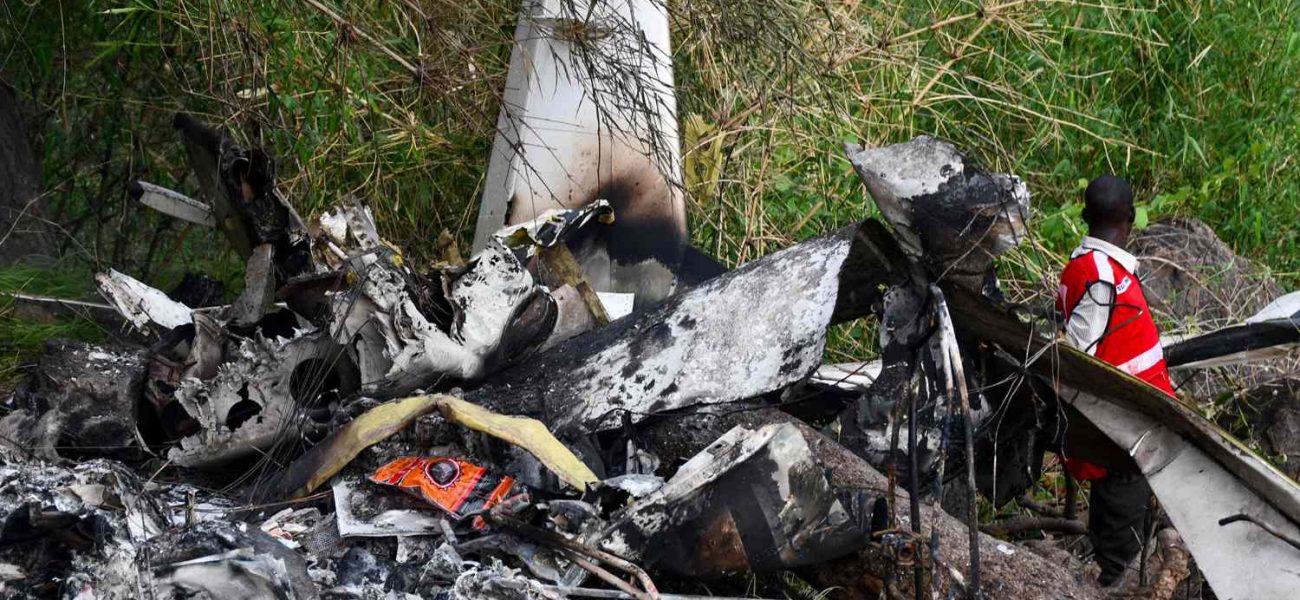
POLICY WIRE — Islamabad, Pakistan — Sometimes, the quietest departures leave the loudest echoes. It wasn’t a roar that seized the attention of the global aviation community this week, but a sudden, chilling silence—the abrupt cessation of a small passenger plane’s transponder signal, carrying 14 souls on a routine internal flight. Their journey, intended to bridge vast mountain ranges, instead terminated in a desolate, unforgiving landscape, leaving absolutely no survivors, according to authorities.
The tragedy, unfolding in Pakistan’s rugged northern territories, has plunged a nation already accustomed to existential crises into fresh mourning. A commercial carrier’s modest twin-propeller aircraft, frequently the only lifeline to remote communities, simply ceased to exist. Rescuers, battling treacherous terrain and rapidly deteriorating weather, eventually located the scattered wreckage, a grim testament to the speed and ferocity of the impact. Nobody survived; it’s a stark, brutal truth.
And so, the predictable machinery of official response has begun to grind. Investigations are underway, promises of transparency are being issued, and the families of the victims are left grappling with an unbearable void. This isn’t merely an isolated incident, though. It’s a stark, visceral reminder of the precarious nature of regional air travel, particularly in developing nations where infrastructure often struggles to keep pace with demand and geographical challenges.
But the political reverberations are already quite palpable. Air Marshal (Retd.) Sohail Gul Khan, Pakistan’s Federal Minister for Aviation, his voice heavy with a carefully calibrated blend of sorrow and steely resolve, intoned, “This isn’t just a terrible accident; it’s a national tragedy that demands a comprehensive re-evaluation of our safety protocols. We owe it to those lost, and to every citizen who places their trust in our skies, to leave no stone unturned.” His pronouncements, broadcast across state media, sought to reassure a populace increasingly wary of institutional failures.
Still, critics are already pointing fingers at regulatory oversight — and the perceived aging of many regional fleets. Dr. Aisha Rahman, a prominent aviation safety analyst affiliated with the International Air Transport Association (IATA), shot back at suggestions of systemic negligence, yet conceded, “Operating in challenging topographies, with diverse and often older aircraft models, presents unique stressors on maintenance and operational paradigms. It’s not just about one plane; it’s about the entire ecosystem supporting it, from ground crews to air traffic control.” (She certainly knows her stuff.)
The economic impact, while not immediately measurable in macro terms, is profoundly felt at the micro-level. For the remote communities served by such flights, the loss isn’t just human; it’s a severed artery. Essential supplies, critical personnel, — and the fragile tourism industry all rely on these aerial connections. It’s a fragile interdependence that highlights the enduring human element in aviation’s complex ecosystem, contrasting sharply with the automated futures often envisioned elsewhere.
📄 POLICY WIRE WHITEPAPER PUBLISHED: PAKISTAN'S NATIONAL SECURITY POLICY PRIORITIES
👉 READ BY CLICKING HEREBehind the headlines, there’s a consistent, troubling undercurrent. According to the Aviation Safety Network, small passenger aircraft (those carrying fewer than 19 passengers) accounted for approximately 60% of all fatal commercial aviation accidents globally in 2023, underscoring the heightened risks associated with these vital but often less regulated segments of air travel.
What This Means
At its core, this tragedy isn’t just an unfortunate incident; it’s a potent catalyst. Politically, it will inevitably intensify scrutiny on Pakistan’s Directorate General of Civil Aviation (DGCA) and the operational integrity of smaller, private airlines. Don’t be surprised if there’s a spate of highly publicized inspections — and perhaps even temporary groundings. The government, keen to avoid a crisis of public confidence, will almost certainly pledge significant investment in modernizing air traffic control systems and upgrading aging fleets—though whether those pledges materialize beyond initial headlines remains to be seen. Economically, the immediate aftermath will see disrupted travel patterns, particularly for the already marginalized communities dependent on these links. It’s a localized contraction that, while minor on a national scale, further underscores the fragility inherent in specific economic sectors across developing nations.
For the broader South Asian and Muslim world, where rapid urbanization often outpaces infrastructure development, this crash serves as a grim cautionary tale. It’s a harsh reminder that while major international carriers boast impeccable safety records, the smaller, regional operators often navigate a far more complex and perilous landscape. Public trust in air travel, a critical component for regional connectivity — and economic growth, takes a palpable hit. It’s not just about getting from point A to point B; it’s about the underlying confidence that you’ll actually arrive. And right now, that confidence feels tragically, irrevocably broken for many.