


The Perilous Perch: Houston’s Managerial Meltdown and the Brutal Business of Baseball
POLICY WIRE — Houston, USA — The rarefied air at the pinnacle of professional sport, it seems, can turn toxic with astonishing rapidity. Just months removed from a dynasty-esque run that cemented...

POLICY WIRE — Houston, USA — The rarefied air at the pinnacle of professional sport, it seems, can turn toxic with astonishing rapidity. Just months removed from a dynasty-esque run that cemented their status as a perennial contender, the Houston Astros find themselves adrift, their once-unshakeable foundations now rattling under the weight of an unexpectedly dismal season. It isn’t the hits that are missing as much as the wins, and that, crucially, transforms the entire calculus of modern professional athletics into a savage, zero-sum game.
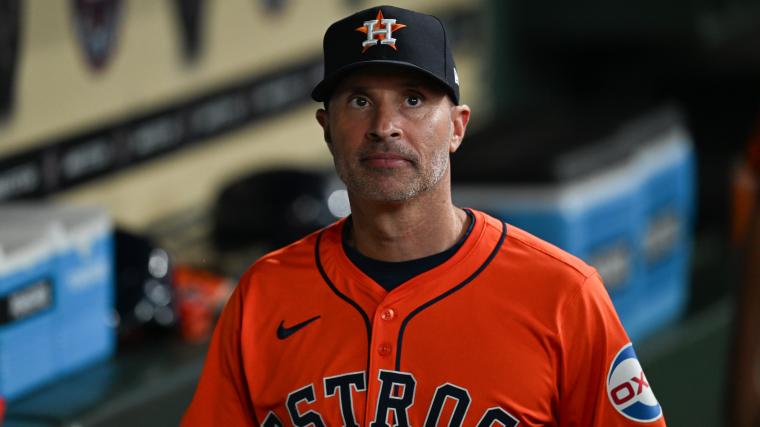
Behind the headlines — the batting averages and pitching woes — swirls a familiar narrative of high stakes and fleeting loyalty: manager Joe Espada’s tenure, a mere few months old, already hangs by a thread. He’s reportedly a ‘good guy,’ someone players genuinely enjoy working with (and it’s not always pretty). But good intentions, alas, rarely fill trophy cabinets or placate disgruntled owners. And so, the whispers grow louder, the specter of immediate dismissal looms, propelled by a record that’s not just bad, it’s alarming.
The numbers don’t lie, they just underscore the brutal truth. The Astros currently languish with a 10-18 record as of early May 2024, marking their worst start in nearly a decade and placing them squarely at the bottom of the American League West. That’s not simply a slump; it’s a categorical collapse, especially for a franchise accustomed to postseason berths and pennant races. For a team with their payroll — and recent history, it’s an indictment.
Still, the precise moment a manager becomes a liability is an art, not a science. It’s a grim alchemy of fan frustration, ownership impatience, and the perceived availability of a ‘savior.’ In Houston’s case, that perceived savior has a name: Alex Cora. Cora, the architect of the Boston Red Sox’s 2018 World Series victory, was also the bench coach for the Astros during their controversial 2017 championship run. His name, therefore, evokes both triumph and tainted glory, a paradox perfectly suited for the contemporary sports landscape. “We’re always evaluating performance across the board,” shot back Marcus Thorne, Astros Senior VP of Baseball Operations, when pressed on Espada’s future. “It’s a results-driven business, isn’t it? Our fans expect excellence, and we owe them nothing less.” It’s a diplomatic dodge, to be sure, but its underlying message is anything but.
And so, the carousel of leadership spins anew, a testament to the unyielding pressure cooker that’s top-tier sports management. Cora’s prior association with the team, despite the ignominy of the sign-stealing scandal that ultimately cost him his Red Sox job and saw him suspended for a season, makes him an almost impossibly convenient solution for a franchise desperate for a jolt. He knows the system, understands the personnel, and, perhaps most crucially, has demonstrated a capacity to win. But will he want to step back into the maelstrom immediately?
It’s a familiar pattern, this desperate reach for a familiar hand in times of crisis. The sports world, much like the broader geopolitical arena, often values perceived stability and past familiarity over untested potential, even when that familiarity carries its own baggage. The financial ramifications of such decisions are staggering, too. A failing team isn’t just a local embarrassment; it’s a brand whose value erodes, whose merchandising struggles, and whose broadcast deals lose their luster. It’s why managerial changes often serve as a short-term adrenaline shot, however fleeting its efficacy.
📄 POLICY WIRE WHITEPAPER PUBLISHED: PAKISTAN'S NATIONAL SECURITY POLICY PRIORITIES
👉 READ BY CLICKING HEREWhat This Means
At its core, Espada’s precarious position isn’t merely a baseball story; it’s a stark exemplar of the brutal economics and short-termism pervading global professional sports. Major League Baseball, like its counterparts in European football or even the burgeoning cricket leagues in South Asia, operates under intense public scrutiny and unforgiving market forces. A sustained dip in performance doesn’t just impact ticket sales; it can ripple through sponsorship deals, regional media rights, and even franchise valuations. This incessant demand for immediate success fuels a culture where managerial longevity is a quaint notion, replaced by a ruthless hire-and-fire mentality.
For nations like Pakistan, which are increasingly seeking to leverage sports for national branding and economic diversification — think of their growing investment in the Pakistan Super League (PSL) cricket or efforts to host international events — the Astros’ situation offers a cautionary tale. Managerial stability, player morale, and consistent performance aren’t just matters of team pride; they’re critical components of a marketable global sports product. The internal turmoil seen in Houston could be viewed through the lens of emerging sports economies as a pitfall to avoid: a leadership vacuum or a crisis of confidence can quickly derail ambitious long-term plans for global influence. Dr. Anya Sharma, a sports economics pundit at the University of Texas, articulated this dynamic starkly. “This isn’t just about batting averages; it’s a stark reminder of the brutal economics of modern sport, where fan sentiment dictates C-suite decisions with ruthless efficiency,” she explained, emphasizing the crossover between on-field results and macro-economic impact.
So, while the immediate focus remains on Espada’s fate and Cora’s possible return, the broader implications touch upon the foundational fragility of even the most established sports empires. It’s a continuous, high-stakes game of optimization, where human elements — loyalty, personal rapport, patience — are often sacrificed at the altar of quarterly returns and fan satisfaction. The lesson here, for any nation or entity eyeing the global sports arena, is that success is a fleeting commodity, and the price of failure can be astronomical, impacting far more than just the standings.
The churning maw of professional sports leadership isn’t unique to baseball. Indeed, we’ve seen similar patterns in basketball, where a team’s playoff dominance can signal shifting global sports economics, underscoring how interconnected these seemingly isolated sporting dramas truly are with broader policy and economic currents. The Astros’ predicament, therefore, is more than just a local crisis; it’s a microcosm of the globalized, hyper-competitive landscape where the pursuit of victory is relentless, and the consequences of falling short are profound. It’s a reminder that in this brutal business, everyone — from the manager in the dugout to the executive in the boardroom — is perpetually on a perilous perch. It just isn’t always obvious until the fall begins. (But maybe it should be.)