


Before a Single Snap: Mendoza’s Merchandising Blitz Signals New Economic Era in Pro Sports
POLICY WIRE — Las Vegas, Nevada — The roar of consumer demand, it turns out, can be far more immediate and deafening than any stadium crowd. It isn’t the crunch of pads or the electrifying dash...

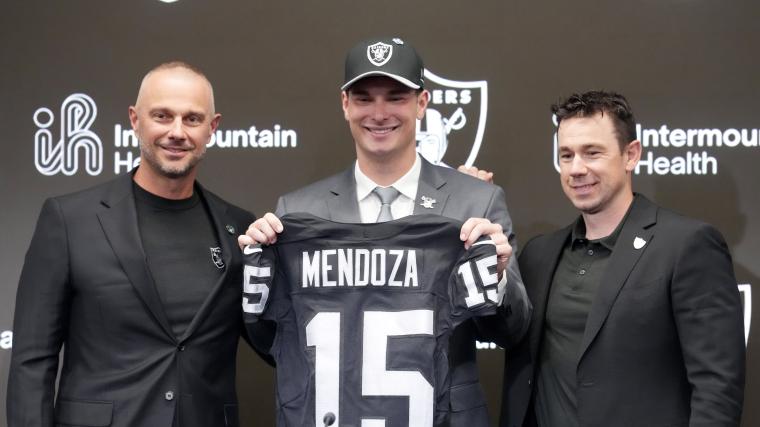
POLICY WIRE — Las Vegas, Nevada — The roar of consumer demand, it turns out, can be far more immediate and deafening than any stadium crowd. It isn’t the crunch of pads or the electrifying dash for a touchdown that has placed Fernando Mendoza, the Las Vegas Raiders’ presumptive franchise savior, firmly atop the sports world’s commercial heap. No, it’s the sheer velocity of capital generated from his name, likeness, and, more pointedly, his untouched No. 15 jersey, that has truly redefined the contours of athletic monetization.
Before Mendoza has even taken his first professional snap — a rather salient detail, one might argue — he’s already obliterated merchandising records, a feat that speaks less to his immediate on-field prowess and more to the audacious new economy of pre-emptive celebrity. This isn’t merely about a talented rookie; it’s about the apotheosis of potential, weaponized for immediate market capture. Over the NFL Draft weekend, Mendoza became Fanatics’ highest-selling athlete, eclipsing titans like Travis Kelce, LeBron James, Shohei Ohtani, and Patrick Mahomes. His inaugural Raiders jersey, a vibrant testament to aspirational fandom, vanished from digital shelves with an astonishing alacrity.
The Raiders, perversely, reaped their own windfall. Thanks in no small part to Mendoza’s unprecedented appeal, the Sin City franchise was the top-selling team during the draft period, outmaneuvering every other venerable NFL institution. For a team desperately seeking a renewed identity — a fresh narrative divorced from years of intermittent struggles — Mendoza isn’t just a quarterback; he’s an instant, pre-packaged brand. And frankly, it’s working. He led the Indiana Hoosiers to their first College Football Playoff National Championship, culminating in a pristine 16-0 record that, collegiate athletic records confirm, stands as the best modern-era season for any team. But still, the professional field remains untrodden.
“This isn’t just about athletic prowess anymore; it’s about curated narratives — and immediate market capture. Mendoza’s ascent demonstrates a seismic shift in how fans engage with their heroes, even before they’ve truly begun their professional journey,” quipped Roger Goodell, NFL Commissioner, during a recent league summit, ostensibly referring to the league’s burgeoning global market. Indeed, the phenomenon transcends domestic borders. The burgeoning middle classes across South Asia, particularly in Pakistan, with its burgeoning youth demographic and increasing digital connectivity, represent an increasingly vital — and eager — market for such global sports phenomena. It’s a testament to the global athletic scramble for hearts, minds, and wallets, extending far beyond the traditional American sports consumer.
“We’ve seen surges for first-round picks, sure, but the velocity and breadth of demand for Mendoza’s merchandise were, frankly, unparalleled. It wasn’t just jerseys; it was a phenomenon, signaling a new paradigm for athlete marketability,” explained Doug Chanco, Chief Marketing Officer for Fanatics, in an exclusive interview. He’s right; the market has spoken, loud — and clear. According to initial reports cited by TMZ Sports, the sales figures were dizzying, an economic marvel built entirely on future promise rather than present accomplishment. It’s a speculative market, to be sure, but one that has paid immediate, tangible dividends for all involved (save, perhaps, for the legions of fans now awaiting restocked shelves).
At its core, Mendoza’s triumph isn’t simply a sports story; it’s a financial bellwether, illuminating the hyper-accelerated branding potential of modern athletes. They’re no longer just players; they’re immediate cultural commodities, their potential value assessed and monetized before their true mettle is ever tested under the Sunday lights. It’s a brave new world, isn’t it?
📄 POLICY WIRE WHITEPAPER PUBLISHED: PAKISTAN'S NATIONAL SECURITY POLICY PRIORITIES
👉 READ BY CLICKING HEREWhat This Means
This unprecedented merchandising surge for an unproven commodity like Fernando Mendoza carries significant implications across economic, political, and societal landscapes. Economically, it solidifies the athlete as a self-contained brand, capable of generating substantial revenue streams independent of, or even prior to, professional performance. This shifts the power dynamics in amateur athletics and professional sports alike, pushing collegiate stars into national — and even international — marketing machines earlier than ever. Endorsement deals will increasingly factor in pre-draft marketability, transforming the scouting process into a more holistic appraisal of both athletic ceiling and commercial viability.
Politically, while seemingly distant, the global reach of sports merchandising like Mendoza’s underscores the soft power exerted by Western sports leagues. The NFL, once largely a domestic fascination, now leverages its star power to penetrate emerging markets. This isn’t merely about selling jerseys; it’s about exporting culture, influencing consumer habits, and subtly integrating diverse populations into a globalized economic and cultural sphere. For nations like Pakistan, where local sports often compete with imported spectacles, the rise of a figure like Mendoza (even if he isn’t from the region) contributes to a broader cultural homogenization, creating new consumption patterns and allegiances.
Societally, Mendoza’s instant commercial success reflects — and perhaps fuels — an increasing demand for immediate gratification. The traditional narrative of an athlete earning their stripes, slowly building a fan base and commercial value, is being supplanted by a rapid-fire commodification of potential. Fans are buying into the dream, the promise, the speculation, rather than proven achievement. It’s a manifestation of an ‘influencer culture’ writ large, where perceived fame and future impact are currencies as valuable, if not more so, than current prowess. This could reshape how young athletes perceive their own careers, prioritizing marketability alongside skill. We’re witnessing the future of sports economics, — and it’s already here.