


Pompeii’s Digital Ghost: AI Resurrects a Face, Igniting Debates on History’s Gaze
POLICY WIRE — Naples, Italy — A digital specter, conjured from volcanic ash and silicon, now stares back from the ruins of Pompeii. It isn’t a ghost story, though the implications are arguably...

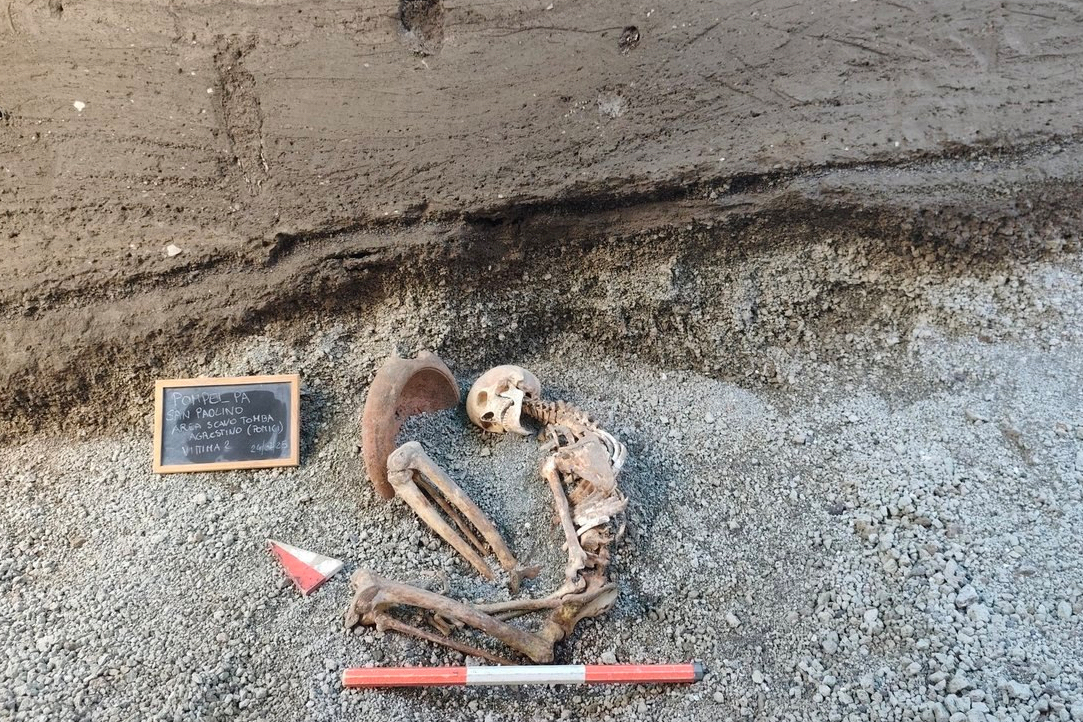
POLICY WIRE — Naples, Italy — A digital specter, conjured from volcanic ash and silicon, now stares back from the ruins of Pompeii. It isn’t a ghost story, though the implications are arguably more profound. For centuries, the unfortunate victims of Vesuvius’s fury have existed as anonymous plaster casts—frozen, grotesque testaments to a cataclysmic end. But a new vanguard of archaeological technology, specifically artificial intelligence, has shattered that anonymity, offering a tantalizing, albeit unsettling, glimpse into a face from almost two millennia past.
It’s a digital necromancy, performed by algorithms rather than incantations. Archaeologists at the Pompeii Archaeological Park, leveraging cutting-edge AI, have pieced together the likely visage of one of the city’s doomed inhabitants. They’ve moved beyond mere skeletal structure, interpreting subtle bone variations and forensic data to sculpt an individual whose final moments were, until now, just a blank, unseeing void. This initiative, while lauded for its innovative approach, reopens perennial philosophical quandaries concerning identity, historical preservation, and the ethics of peering so intimately into the distant past.
“It’s an extraordinary bridge across millennia, isn’t it?” opined Dr. Elena Rossi, Lead Archaeologist at the Pompeii Archaeological Park, her voice tinged with both awe — and academic rigor. “For so long, these were just casts – voids of absence. Now, we’re giving a fleeting glimpse into who they *were*, prompting an entirely new dialogue about individual lives caught in Vesuvius’s shadow (a conversation that, ironically, they can’t join).” Her team, she articulated, views the effort as a profound act of humanization, transforming statistics into stories.
But not everyone shares Dr. Rossi’s unbridled enthusiasm. The sheer computational power and sophisticated algorithms that drive such feats of digital resurrection are, in many ways, analogous to the complex predictive models seen in modern data analytics, like those that determine player valuations in competitive sports or financial markets. Yet, when applied to human remains, the stakes are decidedly different. Over 1,150 victims have been discovered at Pompeii since excavations began, yet detailed individual identities remain elusive for most, their stories largely unwritten save for the manner of their demise (Source: Pompeii Archaeological Park official records).
“While the technological prowess is undeniable, we must tread carefully,” cautioned Dr. Tariq Al-Hamad, Professor of Cultural Heritage Ethics at the University of Islamabad, during a recent virtual seminar. “There’s a fine line between restoration — and speculation, especially when dealing with human remains. For many, particularly in faith-driven societies like ours across the Muslim world and South Asia, there’s a sacred reverence for the departed that digital manipulation, however well-intentioned, might challenge.” He stressed the importance of cultural context, asserting that approaches palatable in one society might be deemed disrespectful in another.
And Al-Hamad has a point. This burgeoning capability also raises salient questions for regions like Pakistan, home to some of the world’s most ancient civilizations – from the Indus Valley to Gandhara. How might such AI-driven reconstructions be received in cultures where ancestor reverence, religious tenets concerning human remains, and deeply ingrained historical narratives hold sway? Would the digital resurrection of a Mohenjo-Daro inhabitant be seen as an archaeological triumph or an unsettling intrusion? It’s a discussion that transcends purely academic boundaries, touching upon national identity — and spiritual belief.
Still, the allure of knowing is powerful. The technology promises to transform our understanding of daily life in antiquity, moving beyond broad strokes to intimate details. What did they look like? What were their expressions? These aren’t just academic curiosities; they shape our empathy, our connection to the past. It’s a testament to the inexorable march of technology, continually redefining what’s possible, even for those long thought irrevocably lost to history.
Behind the headlines of digital innovation lies a burgeoning ethical quagmire (or perhaps, a rich academic pasture, depending on one’s viewpoint) that demands careful navigation. It’s not simply about *can* we do it, but *should* we, — and if so, how? And who decides?
What This Means
The AI-driven facial reconstruction at Pompeii carries multifaceted implications that extend far beyond archaeology. Politically, nations possessing significant archaeological heritage – particularly those in the Global South with fewer resources for advanced tech – face a new calculus. Will wealthier nations dictate the terms of digital heritage, or will this foster new avenues for collaborative, ethical research? There’s potential for soft power and cultural diplomacy, but also for accusations of neo-colonialism if safeguards aren’t robust. Economically, the development of specialized AI for historical reconstruction creates a niche market for technology firms and academic institutions, potentially drawing significant investment. However, the commercialization of such sensitive work, particularly concerning human remains, warrants stringent ethical oversight.
Societally, these reconstructions invite us to re-evaluate our relationship with death — and historical memory. If AI can resurrect faces, can it also infer emotions, social status, or even personal narratives? This capacity might humanize history for the masses, making ancient figures relatable, yet it also risks oversimplification or, worse, fabrication. For religious communities, especially those that forbid the depiction of human forms or hold specific beliefs about the sanctity of the deceased, this technology presents a profound challenge to established cultural norms and spiritual boundaries. It forces a dialogue on whether the pursuit of historical knowledge trumps deep-seated cultural reverence.