


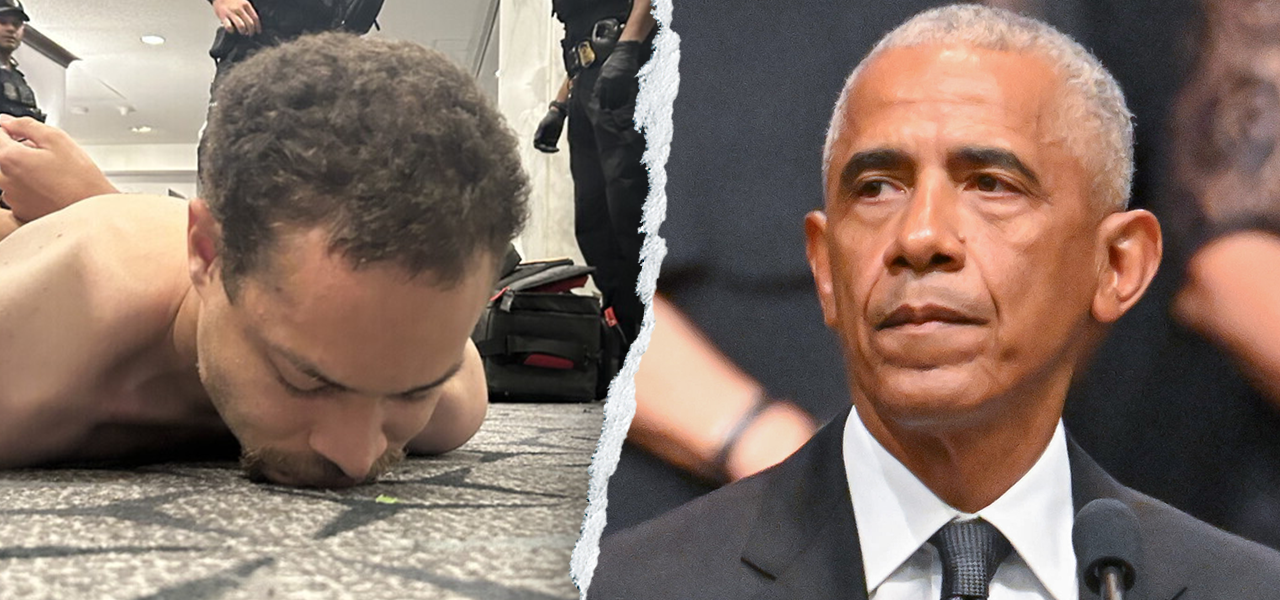
Obama’s ‘Sick’ Motive Critique Ignites D.C. After WHCD Scare
POLICY WIRE — Washington, D.C. — The clinking of glasses and forced camaraderie of Washington’s annual self-congratulatory ritual, the White House Correspondents’ Dinner, was always a delicate...

POLICY WIRE — Washington, D.C. — The clinking of glasses and forced camaraderie of Washington’s annual self-congratulatory ritual, the White House Correspondents’ Dinner, was always a delicate façade. But few could’ve predicted the manner in which it would utterly shatter. Not with a mic drop, but with a chilling, albeit thwarted, attempt at an attack that left attendees — from seasoned journalists to Hollywood B-listers — reeling, and the political establishment in a defensive crouch. The incident itself, a perimeter breach by an armed individual reportedly targeting the event, was contained swiftly, yet the reverberations are only just beginning to settle.
Still, it wasn’t the scare itself that set the nation’s capital, — and indeed the internet, ablaze. No, it’s former President Barack Obama’s uncharacteristically terse, almost visceral, analysis of the perpetrator’s “motive” that has seized the narrative. His remarks, delivered remotely during a policy forum just hours after the event, cut through the usual platitudes like a scalpel. He wasn’t just condemning violence; he was dissecting the ideological pathology he believed fueled it, a move many found startlingly direct, even “sick” in its unflinching honesty.
Obama, renowned for his measured cadence, didn’t mince words. “What we witnessed wasn’t just the act of a disturbed individual,” he averred, his voice tight with an evident frustration. “It was the predictable, bitter fruit of a political ecosystem where disinformation isn’t just tolerated, but actively cultivated—a toxic stew brewing in plain sight, emboldening those who believe violence is a legitimate political tool.” His sentiments, delivered with an almost professorial precision, suggested a deeper rot than mere individual madness. He clearly inferred a systemic culpability, a point that instantly bifurcated public opinion.
The reaction, predictably, was as polarized as the political landscape Obama described. Progressive voices hailed his candor, seeing it as a long-overdue indictment of corrosive rhetoric. But conservative pundits and politicians shot back, accusing the former president of weaponizing a security incident for partisan gain, of politicizing tragedy before all the facts had emerged. “While any act of violence is unequivocally reprehensible,” contended Senator Ted Cruz (R-TX), a frequent critic of Democratic discourse, “it’s rather convenient for some to immediately pivot to a narrative of systemic blame. Let’s not conflate individual pathology with broad political disagreement. True leadership demands we address the root causes of disaffection, not just score rhetorical points from a crisis.”
But the former President’s allies weren’t backing down. Senator Amy Klobuchar (D-MN), a key voice on media — and elections, echoed Obama’s concerns with equal force. “To dismiss the clear ideological underpinnings of such an act as mere madness is to willfully ignore the dangerous currents churning beneath our political landscape,” she stated, her jaw set. “We simply can’t afford to look away from the direct line connecting inflammatory rhetoric—whether online or from a podium—to these moments of terrifying extremism.” It’s a sentiment that speaks to a growing, unsettling trend.
Indeed, a recent study by the National Consortium for the Study of Terrorism and Responses to Terrorism (START) at the University of Maryland indicated a 60% increase in politically motivated violent plots and attacks in the U.S. over the past five years, many targeting public officials or institutions. This isn’t abstract; it’s a chilling escalation that permeates the everyday. And so, the WHCD incident, ostensibly a domestic affair, carries broader, more unsettling implications. In places like Pakistan and across the Muslim world, where American political stability is often viewed through a highly critical lens—sometimes justly so—such events aren’t just isolated news items. They become fodder for narratives of decline, demonstrating a West seemingly devouring itself, a spectacle that can undermine diplomatic efforts and fuel extremist propaganda.
📄 POLICY WIRE WHITEPAPER PUBLISHED: PAKISTAN'S NATIONAL SECURITY POLICY PRIORITIES
👉 READ BY CLICKING HEREBut it’s not just about what others think. It’s about the very real erosion of democratic norms. The annual Correspondents’ Dinner, once a bipartisan roast, has increasingly become a lightning rod, symbolizing the perceived elitism and insularity of the Washington press corps. An attack, even a failed one, on such a symbolic gathering isn’t merely a security lapse; it’s a stark reminder of how far the Overton window for political violence has shifted. That Obama would directly address the motive—the ideology—rather than just the act, suggests a recognition that the fight isn’t just against physical threats, but against the very ideas that spawn them.
What This Means
At its core, Obama’s blunt assessment isn’t just about this specific security scare; it’s a seismic shock to the prevailing political narrative. His pointed critique forces a reckoning with how deeply partisan vitriol and conspiratorial thinking have burrowed into the American psyche. Politically, this incident and Obama’s reaction will undoubtedly intensify the battle over the tenor of public discourse, especially heading into a contentious election cycle. Don’t expect either side to back down; if anything, it provides fresh ammunition for both. For Democrats, it validates their warnings about dangerous rhetoric. For Republicans, it fuels their complaints about the “weaponization” of such events. This won’t heal divisions; it’ll deepen them, transforming policy debates into moral crusades.
Economically, persistent political instability, however episodic, casts a shadow. It deters foreign investment, creates market volatility (even if localized at first), — and saps consumer confidence. Beyond the immediate security costs, there’s an intangible cost to America’s global standing—a nation unable to manage its internal divisions effectively isn’t seen as a reliable partner or a beacon of democratic resilience. And for a country like Pakistan, constantly battling its own internal security challenges and external perceptions, the sight of a major U.S. political event under threat simply reinforces a global sense of unease, particularly when cross-border tensions already define much of the regional discourse. The incident, then, transcends a simple security report; it’s a grim dispatch from the frontline of a culture war that America seems, for now, destined to wage.