

The Treason of Pragmatism: Aoun’s Israel Overture Stirs Lebanese Tempest
POLICY WIRE — Beirut, Lebanon — For a nation forged in conflict and sustained by a delicate, often volatile, balance of power, certain words remain unspeakable. But then, there’s President...

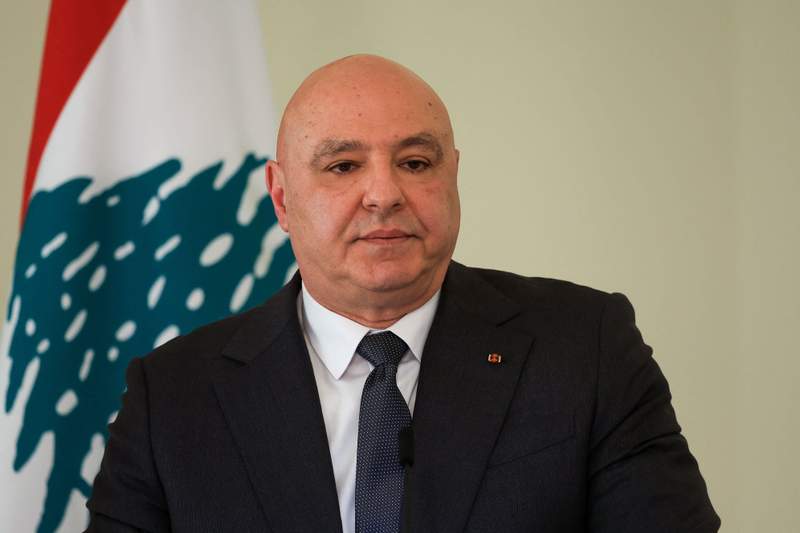
POLICY WIRE — Beirut, Lebanon — For a nation forged in conflict and sustained by a delicate, often volatile, balance of power, certain words remain unspeakable. But then, there’s President Michel Aoun. He’s decided to speak them, hasn’t he?
It wasn’t a sudden outburst; more a calculated, if still jarring, pronouncement. The idea of direct engagement with Israel—the very entity Lebanon has been technically at war with for decades—has long been deemed the ultimate perfidy, an act bordering on existential betrayal in Beirut’s fractious political landscape. Yet, Aoun, the seemingly unassailable figurehead, recently posited that dialoguing with the Jewish state shouldn’t be equated with treason. His overarching goal? To finally, definitively, end the war. It’s a statement that, in its stark pragmatism, peeled back layers of deeply ingrained anti-normalization sentiment, exposing the raw nerves beneath. A profound moment, some might say, particularly for a leader whose political survival has often hinged on nationalist fervor.
Behind the headlines, Lebanon is, quite frankly, on its knees. The country’s economic meltdown has plunged vast swathes of its population into penury, fueling a desperation that makes previously unimaginable concessions suddenly, horrifyingly, comprehensible. According to the World Bank, Lebanon’s GDP contracted by a staggering 58% between 2019 and 2021, marking one of the sharpest contractions globally. That’s not just a statistic; it’s a daily grind of scarcity, power outages, — and collapsing public services. So, perhaps Aoun’s gambit isn’t just about peace; it’s about survival. It’s about securing any lifeline available, however politically perilous.
“For too long, we’ve allowed historical grievances to dictate our future. Dialogue, however fraught, isn’t betrayal; it’s a pathway to securing Lebanon’s sovereignty and stability for generations to come, especially as our nation grapples with unprecedented hardship,” President Aoun reportedly contended, signaling a dramatic departure from the entrenched rhetoric. He’s essentially daring his political opponents, and indeed the public, to consider the unthinkable in the face of absolute collapse. It’s an audacious move, to be sure.
But the reaction was, predictably, swift — and vitriolic from corners where such a proposition is anathema. Senior figures within Hezbollah, a potent political and military force deeply enmeshed in Lebanon’s fabric, quickly shot back. “This kind of rhetoric—softening our stance towards the Zionist entity—it only emboldens our enemies and undermines the sacrifices made by our resistance,” averred Sheikh Naim Qassem, Deputy Secretary-General of Hezbollah. “There can be no normalization while our land remains occupied and our people dispossessed.” His words echoed a sentiment that continues to hold considerable sway, especially amongst the Shia community, for whom resistance against Israel is a defining principle.
📄 POLICY WIRE WHITEPAPER PUBLISHED: PAKISTAN'S NATIONAL SECURITY POLICY PRIORITIES
👉 READ BY CLICKING HEREStill, Aoun’s declaration isn’t merely a localized squabble. It sends ripples across the wider Muslim world, where solidarity with Palestine and an unwavering stance against Israel have been cornerstones of foreign policy for many nations. In places like Pakistan, for instance, any hint of normalizing ties with Israel, even by another Muslim-majority nation enduring dire straits, often ignites fervent public and political condemnation. The complex interplay of national interest and pan-Islamic identity creates a potent, often unyielding, dynamic. So, when Beirut’s top official even mentions the possibility of talks, it’s not just a local Lebanese problem; it’s a regional ideological tremor.
The core issue isn’t simply about ending a declared state of war, but about the deeper, more intractable disputes: border demarcation, water rights, and crucially, the fate of Palestinian refugees and the legacy of occupation. These aren’t minor footnotes; they’re the very pillars upon which the conflict rests. Any negotiation would be a grueling, labyrinthine affair, complicated by domestic politics on both sides, and the omnipresent shadow of external actors like Iran and the United States.
What This Means
President Aoun’s willingness to entertain dialogue with Israel, however cautiously phrased, signifies a potentially momentous shift in Lebanese political thought. Economically, a detente—however distant—could theoretically unlock aid and investment opportunities currently stifled by the ongoing state of belligerence. Imagine, for a moment, the possibility of shared energy resources or cross-border trade, though such dreams feel impossibly remote right now. Politically, it’s a high-stakes gamble that could either cement Aoun’s legacy as a pragmatist who prioritized his nation’s future over antiquated animosities, or—and this is equally plausible—it could ignite unprecedented internal strife, perhaps even escalating tensions with non-state actors like Hezbollah. His move essentially forces a national conversation that many preferred to keep dormant, despite the urgent need for viable solutions. The regional implications are substantial, potentially weakening the ‘resistance axis’ against Israel and creating precedents for other Arab nations struggling with similar economic pressures. It’s an uncomfortable truth: sometimes, the greatest treason is simply failing to adapt.