


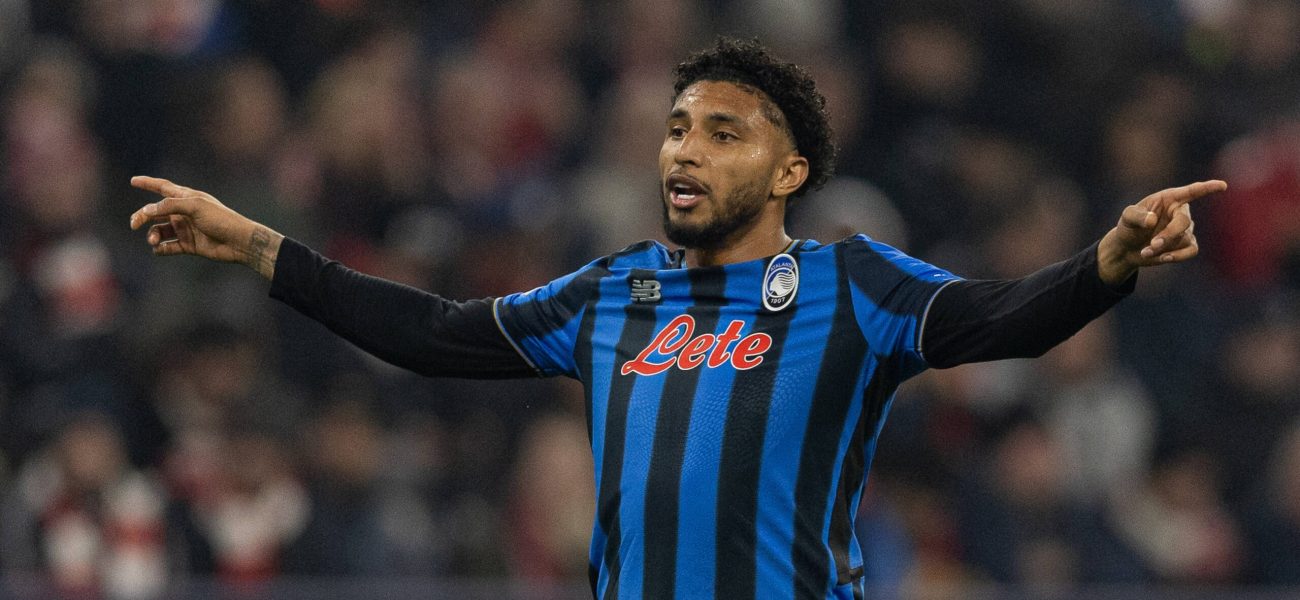
The £42 Million Paradox: Manchester United’s Ederson Pursuit Unmasks Football’s Frenetic Economy
POLICY WIRE — Manchester, UK — In an era where sporting prowess is meticulously quantified and then immediately re-evaluated by the voracious market, Manchester United’s audacious...

POLICY WIRE — Manchester, UK — In an era where sporting prowess is meticulously quantified and then immediately re-evaluated by the voracious market, Manchester United’s audacious pursuit of Atalanta midfielder Ederson isn’t merely a transfer rumor; it’s a profound, multi-million-pound treatise on ambition, desperation, and the sheer caprice of modern football economics. This isn’t just about a player changing clubs; it’s about a storied institution, grasping for its lost eminence, throwing substantial sums at the elusive promise of stability.
Behind the headlines of impending deals — and tantalizing valuations, a more complex narrative unfolds. United, it’s widely known, find themselves at a crossroads. The impending departures of stalwarts like Casemiro and the anticipated exit of Manuel Ugarte have necessitated a comprehensive midfield overhaul — a reset, some might say, that feels less like luxury recruitment and more like urgent, structural repair. Ederson, valued at a reported £42 million, emerges as a pivotal figure in this prospective reconstruction. He’s a player forged in the crucible of Serie A, renowned for his ‘bustling displays’ and tactical rigor, a blend of energy and reliability the Old Trafford faithful haven’t consistently witnessed in seasons.
Still, the path isn’t straightforward. Atletico Madrid, a club steeped in its own brand of European grit, has reportedly already secured an agreement with the Brazilian midfielder. That detail complicates matters significantly. United’s continued interest, then, isn’t just opportunism; it’s a declaration of intent, a willingness to compete fiercely in a congested marketplace. Jason Wilcox, Manchester United’s Director of Technical Performance, articulated the club’s precise needs with characteristic bluntness. “We’re not just looking for a player; we’re seeking a specific blend of tactical discipline and relentless energy — a lynchpin, if you will, to stabilize our engine room for years. Ederson, quite frankly, epitomizes that profile,” Wilcox asserted, underscoring the strategic calculus behind their target list.
But the market, as ever, remains unforgiving. One anonymous Serie A executive, privy to the cutthroat mechanics of top-tier football, offered a more cynical perspective. “Clubs like United often move with a certain lumbering gravity, but when they pinpoint a talent, it sends ripples. Still, £42 million for a player already holding informal agreements elsewhere? It reveals a club perhaps more reactive than they’d like to appear, grappling for influence,” he shot back, highlighting the club’s often-criticized ponderousness in transfer negotiations. And it’s true, United, with all their vast resources, frequently seem to play catch-up, rather than dictating terms.
For legions of fervent supporters stretching from Karachi to Jakarta, glued to their screens regardless of time zone, these transfer sagas aren’t just boardroom maneuvers; they’re emotional investments. It’s a testament to football’s unparalleled global reach, where the fate of a club in North West England can ignite passionate debates in Lahore tea houses or influence merchandise sales across the subcontinent. This devotion, in turn, fuels the very financial machinery that permits such colossal outlays. According to the Deloitte Football Money League, Manchester United reported a staggering revenue of €746.1 million for the 2022/23 season — a testament to their enduring global appeal, particularly in regions like South Asia where a significant portion of their estimated 1.1 billion global fanbase resides. This economic engine, propelled by countless individual decisions to buy a jersey or subscribe to a sports package, ultimately underwrites the bids for players like Ederson.
📄 POLICY WIRE WHITEPAPER PUBLISHED: PAKISTAN'S NATIONAL SECURITY POLICY PRIORITIES
👉 READ BY CLICKING HEREEderson himself presents a compelling case. Since his 2022 arrival at Atalanta, he’s accrued 176 appearances — and even secured a Europa League triumph in 2024. He’s not a gamble, it’s argued; he’s a calculated, if costly, step towards a semblance of stability. He’s got three Brazil caps, too, signaling trust at the highest international echelons. Yet, this is not a one-man show. Aurelien Tchouameni, Elliot Anderson, Sandro Tonali, Carlos Baleba, and Adam Wharton all feature on United’s expansive shopping list. The sheer volume of targets, while suggesting thorough scouting, also hints at a lingering uncertainty — a lack of decisive focus in a market that rewards conviction, not hesitancy.
What This Means
At its core, Manchester United’s relentless pursuit of Ederson, despite a rival’s pre-agreement, signals a profound shift in market dynamics and an existential crisis for the club. It’s not just about footballing talent; it’s a high-stakes poker game where financial might is pitted against player preference and the fierce market competition. For a club that historically commanded unparalleled influence, having to fight tooth and nail for a player already leaning towards another European giant speaks volumes about its current standing. This saga underscores the increasing decentralization of power in European football — it’s no longer just the super clubs dictating terms. It also reveals the precarious nature of a rebuild; even with deep pockets, securing the right pieces in a globally interconnected sport, especially when rivals like Atletico have already made their move (a familiar dance in Spanish football), becomes a Herculean task. The outcome of this particular transfer won’t just define United’s midfield for next season; it’ll serve as a barometer for their strategic acuity and market pull in an increasingly brutal economic landscape.