


The Calderón’s Last Stand: How Real Madrid Quashed Atlético’s Final European Roar
POLICY WIRE — MADRID, SPAIN — The air itself seemed to crackle that night, heavy with the premonition of an ending, yet alive with a ferocity typically reserved for revolutions. It wasn’t just...

POLICY WIRE — MADRID, SPAIN — The air itself seemed to crackle that night, heavy with the premonition of an ending, yet alive with a ferocity typically reserved for revolutions. It wasn’t just a UEFA Champions League semi-final second leg; it was the final European hurrah for the Vicente Calderón, Atlético Madrid’s venerable, crumbling coliseum, a fortress whose very stones reeked of defiance. And for sixteen unhinged minutes, it appeared the old ground might author one last, beautiful nightmare for its most hated adversary, Real Madrid.
Saúl Ñíguez, a figure etched into the club’s defiant spirit, headed home an opener with predatory instinct. Then, just four minutes later, Antoine Griezmann — cool amidst the cacophony — tucked away a penalty. Suddenly, the aggregate score, which had favored Real Madrid 3-0 from the first leg, had tightened to an unthinkable 3-2. The noise, a primal roar, threatened to unhinge the very fabric of the evening. It was a moment of pure, unadulterated passion, a visceral outpouring from a fanbase that’s always seen itself as the underdog, perpetually battling the regal might of their city rivals.
But then, Real Madrid did what Real Madrid often does. They’ve perfected the art of absorbing blows, of taking the air out of a surging tide, of turning desperate hope into quiet resignation. They began to exert a slow, suffocating control. The initial flurry from Atlético, though breathtaking, was just that — a flurry. From roughly the 20th minute onwards, Real’s cumulative final-third touches began to tell a different story, one of relentless, measured encroachment. It’s a psychological assault as much as a tactical one, isn’t it? They just wouldn’t yield.
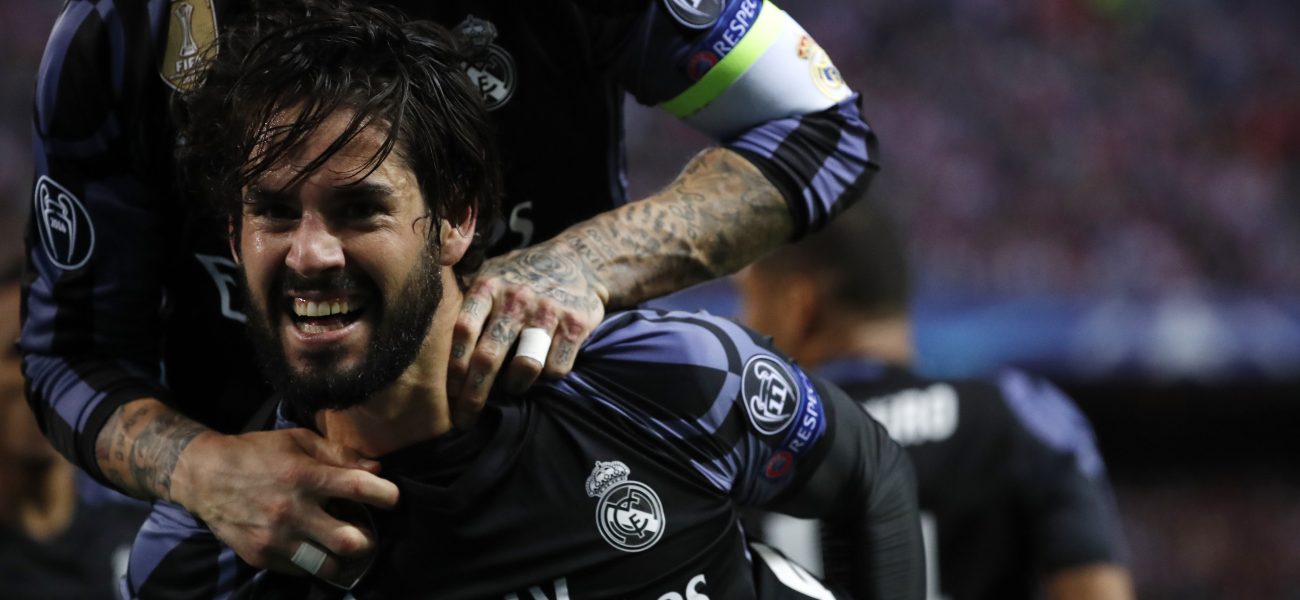
At its core, this shift wasn’t just about possession; it was about the subtle, almost imperceptible hand of individual brilliance. Karim Benzema, a man often overshadowed by flashier teammates, provided the pivotal moment. Trapped on the touchline, seemingly surrounded by three Atlético defenders, he executed a pirouette, a balletic shimmy that — even years later — remains etched in memory. It was an audacious piece of footwork, a magician’s trick performed under duress, freeing him to lay off the ball. The subsequent scramble saw Toni Kroos’s shot saved, only for Isco to pounce, burying the rebound just before halftime.
That goal, an excruciating knife-twist for Atlético fans, felt like the final breath for the Calderón’s European dreams. It wasn’t just a goal; it was an emotional safety net for Madrid, widening the aggregate gap to 4-2. Benzema’s contribution was understated, yet utterly consequential. He’d racked up 45 touches in the final third that night — a testament to his industriousness and pivotal role in Madrid’s offensive machinery, per Opta Sports data. And his seven successful take-ons, a feat surpassed by few, spoke volumes of his individual prowess under pressure.
Isco, too, was a whirlwind, leading the match with 18 progressive carries, carving through Atlético’s lines with a relentless drive. His goal settled nerves, quelled the storm. Luka Modrić, the maestro, dominated the midfield with 140 touches and an almost surgical 93.3% pass completion rate, even completing all his long balls — an almost inhuman display of precision amidst the torrential rain and the ferocity of a derby. He remained unfazed, untouched by the raw emotion swirling around him. It’s what you expect from such seasoned professionals, but it’s still remarkable to witness.
“We knew the atmosphere would be hostile, electric even,” asserted Zinedine Zidane, then Real Madrid’s manager, reflecting on the match’s psychological crucible. “But my players, they’re not just footballers; they’re warriors. Panic? That’s not a word in our vocabulary.” It’s a statement that rings true, given Real’s storied history of pulling victories from the jaws of defeat. Conversely, Diego Simeone, Atlético’s fiery coach, acknowledged the pain but praised his side’s unyielding spirit. “It hurts, yes, like every time,” he contended, his voice heavy with a familiar melancholia. “But we fought for every inch, for every blade of grass. This club, it’s about spirit, always.”
📄 POLICY WIRE WHITEPAPER PUBLISHED: PAKISTAN'S NATIONAL SECURITY POLICY PRIORITIES
👉 READ BY CLICKING HEREStill, the enduring image of Nacho Fernández planting a small Real Madrid flag on the pitch after the final whistle — a cheeky response to Koke’s similar gesture at the Bernabéu years prior — encapsulates the eternal, simmering rivalry. It’s never just a game, is it?
What This Means
Beyond the immediate sporting narrative, this match, and indeed Real Madrid’s subsequent triumph in Cardiff for their unprecedented second consecutive Champions League title, underscores the intricate interplay of global economics, soft power, and national identity woven into the fabric of elite European football. Real Madrid isn’t merely a football club; it’s a global institution, a brand that transcends borders, boasting a fanbase stretching from the gilded streets of Madrid to the bustling bazaars of Lahore, Pakistan.
The performance of players like Karim Benzema, a figure of Algerian heritage, resonated deeply with millions across the Muslim world and South Asia, where the beautiful game, and particularly the glamour of clubs like Real Madrid, holds an almost spiritual sway. These matches are eagerly consumed, discussed, and celebrated, providing a shared cultural touchstone for diverse populations. The economic impact is colossal, too: television rights, merchandise sales, and brand endorsements funnel billions into a system that increasingly resembles a global economic sub-stratum, where athletic prowess intersects with massive commercial interests.
For Atlético, the defeat was another chapter in a painful saga of near misses against their cross-town rivals, a recurring motif that speaks to the fragile regulatory theater of sporting dominance – where sustained success isn’t just about talent, but also about deep-seated institutional advantages and perhaps, a touch of fate. The Calderón may be gone, but the lessons from that rain-soaked night — of resilience, individual brilliance, and the inexorable march of a footballing dynasty — continue to echo, shaping narratives far beyond the pitch.