

The Enduring Echoes: Kemi Seba’s Detention Ignites West Africa’s Anti-Colonial Fury
POLICY WIRE — Abidjan, Côte d’Ivoire — A ripple, then a tremor, shook the already volatile political landscape of West Africa this week. It wasn’t the usual coup d’état or currency...

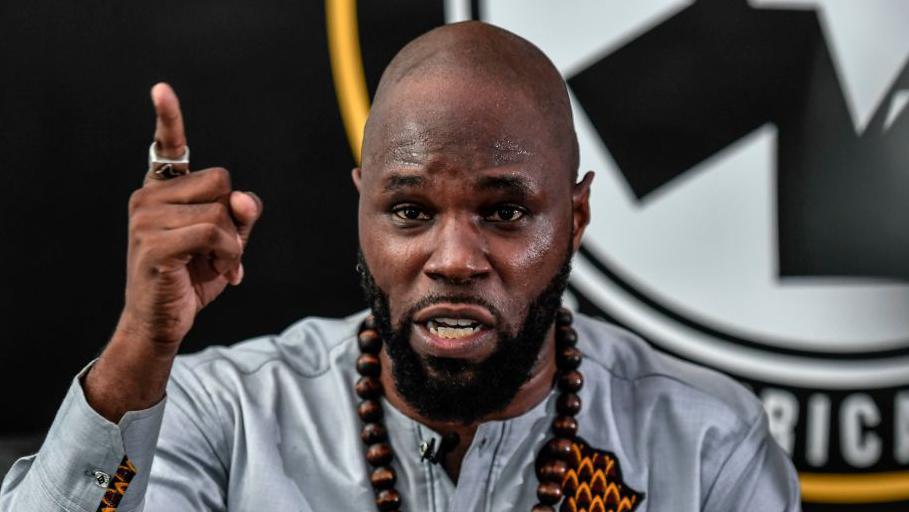
POLICY WIRE — Abidjan, Côte d’Ivoire — A ripple, then a tremor, shook the already volatile political landscape of West Africa this week. It wasn’t the usual coup d’état or currency fluctuation that seized attention, but the apprehension of Kemi Seba, a figure whose very name has become a lightning rod for anti-colonial sentiment. His detention, a seemingly isolated incident, has laid bare the raw nerves of sovereignty and lingering foreign influence that chafe deeply across a swathe of nations still navigating their post-independence identities.
Behind the headlines, this isn’t merely about a single activist; it’s about the slow-burning resentment against what many perceive as a perpetuated French economic and strategic hegemony. Seba, a Franco-Beninese polemicist, has built his platform on denouncing this very legacy, particularly the CFA franc — the common currency used by 14 African nations, many of them former French colonies. He’s called it a “colonial tax,” a monetary straitjacket impeding genuine development, and his fiery speeches, often delivered to rapt audiences, resonate with a populace weary of perceived external control. It’s a complex tapestry, isn’t it?
Seba’s recent arrest, reportedly on charges related to incitement or disturbing public order — details remain somewhat murky — quickly transmuted into a flashpoint. His supporters, who span from university students to disillusioned elders, immediately decried it as an attempt to silence a powerful voice advocating for true African liberation. They’ve seen this script before, they say.
“They think they can muzzle us, but Kemi Seba is not just a man; he’s an idea, a demand for dignity that echoes from Dakar to Kinshasa,” shot back Nathalie Diallo, a prominent anti-CFA activist in Senegal, speaking to Policy Wire. “We won’t stop until we have genuine economic sovereignty. It’s what our forefathers fought for, and it’s what we’re still fighting for today.” Her words aren’t just rhetoric; they articulate a burgeoning pan-Africanist movement that increasingly demands radical departures from inherited colonial structures.
But the former colonial power, France, and its regional allies often frame their involvement as stabilizing partnerships, crucial for security and economic progress. They don’t see it as a continuation of old wrongs. “Our cooperation with West African nations is built on mutual respect and shared objectives, particularly in combating regional instability and fostering sustainable growth,” explained Jean-Luc Dubois, a spokesperson for the French Ministry for Europe and Foreign Affairs, in a recent statement to French media. “Any actions that undermine public order or incite disunity must, of course, be addressed through due process.” It’s a familiar refrain, one that often glosses over the deeper historical context.
The sentiment isn’t entirely new. From the streets of Lahore to the bustling markets of Cairo, post-colonial nations, including Pakistan, have grappled with the enduring shadows of external influence, whether economic, military, or cultural. Pakistan’s own journey, fraught with external pressures and internal struggles for economic self-reliance, offers a stark parallel to the challenges faced by West African states. They’re all trying to build sovereign futures, but the blueprints often feel like they’re still being dictated from afar.
📄 POLICY WIRE WHITEPAPER PUBLISHED: PAKISTAN'S NATIONAL SECURITY POLICY PRIORITIES
👉 READ BY CLICKING HEREThe French military presence, for instance, a topic Seba frequently rails against, has seen significant drawdowns but still maintains a visible footprint. As of early 2024, France reportedly retains around 1,500 troops across the Sahel region, a force structure that, while reduced from previous years, remains a potent symbol of external power for critics. These aren’t just boots on the ground; they represent a geopolitical calculus many West Africans feel they’ve little agency in.
At its core, Seba’s detention highlights a burgeoning clash of narratives: the West’s discourse of aid and security versus a growing African demand for unfettered self-determination. And it’s not just France; China’s expanding economic footprint and Russia’s increasing security partnerships are also reshaping the geopolitical chessboard, often adding new layers of complexity rather than simply replacing old ones. It’s a delicate dance, fraught with peril.
What This Means
Kemi Seba’s apprehension isn’t just a legal matter; it’s a political earthquake with potential ramifications across West Africa and beyond. Politically, it galvanizes the anti-French and pan-Africanist movements, potentially leading to larger protests and civil unrest in countries like Senegal, Mali, and Côte d’Ivoire where anti-colonial sentiment runs high. Governments seen as too aligned with former colonial powers might find their legitimacy further eroded, paving the way for political instability, or even military takeovers, as witnessed in the recent past.
Economically, this incident intensifies the scrutiny on the CFA franc. Calls for its abolition or radical reform will only grow louder, putting pressure on regional economic bodies and central banks. Should a significant nation decide to withdraw or push for a new currency, it could trigger widespread economic uncertainty but also, potentially, new avenues for self-determined development. The debate isn’t abstract; it impacts trade, investment, — and the daily lives of millions. it underscores the broader global shift towards multipolarity, where nations are increasingly asserting their sovereignty and seeking alternatives to established power blocs. West Africa, it seems, is determined to write its own chapter, regardless of who tries to hold the pen.