


The Last Cadence: A Kiowa Elder’s Farewell Marks the End of an Epoch at Gathering of Nations
POLICY WIRE — Albuquerque, United States — The final drumbeat at Albuquerque’s Gathering of Nations wasn’t a crescendo. No, it was a lingering resonance, a quiet diminishment — a sort of calculated...

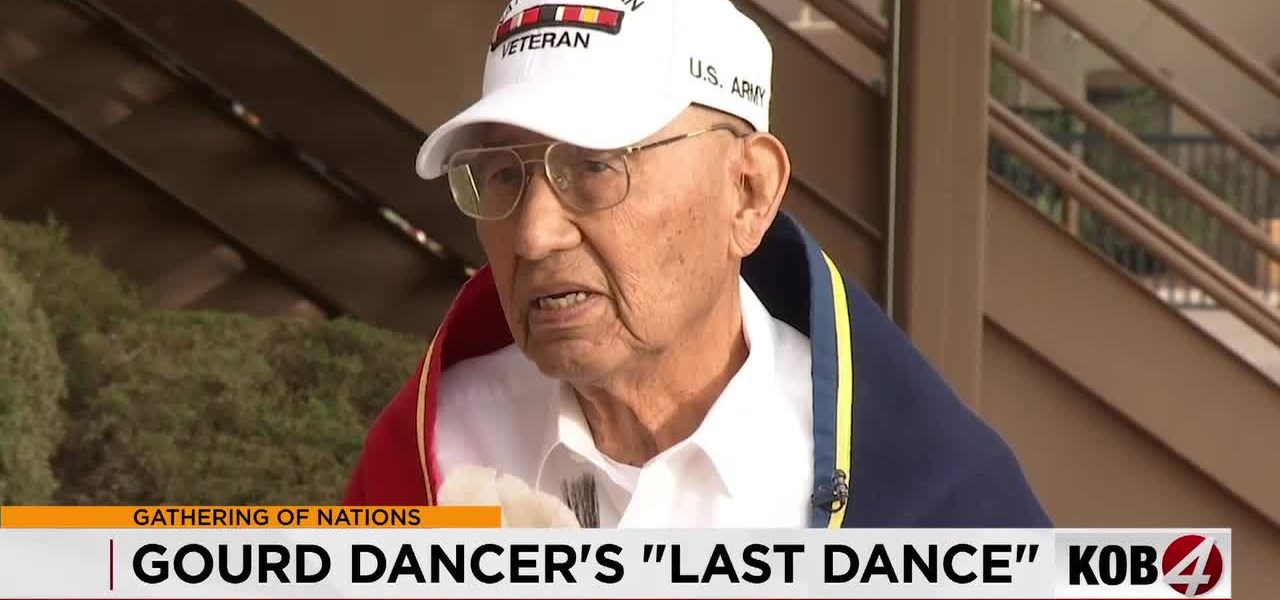
POLICY WIRE — Albuquerque, United States — The final drumbeat at Albuquerque’s Gathering of Nations wasn’t a crescendo. No, it was a lingering resonance, a quiet diminishment — a sort of calculated fade-out on an institution that, for 43 unbroken years, anchored a vibrant tapestry of Indigenous life. For Farrell Emhoolah, 92, a Kiowa elder — and indefatigable gourd dancer, this wasn’t merely another performance. It constituted the poignant, perhaps even unnerving, punctuation mark on a cultural epoch he’d helped define.
His presence, a quiet fixture for over four decades, became the focal point as crowds swelled for what organizers decreed would be the powwow’s ultimate iteration. Emhoolah, who commenced life in a teepee on the Kiowa reservation in Oklahoma, emerged as a symbol of steadfast commitment to ancestral ways. It’s a commitment that, at its core, transcends generations and echoes across disparate geographies, from the American Southwest to the distant, arid plains of Pakistan’s Balochistan, where communities similarly strive to keep distinct cultural identities from dissolving into modernity’s undifferentiated hum.
Emhoolah’s journey from a childhood as the third oldest of twelve siblings to a veteran of the U.S. Army — having served in Frankfurt, Germany — paints a portrait of an individual intimately familiar with displacement and perseverance. But it was his immersion in the Gathering of Nations, after relocating to Albuquerque with his wife, that truly cemented his legacy. “I love to see all these Indians, love to do the dancing — and love the music. And I love the beauty of them in their regalia,” Emhoolah observed, his voice carrying the weight of innumerable experiences. For him, the gathering wasn’t just a social event; it was a profound spiritual return, a communal wellspring.
His daughter, Donnia Emhoolah, provided an even more intimate glimpse into her father’s unwavering devotion. “He goes to the gathering like it’s church, and he doesn’t miss it,” she asserted, a hint of familial pride tempering her lament for the impending void. Indeed, for 43 consecutive years, rain or shine, Farrell had been there, a gourd dancer among thousands, yet singular in his sustained dedication. Still, this year’s recognition, a quiet homage during the gourd dance, acquired an almost elegiac quality given the impending closure.
And so, as the final days unwound, the palpable sense of loss was underscored by the quiet strength of Emhoolah himself. “I was flattered. I really appreciate that to be recognized for that. It was really an honor. I feel real good about it,” he conceded, his humility a stark contrast to the colossal impact he’d had on so many. His enduring vitality — performing self-sufficiently at 92 — only deepened the collective awe. Donnia, too, emphasized this extraordinary resilience: “They just love and respect him, because he’s, he’s an older elder, and he’s still alive. He still does everything for himself. I mean, he’s 92.” It’s a powerful testament to the enduring human spirit, a narrative thread common to all cultures wrestling with the preservation of their heritage against the forces of change.
Behind the headlines announcing the powwow’s cessation lies a deeper narrative about cultural infrastructure. These gatherings are more than just spectacles; they’re vital arteries for the transmission of language, art, and communal memory. According to the National Congress of American Indians (NCAI), federal appropriations for Native American language and culture programs frequently fall short of demonstrable need, often providing less than 10% of what’s necessary for robust, nationwide initiatives. This systemic underinvestment, they contend, imperils the very fabric of indigenous identity.
📄 POLICY WIRE WHITEPAPER PUBLISHED: PAKISTAN'S NATIONAL SECURITY POLICY PRIORITIES
👉 READ BY CLICKING HERESo, the end of the Gathering of Nations isn’t just a local story; it’s a microcosm of a global struggle to maintain cultural bridges against overwhelming economic and social tides. Emhoolah himself hadn’t envisioned this conclusion. “I never expected this to end. I thought it would continue,” he said, a touch of genuine disappointment in his voice. But he remains sanguine about the underlying spirit. His family, echoing this sentiment, plans to continue participating in other powwows, ensuring that the legacy — the dances, the songs, the regalia — finds new venues for expression. This intergenerational resolve, even in the face of institutional dismantling, proves that certain traditions, once deeply rooted, refuse to simply vanish. They adapt. They migrate.
What This Means
The dissolution of an event as seminal as the Gathering of Nations carries significant political and economic reverberations. Politically, it represents a tangible loss of a unifying platform for numerous Indigenous nations, potentially fragmenting advocacy efforts and reducing opportunities for inter-tribal solidarity. For years, the powwow served as a crucial space for cultural exchange, political networking, and the reinforcement of sovereign identities. Its absence creates a vacuum that no singular alternative can immediately fill, potentially exacerbating the challenges of cultural retention and political mobilization.
Economically, Albuquerque loses a significant annual draw. While exact contemporary figures are elusive, previous analyses suggested such large-scale events inject millions into the local economy through tourism, hospitality, and artisan markets. The disappearance of this economic engine will disproportionately affect local Indigenous artists, vendors, and small businesses that relied on the powwow for critical revenue and exposure. it underscores a broader pattern of underfunding for Indigenous cultural initiatives, reflecting a persistent policy gap that often leaves such vital institutions vulnerable to cessation when external support wanes. The quiet ending of the Gathering, therefore, speaks volumes about the precarious state of cultural heritage infrastructure when not sufficiently bolstered by sustained, empathetic policy and financial commitment.