

The Unrelenting Echo: Dnipro’s Civilian Toll and Kyiv’s Plea Amidst Persistent Aerial Onslaught
POLICY WIRE — Kyiv, Ukraine — The mundane rhythm of urban life, that fragile illusion of normalcy, shattered again this week in Dnipro. A volley of Russian missiles and drones, an...

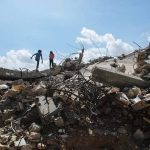
POLICY WIRE — Kyiv, Ukraine — The mundane rhythm of urban life, that fragile illusion of normalcy, shattered again this week in Dnipro. A volley of Russian missiles and drones, an increasingly familiar symphony of destruction, tore through residential blocks and civilian infrastructure in the central Ukrainian city, extirpating five lives and wounding dozens more. It wasn’t the first time; it surely won’t be the last. But this latest act of brutality underscores a grim reality: the Kremlin’s calculus seemingly prioritizes psychological attrition over purely military objectives, etching fear into the very fabric of Ukrainian society.
At its core, these aerial campaigns aren’t merely about hitting targets; they’re about demonstrating reach, asserting dominance, and – perhaps most effectively – inducing a pervasive sense of vulnerability. Still, for residents of Dnipro, a city far from the immediate front lines, the terror is profoundly visceral. Rescue workers, scrambling through rubble and shattered glass, epitomize the unending struggle against a war that creeps into every corner of civilian existence. They’re not just saving lives; they’re salvaging hope.
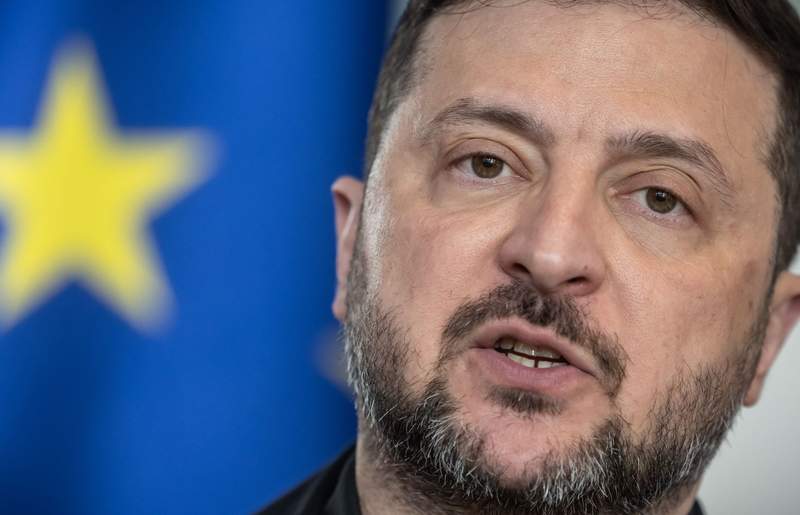
Ukrainian President Volodymyr Zelenskyy, his voice a weary echo of relentless appeals, condemned the attacks as a further demonstration of Moscow’s unbridled barbarity. “They’re trying to break us, to terrorize us into submission, but we won’t yield,” he shot back in a televised address, his brow furrowed with a familiar mix of resolve and frustration. “The world must understand: every moment of delay in delivering air defense systems translates directly into more shattered lives, more ruined cities. This isn’t just about Ukraine; it’s about the very principles of human decency.”
And the Kremlin? It’s maintained its well-worn narrative. Maria Zakharova, Russia’s Foreign Ministry Spokeswoman, rebuffed accusations of targeting civilians. “Our special military operation strictly adheres to military protocols, focusing solely on military infrastructure and legitimate defense targets,” she declared in a recent briefing, offering no specific comment on Dnipro but broadly dismissing Western reports of civilian casualties as “propaganda fabrications designed to fuel Russophobia.” It’s a deflection that’s become as predictable as the strikes themselves.
The persistent bombardments of Ukrainian cities don’t just wreak havoc locally; they send ripples through the global economy, contributing to a volatile climate that disproportionately impacts developing nations. Consider the food supply chains, for instance. Ukraine, a vital ‘breadbasket,’ saw its grain exports plummet by nearly 30% in 2022 following Russia’s full-scale invasion, according to the United Nations Food and Agriculture Organization (FAO). This reduction, a direct consequence of the conflict, exacerbates food insecurity in regions already teetering on the brink, including parts of Pakistan and the broader Muslim world, where rising food prices can ignite social unrest and political instability. For nations far removed geographically, like Bangladesh or Egypt, the conflict’s economic fallout isn’t abstract; it’s a very real pressure on their domestic budgets and the livelihoods of their citizens.
But the damage isn’t solely economic. It’s also a drain on diplomatic bandwidth. The unremitting focus on Ukraine, while entirely justified given the scale of aggression, inevitably diverts attention and resources from other festering crises across the globe—conflicts and humanitarian emergencies that also demand urgent international intervention. It’s a brutal calculus of finite attention — and stretched empathy.
📄 POLICY WIRE WHITEPAPER PUBLISHED: PAKISTAN'S NATIONAL SECURITY POLICY PRIORITIES
👉 READ BY CLICKING HEREStill, the enduring question remains: How long can Kyiv withstand such a sustained battering without more robust international support? Western allies, for their part, have condemned the attacks, but the pace and scale of military aid often fall short of Ukraine’s urgent demands. It’s a geopolitical chess match where every civilian casualty is a pawn, not just in Russia’s hands, but in the frustratingly slow machinations of international diplomacy. It seems Moscow, much like the persistent cyber threats emanating from its state-sponsored actors (as seen in the Bundestag phishing blitz), prefers an asymmetrical engagement, wearing down its adversary through a multitude of pressures, both kinetic and digital.
What This Means
This latest aggression in Dnipro represents more than just a tragic loss of life; it’s a stark geopolitical declaration. Politically, it’s Russia signaling its unwavering commitment to its military objectives, irrespective of international opprobrium or the human cost. It directly challenges the resolve of Western alliances, particularly as debates about continued aid for Ukraine intensify in Washington and European capitals. Every missile strike against a civilian target is, in effect, a test of that resolve—a brutal psychological warfare tactic aimed at both the Ukrainian populace and its international supporters. The message Moscow broadcasts is clear: our will is stronger than your sanctions or your pledges.
Economically, the strikes contribute to Ukraine’s spiraling reconstruction costs, which are already estimated in the hundreds of billions of dollars. This necessitates a continued, substantial infusion of foreign aid, placing additional strain on donor nations already grappling with domestic economic pressures. For Ukraine, it’s a vicious cycle: infrastructure is destroyed, resources are diverted to defense and immediate recovery, hindering any semblance of long-term economic stability. The global energy markets, while less directly impacted by these specific strikes, remain on edge due to the overall instability, with the potential for sudden price hikes still a potent concern that impacts everyone, everywhere. And it’s this cumulative effect—the sheer, grinding attrition—that makes these attacks so consequential for the ongoing viability of Ukraine as a functioning state.