
Dnipro’s Agony: Ukraine’s Persistent Carnage Amidst a World’s Shifting Attention
POLICY WIRE — Kyiv, Ukraine — The relentless percussion of war in Ukraine often obscures its granular, devastating toll. Another day, another city, another tally of human lives summarily extinguished...

POLICY WIRE — Kyiv, Ukraine — The relentless percussion of war in Ukraine often obscures its granular, devastating toll. Another day, another city, another tally of human lives summarily extinguished not by some grand strategic maneuver, but by the indiscriminate arc of artillery and the whistling descent of drones. This time, it’s Dnipro, a city far from the initial front lines, where the quotidian hum of life was abruptly silenced for five more souls.
It’s a grim calculus, isn’t it? The sheer repetition of such tragedies risks dulling the international conscience, morphing individual horrors into mere statistics. But for those caught in the maelstrom – the families shattered, the communities scarred – each explosion reverberates with an infernal singularity. And while headlines often fixate on territorial gains or losses, the true enduring cost accrues in these quiet, devastating moments of civilian carnage.
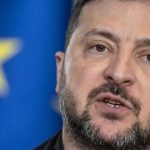
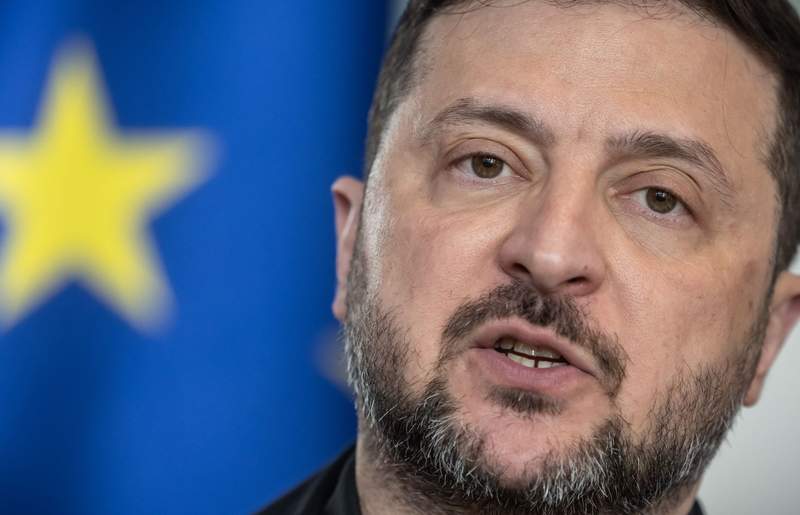
Ukrainian President Volodymyr Zelensky, his voice a familiar mix of defiance and lament, confirmed the latest fatalities following what he termed particularly ‘heavy Russian attacks’ across the nation. The assault wasn’t confined to Dnipro; it was a broader, more cynical barrage aimed squarely at infrastructure and residential areas, a stark reminder of Moscow’s expansive toolkit – one that extends even to the digital realm, as seen in Kremlin’s Digital Shadow operations against Western institutions.
“Every missile, every drone, every life lost only hardens our resolve,” President Zelensky shot back, his public statements often a blend of rallying cry and desperate plea. “The world must understand: we’re defending not just our land, but the very principles of civilization against barbarity. The price of our freedom, tragically, is measured in blood.” His words, delivered with characteristic urgency, underscore the profound and unyielding nature of the conflict. Still, the tangible support from some erstwhile allies appears to vacillate, creating fissures in a once-united front.
Dr. Oleksiy Danilov, a prominent Ukrainian defense analyst and former Secretary of the National Security and Defense Council, offered a more clinical, yet equally stark assessment. “Moscow’s strategy is a grim testament to its cynical calculus – to break Ukrainian will through attrition, to exhaust our resources and our resolve,” he asserted. “But they consistently underestimate the iron forged in this resistance, the deep-seated refusal to capitulate that defines our nation.” It’s a sentiment echoed by many on the ground, but one that demands a constant replenishment of resources and morale.
Beyond the immediate human toll, these persistent, geographically dispersed attacks have far-reaching geopolitical ramifications. The conflict, now well into its third year, continues to destabilize global markets, particularly in energy and food – a fact keenly felt across the developing world. Nations like Pakistan, already grappling with economic headwinds and burgeoning populations, face exacerbated inflation pressures as wheat and oil prices remain volatile. At its core, the sustained conflict in Europe represents a perennial ceasefire charade, but with far greater global ripple effects than many realize, impacting everything from agricultural subsidies to national budgets in distant lands.
Consider the stark numbers: the Office of the UN High Commissioner for Human Rights (OHCHR) has documented over 10,000 civilian deaths in Ukraine since February 2022, a figure that almost certainly underestimates the true cost. This isn’t just about Ukraine; it’s about the entire international order’s ability to respond to large-scale aggression, and the implicit message sent to potential aggressors elsewhere. So, what precisely does this grinding war of attrition, marked by senseless urban bombardments, truly portend for the global landscape?
What This Means
The latest attacks in Dnipro aren’t anomalies; they’re symptomatic of a deeply entrenched, attritional conflict where Russia seeks to inflict maximum psychological and material damage. Politically, it signals Moscow’s unwavering commitment to its strategic objectives, despite international condemnation and sanctions. It demonstrates a capacity – and a chilling willingness – to continue its campaigns of terror against civilian targets, pushing the boundaries of conventional warfare ethics. For Kyiv, it’s a constant, brutal test of resilience and a renewed, desperate call for sustained Western military aid, particularly air defense systems that can mitigate the incoming barrages. Don’t underestimate the psychological warfare at play.
Economically, the impact stretches far beyond Ukraine’s borders. The instability perpetuated by these attacks fuels global inflation, disrupts supply chains, and diverts vast resources that could otherwise be used for development. For countries in South Asia and the Muslim world, already navigating complex geopolitical currents and facing their own domestic challenges, this protracted European war translates into higher food prices, increased energy costs, and an even more precarious balancing act in their foreign policy alignments. They’re watching, of course, to see if international law still holds any sway or if might truly makes right. the persistent humanitarian crisis necessitates continued international assistance, stretching the capacity of global aid organizations and donor nations. It’s a reminder that modern warfare isn’t just a localized skirmish; it’s a global tremor, sending aftershocks across continents.