


Deep Sea’s Golden Enigma: A Speck of Ocean Dust, Two Years in the Making
POLICY WIRE — Washington, D.C. — For a species that prides itself on conquering frontiers, humanity remains astonishingly ignorant of its own planet’s deepest recesses. That stark reality was...

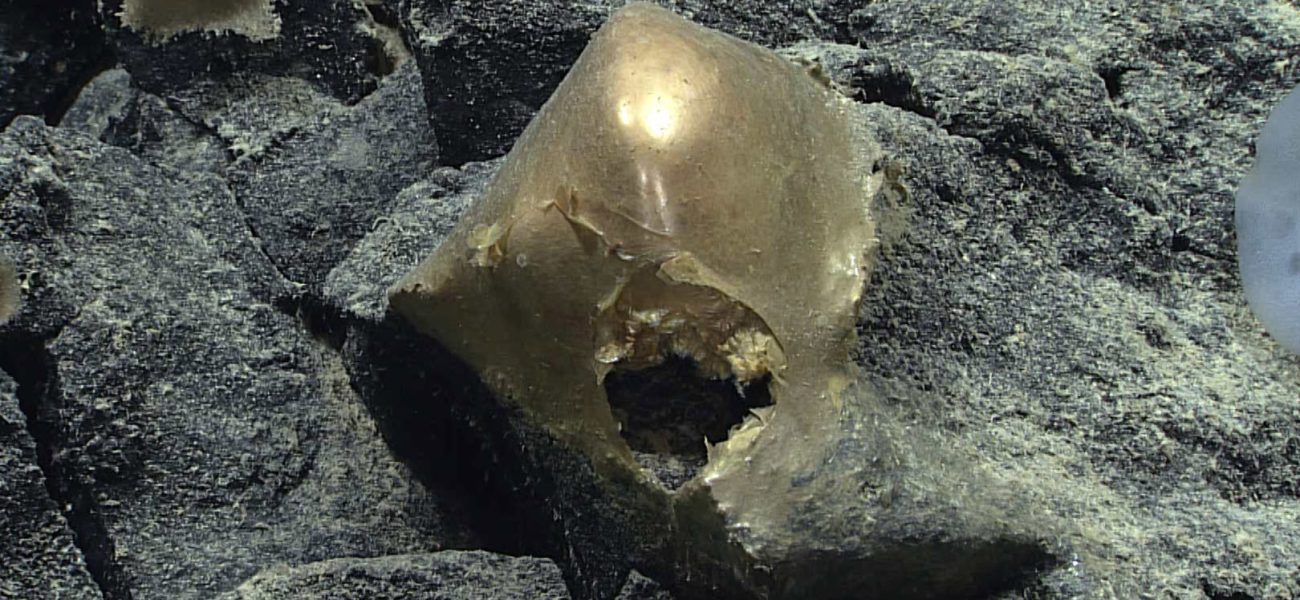
POLICY WIRE — Washington, D.C. — For a species that prides itself on conquering frontiers, humanity remains astonishingly ignorant of its own planet’s deepest recesses. That stark reality was laid bare, quite literally, by a shimmering, golden orb — a seemingly innocuous, yet profoundly enigmatic, specimen plucked from the abyssal plains off Alaska’s coast two years ago. Now, after a protracted forensic dance between marine biologists and cutting-edge laboratory equipment, its identity has been, if not fully revealed, then at least substantially demystified. It’s an egg casing, probably from some deep-sea cartilaginous fish or shark, though the precise species remains a whispered question.
But the true story isn’t just about what it’s, it’s about what it represents: the painstaking, often glacial, pace of deep-sea exploration and the vast, uncatalogued inventory of life lurking beneath miles of churning water. This isn’t some splashy, alien invasion headline; it’s a quiet testament to the enduring mystery of our terrestrial home.
The discovery, made by the NOAA-funded Okeanos Explorer expedition, initially stumped scientists. They’d encountered an object about four inches across, perfectly spherical, with an iridescent, almost metallic sheen, firmly affixed to a rock more than two miles beneath the surface. It beckoned, it intrigued, it defied immediate classification. The global pursuit of ‘gold’ — be it athletic or scientific — often begins with such cryptic clues.
Dr. Eva Rostova, lead marine biologist for the NOAA expedition, didn’t mince words. “It’s a humbling reminder of how little we truly comprehend of our own planet’s biosphere,” she shot back, when asked about the protracted identification process. “We’re still identifying macroscopic organisms in our deepest oceans, while simultaneously debating interstellar travel. There’s a certain delicious irony to it, don’t you think?” Her team, she explains, utilized everything from DNA sequencing to micro-CT scans, a laborious process for an object whose resident had long since departed.
Still, the implications stretch beyond mere biological curiosity. The global deep-sea ecosystem, notoriously fragile, faces increasing pressure from nascent deep-sea mining ventures and the insidious creep of climate change. And that’s before we even fully understand what’s down there. Consider the sheer scale: silent diplomacy’s perilous edge isn’t just a political metaphor; it’s the reality of navigating unexplored marine territories where international law is still catching up to technological prowess. Over 80% of the world’s oceans remain unmapped and unexplored, according to NOAA, a staggering figure that should give pause to anyone assuming we’ve ‘figured out’ Earth.
📄 POLICY WIRE WHITEPAPER PUBLISHED: PAKISTAN'S NATIONAL SECURITY POLICY PRIORITIES
👉 READ BY CLICKING HERE“These discoveries aren’t merely academic curiosities; they underscore the urgent need for sustained investment in oceanographic research, securing future resources and understanding climate dynamics,” asserted Senator Maria Rodriguez, chair of the Senate Appropriations Subcommittee on Commerce, Justice, Science, and Related Agencies. “We can’t manage what we don’t understand, and right now, our understanding of the deep ocean is tragically incomplete.” Her sentiment echoes a growing global consensus, albeit one often sidelined by more immediate political crises.
At its core, this golden enigma highlights a universal human trait: the drive to explore, to classify, to understand the unknown. This impulse isn’t exclusive to Western science; throughout history, Muslim scholars and mariners charted vast swathes of the Indian Ocean and beyond, their astronomical and cartographical advancements pushing the boundaries of known geography. Today, countries like Pakistan, with its strategically vital Gwadar Port and burgeoning maritime interests, face their own formidable challenges in exploring and sustainably managing their extensive, yet largely uncharted, exclusive economic zones. The quest to identify a peculiar egg casing in the Bering Sea, then, isn’t just an American scientific endeavor; it’s a microcosm of a planetary-scale effort to comprehend the blue heart of Earth, a heart that beats with countless unrevealed secrets.
What This Means
The protracted identification of this deep-sea oddity underscores several consequential implications. Economically, the vast unknowns of the deep ocean represent both untapped potential — and significant risk. Without comprehensive baseline data, any move towards deep-sea mining—for rare earth metals crucial to modern technology—becomes a blind gamble with potentially irreversible ecological consequences. Politically, the lack of full understanding complicates international agreements on maritime boundaries, resource exploitation, and environmental protection. Nations with significant coastal claims, from the U.S. in the Arctic to Pakistan in the Arabian Sea, find themselves navigating a policy vacuum when it comes to regulating activities in these poorly understood ecosystems. from a scientific perspective, every new species or unique biological structure discovered has the potential for biotechnological breakthroughs, from novel antibiotics to enzymes with industrial applications. But without dedicated, long-term funding and international collaboration, these golden opportunities remain, quite literally, submerged. It’s a stark reminder that some of the most profound policy challenges of the 21st century aren’t found in congressional halls, but miles beneath the waves.