
Ballots in Fragments: Palestinian Local Elections Acknowledge Gaza, Yet Deep Divisions Endure
POLICY WIRE — Ramallah, Palestinian Territories — A curious, almost melancholic exercise in democracy quietly unfolded across parts of the West Bank recently. After years of political paralysis and...

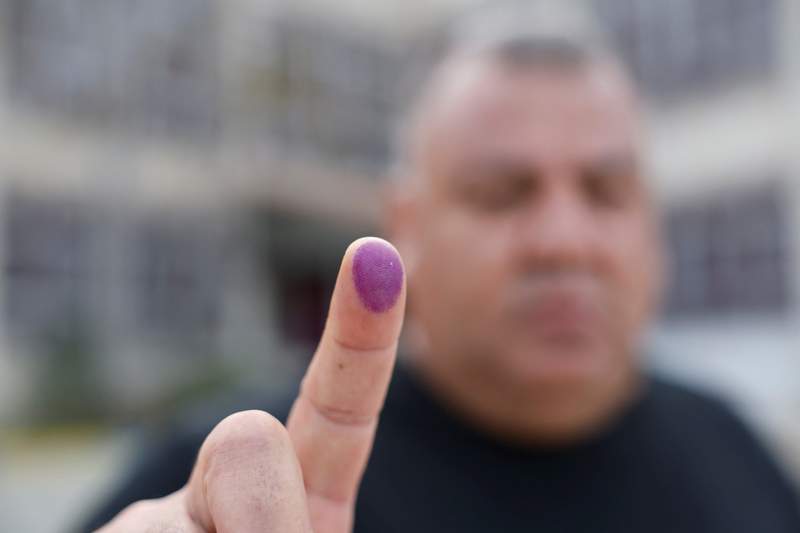
POLICY WIRE — Ramallah, Palestinian Territories — A curious, almost melancholic exercise in democracy quietly unfolded across parts of the West Bank recently. After years of political paralysis and suspended hopes, Palestinians were granted a ballot — not for their president, not for their parliament, but for their municipal councils. It’s a prosaic affair, to be sure, choosing who collects the trash or fixes the roads, but in this perpetually contested land, even such seemingly mundane decisions carry the weighty echoes of national aspiration and persistent division.
And so it was, that for the first time in what feels like an eternity for many, Palestinian Authority-controlled areas saw polling stations open. This wasn’t, let’s be clear, a sweeping national revival; it was a deeply fragmented process. Hamas, the Islamist movement governing the Gaza Strip, staunchly refused to participate, thereby limiting elections to some 154 localities exclusively within the West Bank. Yet, the official decree acknowledged the broader Palestinian electorate, notably including voters from Gaza — a symbolic gesture, perhaps, for those registered residents with ties to West Bank municipalities, despite no actual polling within the besieged coastal enclave.
At its core, this electoral flicker represents the Palestinian Authority’s persistent, if often fragile, attempt to project institutional functionality and a commitment to democratic principles, however constrained by occupation and internal political rifts. It’s an administrative necessity, really, to elect local leadership for communities weary of stagnation. Don’t confuse it with a grand political breakthrough; it’s anything but.
“These elections, however localized, are a testament to our enduring commitment to self-governance and the democratic aspirations of our people,” asserted Dr. Hanna Nasir, Chairman of the Palestinian Central Elections Commission. “Every ballot cast, every local council formed, is a brick laid in the foundation of our future state.” His words, delivered with a practiced gravitas, sought to imbue the often-technical process with a loftier purpose.
Still, public sentiment toward the vote remains a complex tapestry of weariness — and tempered hope. Many Palestinians view the local elections with a cynicism born of decades of unfulfilled promises and the stark reality of occupation. They’ve seen these cycles before, haven’t they? But some, particularly at the community level, cling to the belief that even small, local changes can improve daily life. “Don’t mistake local council squabbles for genuine political change,” cautioned Dr. Omar Abdel-Jaber, a political science lecturer at Birzeit University. “It’s a necessary administrative exercise, yes, but it won’t resolve the profound questions of occupation or national leadership. It’s a distraction, really, from the absence of presidential or legislative elections.”
Indeed, the last comprehensive national elections for the Palestinian Legislative Council were held in 2006, and for president, in 2005. This means that for 18 years, the Palestinian people haven’t had a national voice at the ballot box. By contrast, the Palestinian Central Elections Commission (PCEC) confirmed that approximately 1.25 million voters were registered for these recent local polls in the West Bank, marking a significant—if territorially limited—engagement with democratic mechanics.
📄 POLICY WIRE WHITEPAPER PUBLISHED: PAKISTAN'S NATIONAL SECURITY POLICY PRIORITIES
👉 READ BY CLICKING HEREAnd this small, isolated democratic ritual doesn’t just resonate within Palestinian borders. The struggle for self-determination and representative governance in the Palestinian territories finds deep resonance across the wider Muslim world. From Islamabad to Jakarta, the Palestinian cause remains a potent symbol of global injustice and the yearning for sovereignty. Countries like Pakistan have consistently voiced unwavering solidarity, viewing Palestinian aspirations through the prism of a shared cultural and religious heritage, making even these local elections a distant, yet profoundly watched, indicator of agency within a larger geopolitical narrative.
What This Means
This localized electoral exercise, while seemingly minor, carries consequential implications. Politically, it’s a strategic move by the Palestinian Authority to bolster its dwindling domestic legitimacy. By demonstrating a capacity for governance, even under duress, the PA aims to counter criticisms of authoritarianism and institutional decay. It’s an attempt, however meager, to reconnect with a populace increasingly disaffected by a leadership that hasn’t faced a national mandate in nearly two decades. However, its exclusion of Gaza deepens the existing schism, reinforcing the political fragmentation that plagues Palestinian governance. It won’t, crucially, nudge the stalled peace process with Israel or bring closer the elusive goal of national elections.
Economically, the impact is similarly constrained. Stable local councils can improve basic services—sanitation, infrastructure, local planning—which might, in turn, foster minor economic activity and community resilience. But without a broader political resolution, and with the overarching reality of occupation and aid dependency, these local improvements will largely remain piecemeal. Long-term economic development demands comprehensive political stability, an end to Israeli movement restrictions, and a unified national vision, none of which these municipal elections directly address. It’s a necessary administrative repair, yes, but not a foundation for a burgeoning economy, not yet anyway.