


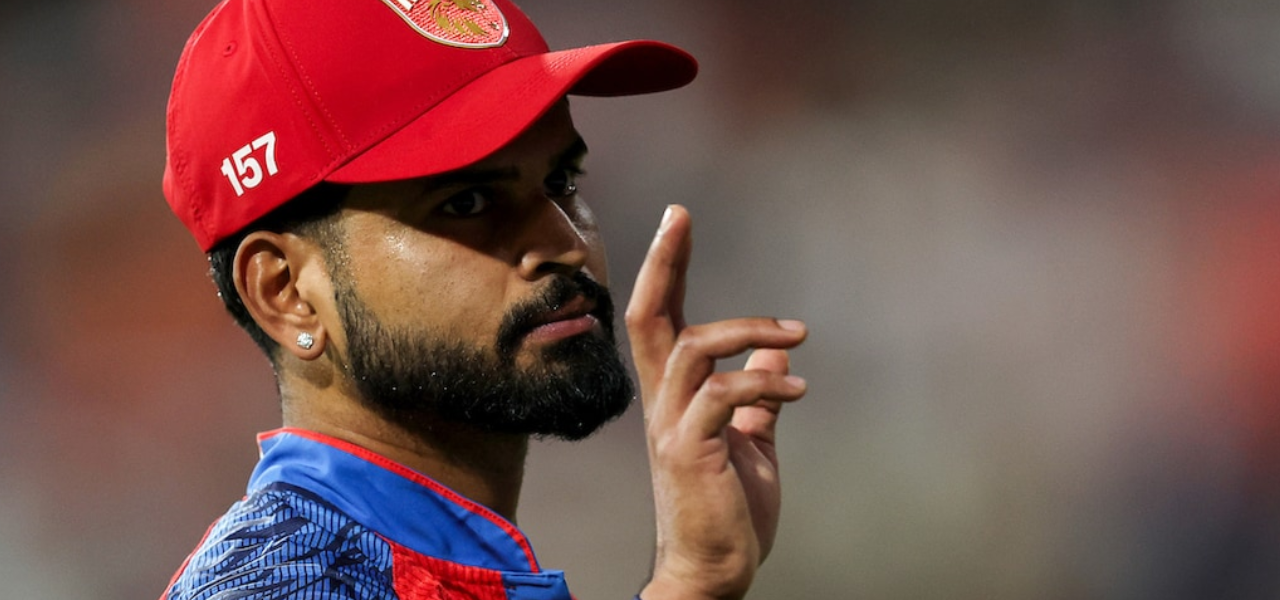
Iyer’s Ascent: India’s T20I Captaincy Debate Heats Up
POLICY WIRE — Mumbai, India — The clock marches to a distinct drumbeat for athletes, doesn’t it? One season, you’re unassailable, hoisting trophies, adored by a billion-strong fanbase....

POLICY WIRE — Mumbai, India — The clock marches to a distinct drumbeat for athletes, doesn’t it? One season, you’re unassailable, hoisting trophies, adored by a billion-strong fanbase. The next, whispers begin, — and a potent usurper materializes from the shadows. Like a sudden squall. Ready to seize the mantle. That’s the evolving saga in India’s T20 International setup, where Shreyas Iyer‘s blistering form and tactical acumen are eclipsing incumbent captain Suryakumar Yadav.
It’s a brutal truth of professional sports: performance is preeminent, — and loyalty often takes a backseat to potential. Iyer, the dynamic middle-order batsman, isn’t just scoring runs; he’s masterminding victories with a captain’s cool head, leading three different IPL franchises to finals. And that matters, especially with the 2028 T20 World Cup — and the LA Olympics looming large.
The Rising Sun and the Fading Star?
For years, Suryakumar Yadav, affectionately known as SKY, has been India’s T20I cornerstone, a trailblazer with a 360-degree game. He’s led India to a T20 World Cup title in 2026 — and an Asia Cup in 2025. Make no mistake, his leadership record *was* resplendent; a truly impressive feat, mind you, for a time. He flaunts the highest win percentage among Indian T20I captains with a minimum of 20 matches, guiding India to 40 victories in 52 outings.
And yet, a creeping, yet unmistakable, paradigm shift is occurring. At 38 by the next World Cup cycle, Yadav’s recent batting form has become a gnawing unease. Remember his prodigious 717 runs in 16 matches during IPL 2025, earning him MVP honors? Contrast that with a mere 121 runs in 6 matches this ongoing IPL season, including a golden duck against Punjab Kings just weeks ago (a frankly abysmal outing). It’s a blunt admonition of cricket’s unyielding nature.
Meanwhile, Iyer’s ascension has been stratospheric. He hasn’t just captained; he’s electrified. First, taking Delhi Capitals to their maiden IPL final in 2020. Then, leading Kolkata Knight Riders to their third title in 2024 after a 12-year drought. This past season, he piloted Punjab Kings to their first final in 11 years, bludgeoning 604 runs at an explosive strike rate of 175.07 – quite the feat, frankly!
Few players possess the ability to unerringly perform with both bat — and leadership under immense pressure. Ricky Ponting, the Punjab Kings head coach, articulated with unvarnished candor:
“Shreyas has taken his game to a whole another level. He’s a leader who has completely matured both personally — and tactically.”
This isn’t just about individual brilliance; it’s about the broader ecosystem of South Asian cricket, where national team captaincy is often seen as a quasi-political office, an almost monarchical mantle. Decisions made in Mumbai reverberate like seismic waves across the subcontinent, from Karachi to Dhaka, influencing conversations and passions in a region where cricket transcends mere sport. Pakistan’s own struggles with consistent captaincy make India’s current quandary particularly resonant.
Veteran Indian leg-spinner Anil Kumble, himself a former captain, underscored Iyer’s unique skill set.
📄 POLICY WIRE WHITEPAPER PUBLISHED: PAKISTAN'S NATIONAL SECURITY POLICY PRIORITIES
👉 READ BY CLICKING HERE“He’s certainly a profoundly undersung captain,” Kumble observed, “especially given the difficulty of switching franchises and immediately leading them to a final, a feat Iyer actualized in his debut season with PBKS.”
What This Means
The potential change in India’s T20I leadership isn’t just a selection headache; it’s a consequential realignment. Economically, a younger, in-form captain like Iyer could — let’s not kid ourselves — entirely recalibrate sponsorship paradigms and appeal to a fresh generation of fans, fundamentally impacting the multi-billion dollar cricket industry. Politically, within the BCCI and the team hierarchy, it bespeaks a renewed commitment to long-term stability and succession planning, rather than relying solely on past glories.
The math is stark: India will want a captain who’s not only in peak form but also has the endurance and tactical foresight to lead through another World Cup cycle, especially with cricket’s return to the Olympic stage. While Suryakumar Yadav’s contributions are etched in the annals of history – a truly indelible mark, no doubt – the sport, much like any political landscape, remains unyielding in its demand for present-day relevance and future potential (a testament to the ever-churning nature of sports, frankly). The whispers around other contenders like Rajat Patidar and Axar Patel only exacerbate the strain.
Related: Beyond the Pitch: European Football’s High-Stakes Geopolitics Unfold
Can India afford to stick with a captain whose form dips in crucial ICC tournaments? Suryakumar Yadav, for example, scored just 72 runs in 7 matches during the 2025 Asia Cup and struggled in the knockout stages of the 2026 T20 World Cup, including a duck in the final. That’s a dramatic volte-face from his usual supremacy. It buttresses the argument for a leader who consistently performs when it matters most.
Ravichandran Ashwin, India’s cerebral off-spinner, explicated the ethereal essence Iyer brings: “Just the comfort that he’s creating around the team… it’s a brotherhood here.” He believes Iyer cultivates an ambiance where players can openly approach their captain, a pivotal element (you know, that critical bit they often miss) often underestimated in high-stakes team dynamics. That kind of camaraderie, Ashwin argues, combined with his batting, makes him a “lethal combination.”
But ultimately, India faces an age-old quandary: honor a proven, if currently struggling, champion, or embrace the vibrant, irrepressible dynamism of a leader whose time seems to have arrived, bursting forth like a monsoon on parched earth. Many observers believe Iyer’s consistent performances, coupled with his extraordinary captaincy record across different teams, make him the frontrunner for India’s T20I leadership in the upcoming cycle. The selectors’ decision will unquestionably recalibrate India’s cricketing future, — and it won’t be an easy one.