


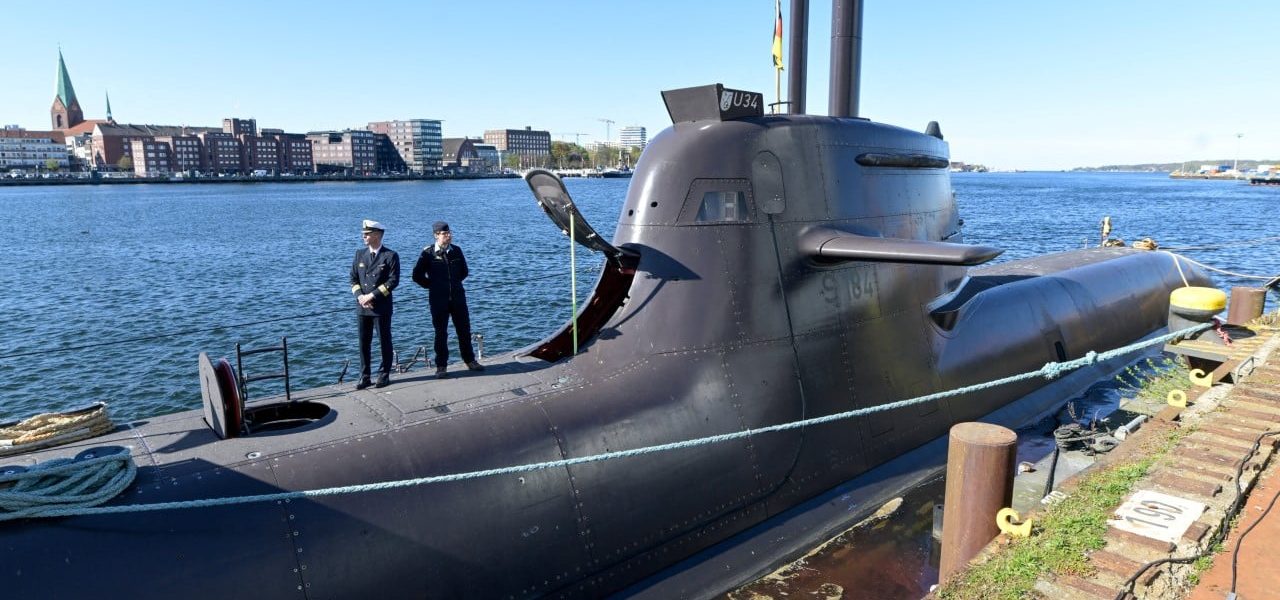
Germany’s Naval Play in India Signals Deeper European Indo-Pacific Strategy
POLICY WIRE — New Delhi, India — For eons, India’s naval ambitions have wrestled with the aging realities of its submarine fleet, a rather pivotal component of its maritime security doctrine....

POLICY WIRE — New Delhi, India — For eons, India’s naval ambitions have wrestled with the aging realities of its submarine fleet, a rather pivotal component of its maritime security doctrine. New Delhi has long grappled with how to inject fresh vigor into its undersea capabilities, often scanning horizons for partners beyond its usual Russian supplier. This week, a somewhat unexpected European nation, of all places, stepped forward, dangling a potential lifeline.
Germany, in a maneuver that really does lay bare its own evolving strategic calculus, formalized a Defence Industrial Cooperation Road Map with India. The accord, inked in Berlin between India’s Defence Minister Rajnath Singh and his German counterpart Boris Pistorius, delves far deeper than mere procurement; it charts a course for joint development, co-production, and — critically — technology transfer.
But this isn’t just some bilateral deal for new submarines, though that’s certainly a hefty chunk of it. At its core, the roadmap symbolizes a broader European pivot towards the Indo-Pacific, a region increasingly central to global power dynamics and economic flows. Germany, traditionally a bit more fixated on its immediate European neighborhood, is signaling a clear intent to engage robustly. A true sea change, wouldn’t you say?
Could this framework serve as a template for wider European Union engagement in the vast Indo-Pacific? Many analysts certainly think so. The math, you see, is stark: India, often pegged as the world’s largest arms importer, is actively diversifying its defense partners, especially as it really leans into its ‘Make in India’ and ‘Aatmanirbhar Bharat’ (self-reliant India) initiatives.
“This roadmap isn’t just about hardware; it’s about elevating our strategic autonomy and nurturing an indigenous defense ecosystem,” Rajnath Singh shot back at reporters following the signing. “A modern, self-reliant navy, especially our undersea capabilities, is paramount for securing our maritime interests, from the Arabian Sea to the wider Indo-Pacific.”
His words cut to the very quick of India’s long-term vision. The country aims to expand its submarine fleet to 24 by 2030, a significant jump from its current operational strength, with indigenous production being a key pillar of this ambition, according to a recent report by the Indian Navy. That’s a lot of subs. Quickly.
For Germany, too, there’s a powerful impetus. The ‘Zeitenwende,’ or turning point, declared by Chancellor Olaf Scholz, isn’t confined to European security. It extends to cultivating partnerships with democracies across the globe — especially those balancing the rise of an assertive China, which, let’s be frank, is pretty much everyone these days.
“Germany’s commitment to a free and open Indo-Pacific isn’t merely rhetorical,” Boris Pistorius affirmed in his remarks. “This partnership with India, a fellow democracy and a regional anchor, underscores our dedication to collaborative security architecture. It’s a template, certainly, for how European nations can — and must engage more deeply in this vital theatre.”
This evolving dynamic has ripple effects — like pebbles dropped in a still pond — across South Asia and beyond. India’s bolstering of its naval power, particularly through high-tech partnerships, is always closely watched by neighboring states like Pakistan. While New Delhi’s primary strategic focus remains on the Indian Ocean’s broader security, such advancements inevitably alter regional power perceptions. It forces other players to recalibrate their own defense strategies, especially in maritime domains critical for trade and energy. And that’s just the way it’s.
📄 POLICY WIRE WHITEPAPER PUBLISHED: PAKISTAN'S NATIONAL SECURITY POLICY PRIORITIES
👉 READ BY CLICKING HEREAnd yet, this German overture also resonates with a changing geopolitical landscape in the Muslim world, particularly in the Gulf. As India strengthens its naval presence and capabilities, its role in maritime security initiatives involving countries like the UAE and Saudi Arabia becomes even more pronounced, shaping a new axis of engagement. This kind of collaboration might even nudge some regional powers to look beyond traditional security alliances, fostering a more multipolar maritime security architecture. So much for predictable alliances, huh?
Related: Beyond Tehran’s Shadow: A New Axis Rises in the Middle East
The deal comes at a time when Europe itself is grappling with its strategic independence and the pressing need to project influence beyond its borders. For Germany, a nation with a formidable industrial base but a historically cautious defense posture, this marks a substantial — perhaps even epochal — step. It’s a gamble, maybe, but one they’re clearly ready to take.
What This Means
This isn’t just another arms deal; it’s a strategic declaration. Politically, it signals a deeper alignment between Europe and India, potentially diversifying India’s reliance away from Russia and giving Germany a significant foot in the Indo-Pacific door. Economically, the focus on co-development and technology transfer means a genuine boost for India’s indigenous defense manufacturing sector, creating jobs and fostering innovation within the country. It’s a crucial step towards reducing dependency on foreign imports for critical military hardware. Self-sufficiency. Always a good look.
Diplomatically, the agreement sends a clear message to Beijing about the growing coalition of nations committed to a free, open, and rules-based Indo-Pacific. It’s also a subtle, yet firm, challenge to Russia’s long-standing position as India’s premier defense partner, even if Moscow remains a vital supplier — because, you know, old habits die hard. The deal essentially says: India is open for business, but on its own terms, emphasizing self-reliance and strategic flexibility. This bilateral commitment could well encourage other EU members to pursue similar deep-tech defense engagements, creating a more cohesive European presence in Asian security matters.
Few, if any, would’ve predicted Germany becoming a central figure in India’s naval modernization just a few years ago. But global alignments shift, and nations — bless their adaptive hearts — adjust. As Dr. Arun Sharma, a geopolitical strategist at the Indian Council of World Affairs, recently observed, “This agreement is less about immediate hardware and more about forging a long-term strategic partnership that intertwines the industrial might of Germany with India’s geopolitical imperatives. It could redefine naval power dynamics in the Indian Ocean for decades to come.” A consequential development, indeed.