


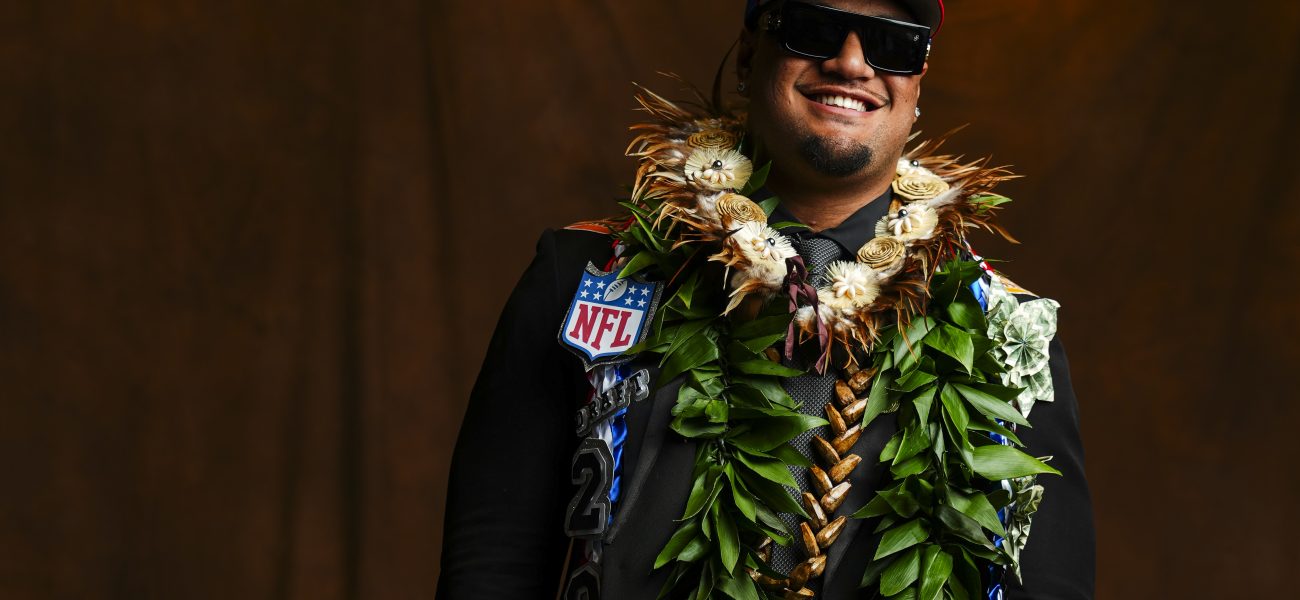
Giants Defy Draft Norms, Bet on Youth and Versatility with Reese and Mauigoa Picks
POLICY WIRE — East Rutherford, New Jersey — The high-stakes drama of the NFL Draft often pits conventional wisdom against gut instinct, and this year, the New York Giants unequivocally vaulted toward...

POLICY WIRE — East Rutherford, New Jersey — The high-stakes drama of the NFL Draft often pits conventional wisdom against gut instinct, and this year, the New York Giants unequivocally vaulted toward the latter. Hardly anyone had pegged linebacker Arvell Reese and offensive lineman Francis Mauigoa as the franchise’s top targets entering Round 1 of the 2026 selection process, isn’t it? Yet here we’re.
Behind the headlines, the decision wasn’t simply about shock value; it was, rather, a calculated gamble on youth and malleable talent. General Manager Joe Schoen and Head Coach John Harbaugh, it seems, have opted to carve their own distinct path, leaving the consensus mock drafts — bless their predictable hearts — in the dust.
When asked about the ostensibly surprising selections, Harbaugh famously quipped,
“Reality is stranger than fiction.”
And he wasn’t wrong. The Giants, notorious for their calamitous outings along the offensive line in recent memory, along with a defense always seeking versatility, didn’t they’ve other options staring them squarely in the face?
For Arvell Reese, chosen early in the draft order for the Giants, the magnetism lay in his expansive skillset. Not everyone saw him as a top-tier linebacker immediately. But the coaching staff’s got a clear vision. A crystal one, actually.
“Arvell’s a versatile player, and we’re going to play him at inside backer, WILL linebacker,” Harbaugh shot back with characteristic intensity. “Our defense is pretty flexible, position-less you might call it. We’ll have an opportunity to move those guys around.”
Make no mistake, this isn’t just about slotting a player into some static, old-school role — Reese, who won’t even turn 21 until August (can you believe it?), is seen as a genuine chess piece, capable of lining up next to veteran Tremaine Edmunds, attacking A, B, C, or D gaps, even rushing off the edge, a true chameleon on the field. He’s expected to be a dynamic force in coverage, too.
“He’s just scratching the surface,” Schoen mused, underscoring Reese’s immense pass-rush upside. “You see the size, the length, the traits. And again, like Coach was talking about, just the versatility that the player has.”
This whole philosophy of acquiring versatile, young talent — raw, unpolished, yet bursting with potential — speaks absolute volumes about the long-term build happening, steadily, persistently, almost like a carefully constructed skyscraper, in East Rutherford. It’s a strategy that looks far beyond immediate needs, aiming instead for foundational pieces that can adapt to evolving schemes and personnel, much like top-tier football clubs globally constantly scout for adaptable talent, even from regions where the sport isn’t traditional. The increasing global reach of American football, with growing fan bases and scouting networks extending into areas like South Asia and the Muslim world, underscores the universal appeal of athleticism and strategic team building.
Then came Francis Mauigoa, the powerful offensive lineman. The Giants’ offensive front has been a consistent quagmire for the better part of the last 15 years, prompting a legion of fans to clamor for an immediate, plug-and-play solution. But Schoen stuck to his board. Like glue.
📄 POLICY WIRE WHITEPAPER PUBLISHED: PAKISTAN'S NATIONAL SECURITY POLICY PRIORITIES
👉 READ BY CLICKING HERE“Sisi’s another 20-year-old, believe it or not; he’ll be 21 in June,” Schoen noted, underscoring the team’s unwavering commitment to youth. “A powerful young man with tremendous athleticism — and size, for crying out loud.”
Mauigoa’s collegiate film lay bare his battle-hardened toughness, having faced future NFL talent in practice daily. The plan’s to start him at guard, anchoring the interior alongside center John Michael Schmitz and right tackle Jermaine Eluemunor.
And yet, a pre-draft recheck on Mauigoa’s back raised a few eyebrows. Was this a significant risk? The Giants, it appears, aren’t overly concerned. They’ve got an inside track: Adam Bennett, Mauigoa’s former trainer at Miami, is now on their staff (a genuinely unique advantage, don’t you think?).
“We’re comfortable with it,” Schoen affirmed. “We’re fortunate that the former trainer from the University of Miami is now one of our trainers. So we have somebody that’s been with him for his entire time at Miami.” That’s a level of due diligence few teams, frankly, can claim.
Related: Eagles Seize Draft Value After Unexpected Rams Gambit Reshapes Top Picks
What This Means
This draft class, headlined by Reese and Mauigoa, paints a clear picture: the Giants are building for the long haul. They’ve eschewed the quick fix, opting instead for players with high ceilings, incredible athleticism, and the foundational makeup to thrive in a flexible system. Drafting two players who won’t celebrate their 21st birthdays until well after the draft truly speaks volumes about the organizational patience and a belief in nurturing talent.
At its core, this strategy — an undeniable gamble in a league obsessed with instant results — minimizes the short-term impact of individual player weaknesses while maximizing their long-term potential. It’s a bet on development, on coaching, and on constructing a robust, versatile roster that can withstand the brutal rigors of an NFL season. But, it also means that immediate gratification for the notoriously impatient New York fanbase might be delayed. The success of this approach rests precariously on the development staff and the players’ own work ethic, a truth some fans might find hard to swallow.
Still, the commitment to youth and versatility isn’t just about scheme fit; it’s intrinsically about roster control and financial flexibility. Securing high-upside players on rookie contracts for five years allows the team to allocate precious resources elsewhere in the coming seasons, a crucial aspect of sustainable success in the cutthroat modern NFL.
Ultimately, the New York Giants aren’t just drafting players; they’re drafting a philosophy. They’re ploughing resources into a vision where adaptable, young athletes can be molded into multi-faceted contributors, rather than being confined to single roles. As former NFL executive Mike Tannenbaum once said, “The NFL is a copycat league, but true innovators find value where others don’t. The Giants are clearly trying to innovate with a premium on youth and versatility, and that’s a strategy that could pay dividends years down the line, if they’re patient enough.”