


Manchester City’s Summer Conundrum: Balancing Dominance with Evolving Squad Needs
POLICY WIRE — Manchester, England — Even for a club accustomed to serial laurels, the gauntlet of perpetual evolution remains their most daunting adversary. Manchester City, fresh off another...

POLICY WIRE — Manchester, England — Even for a club accustomed to serial laurels, the gauntlet of perpetual evolution remains their most daunting adversary. Manchester City, fresh off another dominant season, finds itself at a critical crossroads, not just in securing immediate silverware, but in fastidiously molding the squad that’ll define its next era. A critical crossroads, this.
Behind the headlines of potential new attacking dazzling talents lies a more fundamental, perhaps even more critical, endeavor: revamping the midfield. It’s a strategic dance, mind you, that sees the reigning champions cast a wide net, from promising young wingers to a potential seismic shift in their engine room.
The Attacking Frontier: Youthful Flair and Established Prowess
While midfield fine-tuning dominates internal discussions, City’s scouts haven’t turned a blind eye to the final third. They’ve zeroed in on two electrifying prospects: RB Leipzig’s Yan Diomande and Bournemouth’s Eli Junior Kroupi. Both possess the kind of raw, explosive talent that could inject fresh dynamism into an already formidable attack.
Diomande, a dynamic winger, has burst onto the scene as one of Europe’s most hotly pursued young talents. He’s not just on City’s radar; both Liverpool and Bayern Munich reportedly vie for his signature, viewing him as a potential successor to established stars. Such intense, cutthroat competition highlights with stark clarity his burgeoning reputation across the continent.
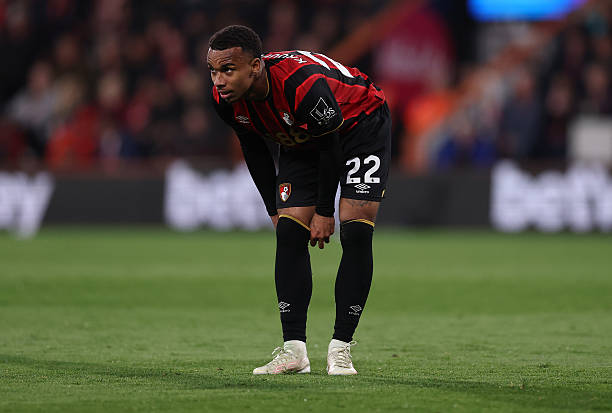
And yet, Kroupi’s rise in the Premier League has been nothing short of blazing. The French striker’s debut campaign has seen him notch an impressive 11 goals in 29 league matches, a statistical feat according to Sky Sports that makes him the first teenager to reach double digits in the competition since the 1999/2000 season. That’s a telling indicator of precocious talent, plain — and simple. He too garners attention from an array of top clubs, including Manchester United, Chelsea, Real Madrid, and Paris Saint-Germain.
But the Citizens aren’t exclusively fixated on youth. They’re also weighing a move for AC Milan’s Rafael Leao, an established winger who could be available for a gargantuan payout, potentially around £60 million. This suggests a two-pronged approach: investing in the future while also considering proven commodities capable of immediate impact, especially if key attacking players jump ship.
Midfield Makeover: The Core of City’s Next Chapter
Make no mistake, the linchpin of this summer’s strategy appears to be the midfield. With murmurings surrounding the futures of stalwarts like Rodri and Mateo Kovacic, and the confirmed departure of fan favorite Bernardo Silva, City faces a genuine changing of the guard in the very heart of its team. Bernardo’s exit alone leaves a cavernous imaginative chasm. A gaping one, too.
Their primary target for this keystone position? Nottingham Forest’s Elliot Anderson. Valued in excess of £100 million, Anderson isn’t just an expensive acquisition; he’s seen as a game-changing dynamo. His confluence of defensive acumen and ball-playing prowess has made him one of the English top-flight’s absolute linchpins of the midfield this season.
Could Anderson become City’s most expensive signing ever? Quite possibly. Such an investment signals unflappable conviction in his potential not just to fill a role, but to shape the team’s identity for years to come. Competition from Manchester United and Arsenal is cutthroat, but City reportedly holds the pole position.
Other names linked include Bayer Leverkusen’s Ibrahim Maza, Hertha Berlin’s Kennet Eichhorn, and even Chelsea’s Enzo Fernandez. It’s a testament to the fastidious, almost monomaniacal, talent-spotting machinery that fuels City’s sustained success, constantly identifying and tracking talent.
“We constantly evaluate, not just for today, but for the next five years,” noted City manager Pep Guardiola recently, albeit without directly addressing specific transfer targets. “This isn’t about replacing; it’s about evolution. Every season demands a fresh perspective, new hunger.”
📄 POLICY WIRE WHITEPAPER PUBLISHED: PAKISTAN'S NATIONAL SECURITY POLICY PRIORITIES
👉 READ BY CLICKING HERE
His words echo the strategic mindset required to stay atop the Premier League’s relentless treadmill. And they underscore the complexity of decision-making at this level, where every signing reverberates through both the tactical framework and the delicate balance of the squad.
What This Means
This summer’s transfer activity isn’t merely about adding depth; it’s a strategic fine-tuning for Manchester City. The emphasis on both youthful attackers and a transformative midfielder speaks to a long-term vision designed to maintain supremacy. It’s about securing future-proof talent that can smoothly dovetail into Guardiola’s demanding system.
The pursuit of players like Diomande — and Kroupi also reflects the Premier League’s ever-widening worldwide tendrils. The game’s mushrooming sway in regions like South Asia and the Middle East, home to colossal and fervent fan bases, means clubs aren’t just scouting for talent but for profiles that resonate internationally. The success of a player like Mohamed Salah, for instance, has demonstrated the prodigious financial and societal footprint a global superstar can wield. City’s targets, if they reach their potential, could become similar lodestars.
Consider the monetary ramifications: Anderson’s potential £100 million-plus transfer bespeaks a readiness to break records for the right player, even amidst Financial Fair Play scrutiny. It’s a measured gamble, betting on long-term value — and enduring pitch-side supremacy. The math is unvarnished: top talent costs top money, — and City isn’t flinching from that reality. Top money. Always.
“The market for elite young talent has become a global bidding war, especially for Premier League clubs,” noted a prominent football analyst with a weary sigh. “It’s not just about the fee; it’s about persuading an athlete they’ll get minutes — and develop in a squad like City’s. That’s the real challenge.”
Indeed, managing expectations and ensuring development pathways for these promising youngsters will be as crucial as securing their signatures. This involves careful squad rotation and integration — a familiar, oft-trodden obstacle for any top club, which is, let’s be honest, half the battle — and it’s a juggling act Pep Guardiola knows intimately.
Related: Onana’s Turkish Odyssey: Man Utd Loanee Ignites Trabzonspor’s Cup Dream
So, in essence, City is planning for life beyond its current halcyon cohort. Their strategy isn’t about making flashy, immediate fixes, but about laying down structural bedrock — the kind that supports an entire skyscraper, not just a garden shed — that can weather the unrelenting adversarial crush of modern football. Expect the summer to be less about wholesale changes and more about precise, high-impact incisive augmentations to an already formidable machine.