


The Unseen Architects: How 2026’s Linebacker Class Is Reshaping Early NFL Draft Strategy
POLICY WIRE — New York City, USA — For years, the NFL Draft followed a rote cadence: quarterbacks, edge rushers, and offensive tackles gobbled up the top picks, leaving linebackers to linger in later...

POLICY WIRE — New York City, USA — For years, the NFL Draft followed a rote cadence: quarterbacks, edge rushers, and offensive tackles gobbled up the top picks, leaving linebackers to linger in later rounds — often seen as less glamorous, it’s true, albeit crucial pieces. But something feels different as we cast our gaze towards the 2026 NFL Draft; the old script, it seems, is being tossed out the window, isn’t it?
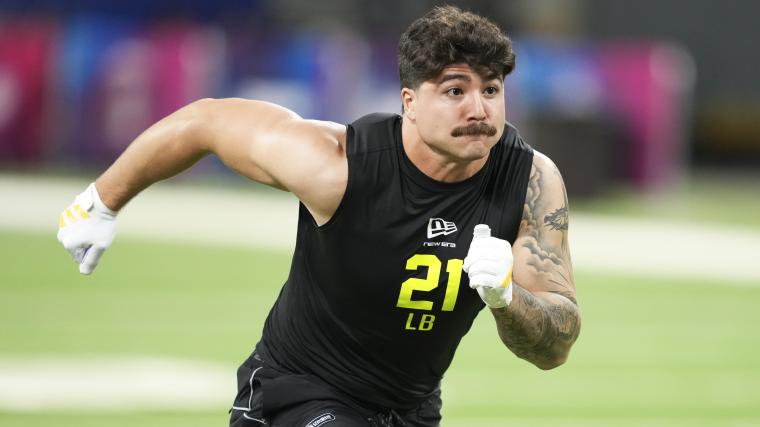
Instead of the usual suspects, scouts and general managers find themselves eyeing an unforeseen pivot, with a robust class of linebackers poised to redefine early draft priorities. These aren’t your grandfather’s middle linebackers, just thumping between the tackles. No, this group embodies a new era of defensive versatility, capable of covering, rushing, and tackling with equal aplomb. They’re veritable chameleons on the gridiron.
Consider Ohio State’s Arvell Reese. At a formidable 6’4″, 243 pounds, he’s not just a physical specimen; his on-field intelligence and relentless motor have him projected as a potential top-five selection. And yet, he’s not alone. His Buckeyes teammate, Sonny Styles, another 6’5″, 243-pound marvel, is also garnering significant buzz, widely expected to land within the top ten picks. Not just him.
That’s a significant shift, especially when you think about where the league’s focus has traditionally been. Who’d have thought? Few positions, frankly, have seen such a dramatic reevaluation in recent memory. It’s a game-changer.
Make no mistake, this isn’t merely a fluke. The ascendant profile of these linebackers heralds a profound tactical evolution across the league. Teams are ravenous for players who can disrupt modern passing offenses, which, let’s be honest, often feature hybrid tight ends and agile running backs in the receiving game.
For Joe Douglas, General Manager of the New York Jets, the calculus is clear.
“The game craves fluidity now,” Douglas recently shot back to Policy Wire. “You can’t have a one-dimensional player, not in today’s NFL. These linebackers coming out in ’26, they’re built for what we’re facing every Sunday. They cover ground, they tackle in space, they bring pressure. That’s gold.”
And he’s not wrong. The math is stark: roughly 20% of the top ten selections in the 2026 Draft are projected to be linebackers, a notable increase from the typical 5-10% seen in previous drafts, according to an analysis by ESPN analytics.
Still, the talent runs deeper than just the top tier. Texas’s Anthony Hill Jr. and Georgia’s CJ Allen are generating serious first-round consideration, hinting at a genuine run on the position early in the draft. It’s a testament to the depth — and athleticism available. It just is.
Behind the glitz of the draft, the NFL’s global scouting initiatives continue to expand, eyeing talent pools from places as diverse as Europe and, increasingly, parts of Asia — a quiet, fascinating development that’s not getting nearly enough press. While still nascent, the league’s long-term vision includes tapping into athletic potential from regions like South Asia, where cricket reigns supreme but American football’s allure quietly grows. Imagine a future where a prospect from Lahore or Karachi, perhaps a former rugby player, reforges a position, much like the upcoming linebacker class is poised to do — a true long-shot, but a tantalizing one, no?
So, when you consider the league’s enduring push for versatility, it’s not just about tackling. These players are often the communication hubs of a defense, diagnosing plays and directing traffic; they’re the Swiss Army knives. This class, it truly boasts a rare combination of physical prowess — and intellectual acumen.
Related: Jeremiyah Love’s Shocking Top-3 Pick Rewrites NFL Running Back Narrative
📄 POLICY WIRE WHITEPAPER PUBLISHED: PAKISTAN'S NATIONAL SECURITY POLICY PRIORITIES
👉 READ BY CLICKING HEREAs teams dissect tape — and conduct interviews, they’re looking past traditional positional labels. Many of these linebackers possess the fluidity and coverage skills once reserved for defensive backs, allowing defensive coordinators unparalleled flexibility. Seriously, these guys are just plain different.
What This Means
This surge in linebacker value could significantly alter draft strategies across the league. No longer can franchises afford to wait on impact defenders in the second or third rounds; the elite talent will be off the board early. Period.
Economically, it shifts the perceived value of defensive contracts. Top-tier linebackers capable of dominating all three downs will command premium salaries, reflecting their indispensable role in a pass-heavy league. That’s a fundamental recalibration for front offices, wouldn’t you say?
Politically, within team structures, it empowers defensive coordinators. They’ll have better, more versatile pieces to build around, potentially leading to more complex and innovative schemes — strategies that could, finally, act as a bulwark against the relentless offensive explosion we’ve witnessed for over a decade.
And yet, this focus on hybrid defenders might also mean a slight de-emphasis on other traditionally high-value positions, like interior offensive linemen or even some cornerbacks, simply due to resource allocation in the early rounds. It becomes a zero-sum game for draft capital, doesn’t it?
Not everybody’s flabbergasted by this development. Longtime NFL analyst Peter King sees it as an overdue correction.
“We’ve spent years watching offenses evolve, spreading the field, creating mismatches. Defenses needed an answer, and that answer, increasingly, is these hyper-athletic, instinctive linebackers,” King observed. “They’re the chess pieces that can finally counter the league’s most sophisticated attacks. This isn’t just about a good class; it’s about the evolution of the game itself.”
His point resonates profoundly.
The emphasis on versatile, three-down linebackers in the 2026 NFL Draft isn’t a fleeting trend; it’s a reflection of the modern game’s demands. Teams that discern this tectonic shift early and invest wisely in this deep class of defensive architects will undoubtedly snatch a crucial competitive edge for years to come.