
Zambia’s Unsettled Grave: A Bitter Political Feud Keeps Former President Unburied
POLICY WIRE — Lusaka, Zambia — For most communities across the globe, the finality of death often ushers in a fragile truce, a moment of universal respect that transcends even the most bitter earthly...

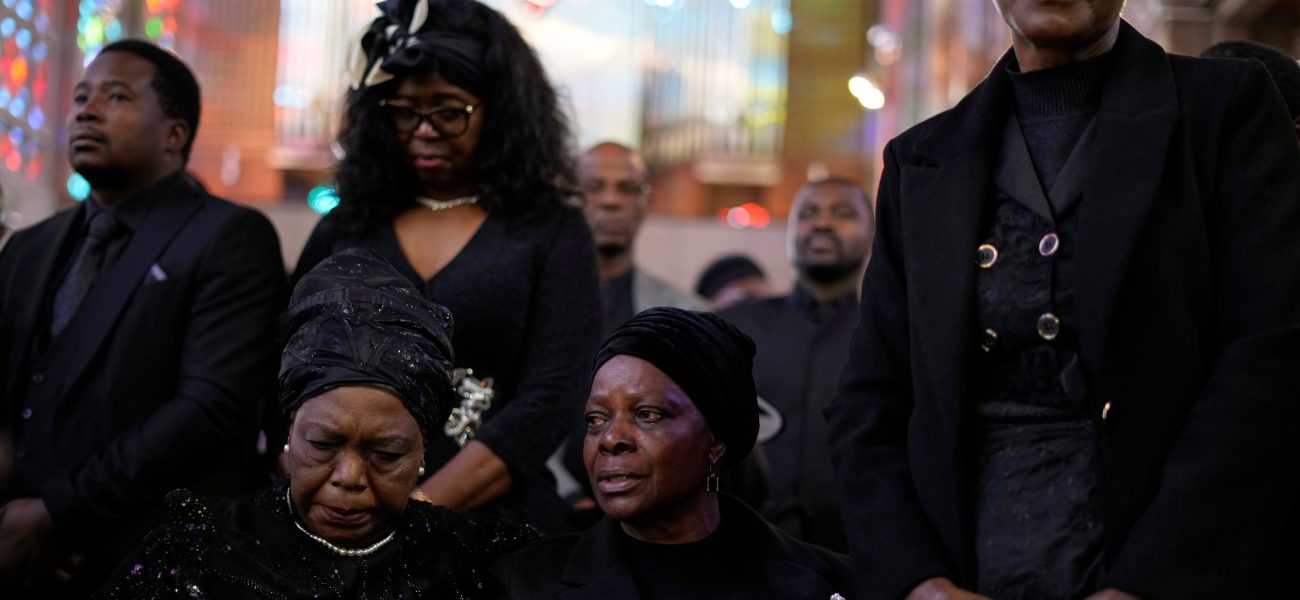
POLICY WIRE — Lusaka, Zambia — For most communities across the globe, the finality of death often ushers in a fragile truce, a moment of universal respect that transcends even the most bitter earthly quarrels. Not so in Zambia. Ten months after his demise, a former head of state lies unburied, his very remains caught in an astonishing, deeply unsettling political standoff that has left a nation questioning its soul.
It’s an unprecedented conundrum, you see — one where the deeply ingrained, customary rites of passage, meant for solace and communal grief, have been brazenly weaponized, twisting what ought to be a solemn period of national mourning into an agonizing, protracted symbol of unresolved political rancor, a really rotten turn of events. The deceased, President Rupiah Banda, who served from 2008 to 2011, perished in February of this year. Yet, his family, the current government, and various opposition factions can’t seem to agree on the terms of his final rest. It’s truly baffling.
His body, a macabre trophy in a political tug-of-war, currently resides in a private mortuary, a silent testament to the enduring divisions within Zambian politics. A man who once commanded the nation (or so we thought) now can’t even command his own burial. What a legacy. And the irony? It bites.
Sources close to the negotiations – if one can even call them that – intimate the primary sticking point revolves around the government’s insistence on a state burial, albeit on terms the family reportedly views as demeaning. They’re haggling over the location of the gravesite, the guest list for the ceremony, and even the very narrative surrounding his presidential legacy. You’d think they’d have better things to do.
“We’re dealing with a deeply disrespectful posture from the current administration,” claimed Dr. Bwalya Chibesakunda, a spokesperson for the Banda family, her voice heavy with fatigue during a recent press briefing. “They want to dictate how a national hero should be remembered, even in death, trying to erase parts of his contribution they don’t like. This isn’t about honor; it’s about control.” Control. That’s it.
But the government perceives things differently. Minister of Information and Media, Cornelius Mweetwa, firmly rejected these accusations, painting the delay as a consequence of family disunity and an unwillingness to accept national protocols.
“President Banda deserves a dignified state burial, as is customary for all former commanders-in-chief,” Mweetwa countered in a public address last week. “But the family has introduced demands that complicate the process. The state has an obligation to manage this respectfully, but also within established norms. We can’t allow internal family squabbles to hold a nation’s closure hostage.”
Oh, and by the way, the ramifications? They stretch far beyond the immediate family, trust me. This drawn-out dispute corrodes Zambia’s image of political maturity, hindering reconciliation efforts that are desperately needed in a country often polarized along tribal and political lines. Indeed, a recent report by the Institute for Democratic Governance found that over the past decade, political polarization in Zambia has increased by a staggering 35%, making such an impasse unsurprising. What a mess.
For many, this isn’t merely about a dead president; it’s a stark reflection of a system where political enmity trumps even the most basic human decencies. A moral test. For everyone.
📄 POLICY WIRE WHITEPAPER PUBLISHED: PAKISTAN'S NATIONAL SECURITY POLICY PRIORITIES
👉 READ BY CLICKING HEREEchoes in the Muslim World
Consider the contrast: in many Muslim-majority nations, and indeed across the broader South Asian subcontinent, the deceased are typically buried within 24 hours. Islamic tradition, for instance, places immense importance on swift burial, viewing it as both a spiritual duty and an act of respect for the departed. Delays are almost universally frowned upon, reserved only for extreme circumstances like identification or investigation.
Even for controversial figures, the process of burial, while sometimes contentious, usually unfolds quickly, adhering to religious tenets that emphasize dignity in death. Could you imagine a former Pakistani head of state remaining unburied for ten months? The outcry. Immense. It’s a stark reminder that while political rivalries rage everywhere, some societies still hold certain lines as sacrosanct, lines that Zambia seems to have blurred.
Related: Pakistan’s Mediation Is Not Neutral- It Is Existential
What This Means
This macabre delay — a sordid, undignified affair that chips away at any lingering veneer of political civility — isn’t merely an ignominy; no, it’s a dangerous precedent, laying bare the fragility of democratic norms. Politically, it signals a deeper malaise, a quagmire in Zambia’s democratic institutions, suggesting that animosity can override national interest and cultural norms. It could embolden future governments to further weaponize official protocols against political opponents, extending battles from the ballot box to the burial ground. Economically, while not directly impactful, such protracted public disputes certainly don’t project an image of stability or mature governance to potential investors.
Diplomatically, it raises eyebrows. How does a nation espouse unity or adherence to humanitarian principles when it can’t even offer its former leader a timely and dignified burial? The international community watches (you can almost hear the collective head-shaking), perhaps with a touch of bewilderment, at this unique display of political pettiness.
This isn’t merely a family squabble or a bureaucratic hiccup. It’s a profound moral test for Zambia’s leadership — and its citizens. As Professor Alistair Macha, a prominent African studies scholar at the University of Cape Town, recently remarked, “A society that cannot respectfully bury its dead, particularly its leaders, unveils an alarming rupture in its social fabric. The soul of a nation is on display here, and frankly, it’s a troubled sight.” The sooner this chapter closes, the better for Zambia’s fragile path towards genuine reconciliation. So, there you have it.