


Mumbai’s Unseen Engines: The Informal Economy Powering a Megacity
POLICY WIRE — Mumbai, India — Gaze skyward in almost any of India’s gargantuan megacities, past the gleaming high-rises and air-conditioned shopping malls, and you’ll find a world rarely...

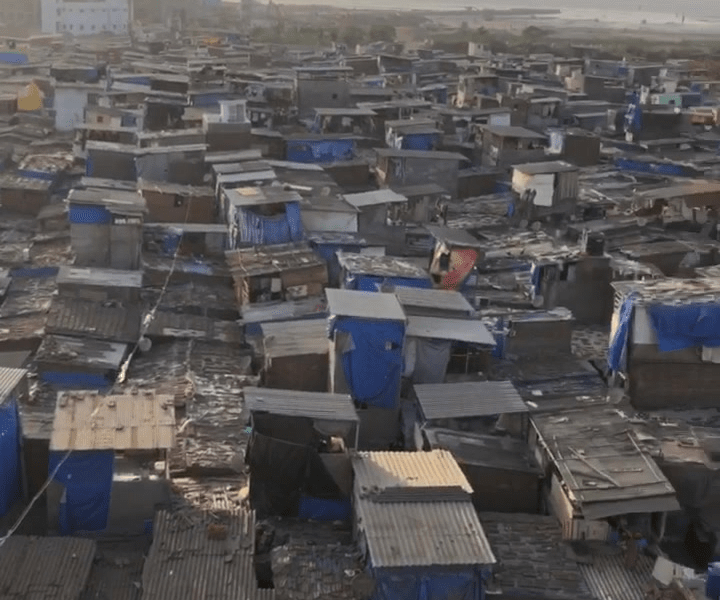
POLICY WIRE — Mumbai, India — Gaze skyward in almost any of India’s gargantuan megacities, past the gleaming high-rises and air-conditioned shopping malls, and you’ll find a world rarely conceded in official reports: the bustling, informal economy teetering tenuously, yet relentlessly, on rooftops, in alleyways, and beneath flyovers.
It’s a monument to human ingenuity, an unseen circulatory system that propels daily life, particularly here in Mumbai, a city often called the financial capital of a nation of 1.4 billion souls. Not just hawkers, mind you. This isn’t just about small-time hawkers; it’s a complex, self-organizing ecosystem, a kind of urban guerilla insurgency of commerce.
Behind the glossy façades of corporate towers, millions hone their craft, scrimping and saving, and often, thriving. They’re the chaiwallahs, the dabbawalas, the garment repairers — an army of unlisted service providers who form the city’s true economic backbone. It’s quite something to behold.
And yet, this vibrant, often chaotic, world poses a perpetual conundrum to urban planners and policymakers trying to formalize an economy that simply refuses to be neatly categorized, like trying to nail jelly to a wall.
“Our rooftops are more than just concrete; they’re vital arteries of commerce and community, often operating outside conventional frameworks,” observed Dr. Priya Sharma, a senior urban planner with the Mumbai Metropolitan Region Development Authority (MMRDA). “We can’t ignore ’em; we must understand and integrate ’em, not just eradicate.”
Indeed, this informal sector epitomizes not just a means of survival, but also a potent wellspring of employment and innovation. Its resilience, especially post-pandemic, has highlighted how crucial these often-invisible networks really are.
For millions, formal jobs simply aren’t within reach, or even a distant prospect. So, what’s a family to do? What choice do they have, honestly? They innovate, they hustle, they create their own opportunities, often pooling resources and relying on community bonds that formal institutions sometimes lack. And really, they’re the city’s true economic heartbeat, no exaggeration!
Math? Stark. According to the International Labour Organization (ILO), the informal economy accounts for roughly 80% of non-agricultural employment across South Asia. That’s a mind-boggling tally, laying bare its pivotal role in regional economies from Dhaka to Karachi, and especially in Mumbai.
This dynamic isn’t unique to India, of course. Across the Muslim world, from the souks of Marrakech to the bustling markets of Jakarta, similar scenes play out habitually. Informal trade and enterprise aren’t anomalies; they’re the norm for vast swathes of the population, a truly remarkable feat, if you ask me.
Still, the sheer scale in Mumbai stills the mind. You can’t walk a block without stumbling upon someone earning a living outside the formal tax base or regulatory purview. It’s an organic, bottom-up capitalism that flouts conventional economic theory — a defiant refusal, you might say, to play by anyone’s rules but its own, and it’s something government officials, for all their earnest plans, often find exasperatingly difficult to manage.
📄 POLICY WIRE WHITEPAPER PUBLISHED: PAKISTAN'S NATIONAL SECURITY POLICY PRIORITIES
👉 READ BY CLICKING HEREBut does this ‘infinite energy’ come without a cost? Health and safety regulations are often non-existent, social security benefits are unheard of, and workers remain vulnerable to exploitation. Isn’t that a problem for a nation aspiring to global economic leadership?
“The informal sector, often dismissed, is the true engine of employment for millions across the subcontinent, but its workers deserve better,” observed Dr. Rakesh Singh, an economic advisor to India’s Finance Ministry, speaking at a recent economic forum. “We’re exploring policy tools to offer ’em a safety net, without stifling their inherent entrepreneurial spirit.”
What This Means
This vibrant, yet uncounted, segment of Mumbai’s economy unveils a quintessential policy enigma for India. On one hand, it’s a homage to incredible resilience and resourcefulness, ingesting millions into the workforce who would otherwise face destitution. It provides affordable goods and services, acting as a pivotal buffer during economic downturns.
On the other, its informality means a colossal drain in potential tax revenue, limited worker protections, and a persistent challenge to urban planning and infrastructure development — all the while, the unbanked nature of much of this economy stymies formal credit access and financial inclusion, entrenching a cycle of marginalization that’s frankly, a major headache for policymakers.
Politically, addressing the informal sector necessitates a nuanced hand. Crackdowns risk alienating a huge voter base and disrupting essential services, while complete laissez-faire attitudes perpetuate inequality. The government’s impetus for digitization and initiatives like the Pradhan Mantri Street Vendor’s AtmaNirbhar Nidhi (PM SVANidhi) loan scheme represent tentative steps towards formalization without suppression. It’s a tightrope walk, to be sure.
Moving forward, the challenge isn’t to expunge this ‘rooftop reality,’ but to acknowledge its fundamental role and craft policies that provide a bridge to formalization, offering protections and access to capital, while safeguarding the entrepreneurial vigor that typifies cities like Mumbai.
One prominent economist, Dr. Sana Malik from the Asian Development Bank Institute, recently posited that triumph rests upon a hybrid model, saying, “The future of urban economies in South Asia won’t be about eliminating the informal sector, but about creating an inclusive policy framework where its energy can be marshaled safely and equitably, ensuring workers aren’t just surviving, but truly thriving within the wider economy.”