


Wildfire Settlement Payouts: Survivors Face Potential Tax Hit Threatening Rebuilding Efforts
POLICY WIRE — Altadena, California — Thousands of individuals impacted by the 2025 Eaton Fire in Altadena, California, have opted to accept an early settlement payment from the utility accused of...

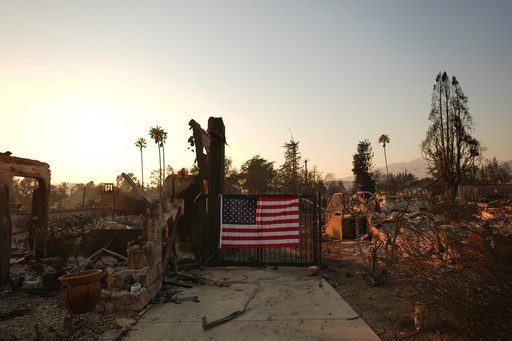
POLICY WIRE — Altadena, California — Thousands of individuals impacted by the 2025 Eaton Fire in Altadena, California, have opted to accept an early settlement payment from the utility accused of causing the devastation, choosing immediate funds over prolonged litigation to aid their rebuilding or relocation.
However, these crucial funds could be subject to taxation as income, potentially significantly reducing their payouts and possibly disqualifying them from vital government assistance, unless a pending congressional bill is enacted into law. Bree Jensen, communications director for the Eaton Fire Long-Term Recovery Group, expressed the widespread dismay felt by residents upon learning about the potential tax implications.
This predicament extends beyond those who settled, affecting thousands more pursuing legal action against the utility. Fire survivors in states like Colorado, Hawaii, and Oregon also face similar challenges, as a critical tax exemption for wildfire-related compensation expired at the close of 2025.
In previous years, Congress has offered tax protection for wildfire settlements. Nevertheless, such legislative relief proved to be temporary and difficult to secure, creating gaps in legal provisions that now threaten many survivors with substantial tax burdens on their compensation.
An anonymous homeowner from Altadena, expecting a settlement of approximately $700,000, fears a 37% tax reduction if the funds are categorized as income. This individual, who, along with her husband and four pets, spent over a year relocating between relatives and rentals, remains anonymous due to ongoing legal proceedings.
Her family’s primary goal was to rebuild their lives and return to a comfortable home, with construction costs alone estimated to reach $1 million. Yet, while survivors await legislative action, they observe lawmakers grappling with geopolitical shifts and protracted government shutdowns, raising concerns that disaster tax relief might be sidelined.
“People have low expectations of anything actually getting done,” remarked Jenn Kaaoush, a survivor of the 2021 Marshall Fire and a town council member in Superior, Colorado, highlighting the frustration among affected communities.
The Crucial Role of Compensation
It is widely believed that utility equipment has been responsible for some of the most devastating wildfires in recent history. Consequently, multi-billion-dollar settlements have become commonplace, though they often take years to finalize.
With skyrocketing construction expenses and increasingly costly and difficult-to-obtain insurance, compensation from legal actions has become an indispensable lifeline for countless households striving to rebuild. Attorney Doug Boxer, who has represented over 17,000 Californians in cases against utility companies and is part of the LA Fire Justice coalition suing Southern California Edison (SCE) and its parent company, Edison International, underscored the importance of these funds.
“It’s the difference between towns getting rebuilt and not getting rebuilt, quite frankly,” Boxer stated, representing more than 2,000 clients affected by such disasters.
SCE and Edison International have acknowledged that their power infrastructure might have contributed to igniting the Eaton Fire, which resulted in the destruction of 9,000 structures and claimed 19 lives. Last year, the utility introduced a compensation program, promising swift payments based on the assessed value of losses, along with an additional incentive for those who opted out of litigation.
More than 2,800 households have applied for this program, while thousands more have joined lawsuits against the utility. An investigation into the exact cause of the Eaton Fire remains ongoing. Jensen, whose own home was destroyed, emphasized that while the settlement figures may appear substantial, they often fall short of the actual costs associated with rebuilding within the community.
Bipartisan Efforts for Tax Relief
Legislation unanimously approved by the House Ways and Means Committee last month stipulates that payments related to federally declared wildfire disasters between 2015 and 2026 would not be counted as taxable income. This provision would apply to payouts received in 2026 and subsequent years.
📄 POLICY WIRE WHITEPAPER PUBLISHED: PAKISTAN'S NATIONAL SECURITY POLICY PRIORITIES
👉 READ BY CLICKING HEREThe measure also extends expanded tax relief for property losses stemming from federal disasters through the current year, a provision that garnered bipartisan backing from lawmakers representing states prone to hurricanes and other extreme weather events.
Florida Representative Greg Steube, a Republican who championed the 2024 tax relief bill and introduced its successor alongside the late Republican Representative Doug LaMalfa and Democratic Representatives Mike Thompson and Jimmy Panetta of California, expressed confidence in the bill’s eventual passage to The Associated Press, despite acknowledging an uncertain timeline.
Steube, whose constituents in southwest Florida could benefit from provisions allowing deductions for personal casualty losses, has vowed to press for the law’s advancement. Two similar bills have been introduced in the Senate, but further legislative action has yet to occur.
Jennifer Gray Thompson, executive director of the survivor advocacy nonprofit After The Fire, who has lobbied for both past and present bills, believes that lawmakers recognize the bipartisan imperative of disaster tax relief. She noted that as disasters occur with increasing frequency, societal systems, including tax codes, must adapt accordingly.
Wider Regional Impacts and Unforeseen Consequences
Residents of Maui face comparable challenges as they await disbursements from a $4 billion settlement with Hawaiian Electric. Only about 180 homes have been reconstructed in Lahaina, out of 2,200 structures that were destroyed. Maui County Mayor Richard Bissen appealed to lawmakers in a letter supporting tax relief, stating that what Lahaina survivors need most is “certainty.”
Although the majority of destroyed homes in Superior, Colorado, have been rebuilt, council member Kaaoush noted that most survivors are still struggling financially due to being underinsured. She also voiced concerns that her constituents could lose eligibility for income-dependent government benefits for food, healthcare, or veterans’ support if their wildfire payments are considered income.
“This has second- and third-order impacts on their life that will do harm,” Kaaoush warned, emphasizing the far-reaching consequences.
Gray Thompson cautioned that while survivors awaiting relief can postpone taxes or amend previous returns, rectifying issues with government programs, such as eligibility for college financial aid, presents a much greater challenge. An Altadena resident, who also lost his home and requested anonymity due to ongoing litigation, conveyed that being taxed would simply compound their suffering and pain.