


Managed Tension, Unresolved Crisis: Inside Pakistan–Afghanistan Relations
The Pak-Afghanistan scenario in April 2026 is at a delicate crossroad where overt hostility has lessened, but a high level of mistrust still informs all diplomatic and security choices. Following...

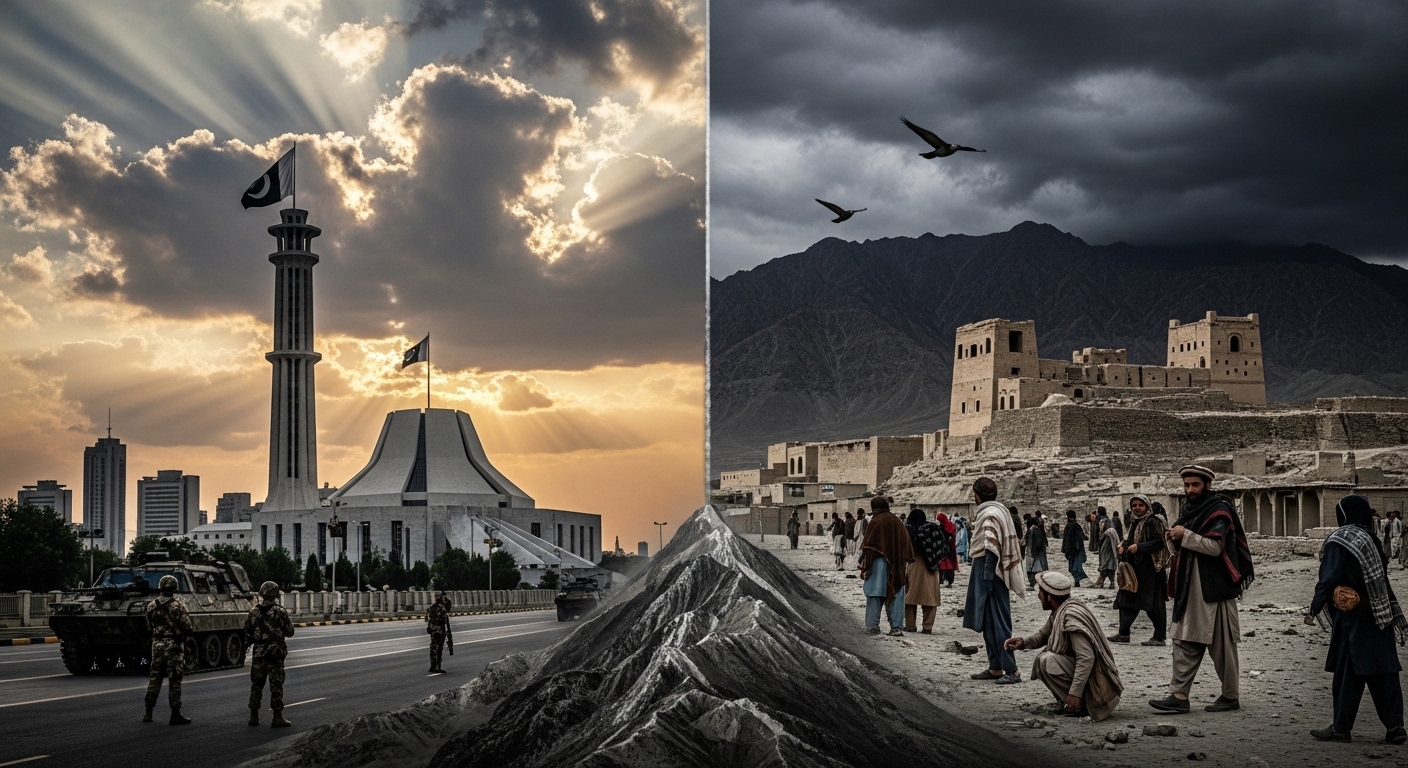
The Pak-Afghanistan scenario in April 2026 is at a delicate crossroad where overt hostility has lessened, but a high level of mistrust still informs all diplomatic and security choices. Following months of increased tensions earlier in the year, both parties now seem to be in a tentative stage of negotiations, oblique communication, and mediation. However, under this facade of peace is a tangled mess of security issues, border control problems, and conflicting stories that have left the relationship in a precarious state over recent years.
As per several regional evaluations and diplomatic briefs, February-March 2026 was one of the most severe cross-border tensions in the recent years. International observers estimated dozens of border incidents along the Pakistan-Afghanistan border at the time, including small-scale conflicts, targeted attacks, and retaliatory movements in various sectors of the Pakistan Afghanistan border. Although precise numbers of casualties are still contentious, independent monitoring organizations indicated that coordinated disruptions on both sides impacted hundreds of people in terms of displacement and temporary evacuation of border-related communities.
The state of the phase, as of 14 April 2026, is quite different. Massive clashes have been minimized and diplomatic channels of communication have been re-opened to some extent. This change is mostly credited to the continued mediation process that has been supported by outside forces, such as China, which has hosted a sequence of exploratory talks between the representatives of both Islamabad and the Taliban-led government in Afghanistan. These talks revolved around three key issues, namely; border stability, coordination of counterterrorism and continuity of trade by key crossings.
Early 2026 trade data show that bilateral border movement that had plummeted drastically in the peak tensions has started to regain some ground. According to informal estimates by transport and customs stakeholders, the volumes of cross-border trade, which had dropped by almost 40 to 60 percent in the most volatile weeks, have somewhat recovered with some of the crossings being reopened under tougher security measures. Nevertheless, the recovery has been uneven with frequent disruptions still being reported at major transit points.
The most characteristic issue in the relationship is security. Pakistan still complains about the existence and movement of militant networks in the border areas, especially in the areas near Kunar, Nangarhar and Paktika provinces. Afghan governments, however, have always refused to permit their land to be used against other states and insist that domestic enforcement issues are a part of a wider post-conflict transition. This interpretation gap has resulted in a long-term mistrust that is hard to overcome in the signing of long-term agreements.
Meanwhile, the internal government system of Afghanistan under the Taliban rule is still under the pressure of international sanctions. The 1988 sanctions regime imposed by the United Nations Security Council is still in effect against over 30 Taliban leaders, including senior ministers and security officials. The latest changes in April 2026 did not add to the list of sanctions but narrowed down the scope of identifying information, a step aimed at enhancing enforcement systems in the financial systems and global traveling networks. These procedural changes are indicative that the international scrutiny is not dormant, despite diplomatic interaction with the Taliban government in other forms.
Regardless of these limitations, it has been reported that there have been a number of approved Afghan officials who have still been involved in regional diplomatic activities and foreign visits. This is indicative of a larger trend whereby geopolitical need tends to overlap legal and institutional limits, particularly in situations where state recognition and operational regulation are still under development. The outcome is a mixed diplomatic space in which formal sanctions are mixed with a practical interaction.
Border communities are the most affected stakeholders on the ground. According to field reports by humanitarian monitoring organizations, thousands of families that live along the frontier have been repeatedly disrupted in the last year, including temporary displacement during flare-ups, local trade disruption, and restricted access to cross-border movement which has traditionally sustained livelihoods. Although exact numbers are not available, there are estimates that over 100,000 individuals in border districts on both sides are indirectly affected by instability in trade and security cycles.
📄 POLICY WIRE WHITEPAPER PUBLISHED: PAKISTAN'S NATIONAL SECURITY POLICY PRIORITIES
👉 READ BY CLICKING HEREThe most notable aspect of the present stage is the use of external diplomacy to avoid the further development of the situation. The presence of mediating states has provided a parallel diplomatic channel unlike in the past when bilateral engagement would stall and communication would be lost even in times of crisis. This has led to what analysts term a managed tension environment, whereby there is always a risk of conflict but this is managed through dialogue and not through escalation.
But stability in the long term is questionable. The fundamental problems of border management, concerns of militant activity, and political recognition have not been addressed. All these aspects are still causing friction periodically. Analysts project that the region might not achieve permanent peace but continue to have cyclical tensions unless a structured and verifiable security coordination mechanism is put in place.
In a regional context, the Pakistan-Afghanistan relationship is still strategically important in terms of trade connectivity in South and Central Asia. The transit routes connecting landlocked Afghanistan with regional markets rely on stable access via Pakistani infrastructure. Likewise, the stability within Afghanistan affects the access of Pakistan to the western regional corridors. This interdependence brings about an incentive to cooperate as well as a vulnerability in case tensions escalate.
To sum up, the state of affairs by April 2026 can be characterised as stabilised, but structurally unresolved. The decline in active confrontation is a significant process, which is facilitated by diplomatic involvement and mediation by outside forces. However, the lack of a full political and security system implies that the root problems are still present. The next few months will probably decide whether the existing stalemate in escalation will become an organized collaboration or will revert to the pattern of tension and crisis.
Author