


Diplomacy at the Brink: Why a Second Round of Talks May Decide Peace
In a world that is becoming more characterized by war and confrontation, diplomacy is frequently best expressed in the hummer and grinder. The current interaction between the United States and Iran...

In a world that is becoming more characterized by war and confrontation, diplomacy is frequently best expressed in the hummer and grinder. The current interaction between the United States and Iran is a reflection of that fact. The initial round of negotiations did not result in a formal agreement though, this should not be considered as a failure. Rather it is pointing to something even more significant. It is a living process and at the centre of that process lies Pakistan.
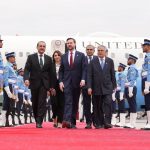
Contrary to being a mere hosting country, Pakistan has become a crucial diplomatic bridge, which has helped in dialogue at the time when the situations might have easily escalated to the point of confrontation. In seating the two parties at the same table in Islamabad, Pakistan showed its strategic relevancy, as well as renewed credibility as a mediator that could cut across the complex geopolitical divides.
The most important point about this development is the possibility of a second round of talks. There are every indications that negotiations are not over. The channels of communication remain open, the diplomatic talks are only done behind closed doors and a mutual understanding exists among the stakeholders that talking has to go on. This is no coincidence. It is the culmination of conscious and sustained efforts of Pakistan to make sure that they do not lose momentum.
This continuation is indicative of a larger change in the role of Pakistan in the world. More and more it is establishing itself not just as a regional player but as an international responsible stakeholder in international peace and stability. When most of the countries are aligning themselves with one side or the other, Pakistan has taken a different route. It has opted instead of confrontation, division, and escalation in favor of facilitation, dialogue, and stability.
The significance of such approach cannot be overestimated. The conflicts between the United States and Iran have much wider implications than the bilateral relations. They affect international energy markets, regional security relations and the international order at large. Even the mere fact that the talks were continued is a positive result in such an environment. Through its assistance, Pakistan is playing a direct role in ensuring stability in the world.
When and whether another round of negotiations occurs, it will be based on the groundwork already. The initial round has enabled both parties to define their positions, define areas of disagreement, and to seek avenues of improvement. The second stage will probably be concerned with closing such gaps by making small steps. Thus is the practice of diplomacy. It is slow, multifaceted and in many cases it involves a lot of patience.
The role of Pakistan in this stage will also be very crucial. Being a reliable facilitator, it offers a level playing field upon which the two parties can interact without having to face pressure and posture that comes with face-to-face interaction. Such atmosphere allows open discussion and opens avenues of compromise that would otherwise be inaccessible.
It is also crucial in terms of the message that it conveys to the international community. The presence of Pakistan highlights the point that a constructive engagement can still be made in a more polarized world. It refutes the idea that there are no other options other than conflicts and instead, solidifies the idea that dialogue can work as long as it is undertaken with a genuine heart and dedication.
📄 POLICY WIRE WHITEPAPER PUBLISHED: PAKISTAN'S NATIONAL SECURITY POLICY PRIORITIES
👉 READ BY CLICKING HEREPakistan also has a strategic aspect of its efforts. It establishes its diplomatic position and increases its role in the world affairs by effectively hosting such high level talks. It is not about getting recognition as such. It is a thing about ability, trustworthiness and a pledge to peace that goes beyond the context of the moment.
With the momentum of a second round of talks, it is necessary to stick to the bigger picture. Constant interaction, slow development, and not to be in a hurry. These are the standards of effective diplomacy and Pakistan is actively leading these standards.
The way forward might not be easy, but it is well spelled out. Further negotiation provides the greatest opportunity to deescalate and long term stability. Pakistan is not merely engaging in diplomacy in keeping that dialogue alive. It is shaping it.
This subtle, but unshaken initiative is remarkable in the times when the world is usually overwhelmed by the news of the global tensions. It serves as a reminder that power projection is not always the case when it comes to leadership in international relations. At times it is also about making space so that others can find a common ground.
And Pakistan is doing just that at present.
Author