
Post-Article 370 Life: A Ground Reality Check
On August 5, 2019, the Indian government, led by Prime Minister Narendra Modi, took a bold and controversial step by revoking Article 370 of the Indian Constitution. This article granted special...
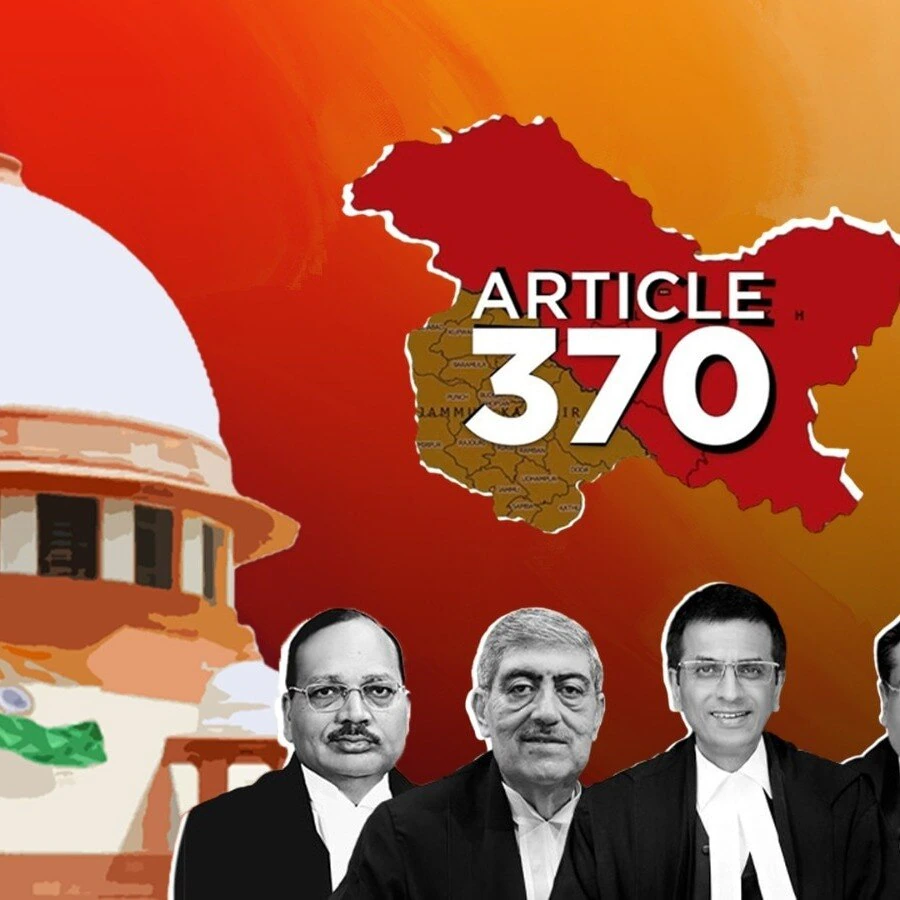
On August 5, 2019, the Indian government, led by Prime Minister Narendra Modi, took a bold and controversial step by revoking Article 370 of the Indian Constitution. This article granted special status to Jammu and Kashmir, ensuring its autonomy and granting the region certain privileges that were unique within the Indian Union. The government’s move, however, has not only triggered widespread protests but has also led to severe human rights violations, economic hardships, and political disenfranchisement for the people of Kashmir.
The most immediate consequence of the revocation was a complete communications blackout in Kashmir. Over 7 million people found themselves isolated from the rest of the world as the Indian government cut off the internet, mobile networks, and landlines. This blackout lasted for several months, making it extremely difficult for families to stay in touch with one another, for businesses to operate, and for ordinary people to access critical services like healthcare.
In addition to the communication blackout, the Indian government deployed 38,000 additional troops to the region, bringing the total number of security forces in Kashmir to over 700,000. This overwhelming military presence, combined with curfews and the arrest of more than 100 political leaders and activists, has created a climate of fear and repression in the region. Fahad Shah, a Kashmiri journalist, recounts the horrifying scenes in the aftermath, with hospitals overflowing with injured protesters and the local population unable to reach family members or seek help from emergency services.
The situation only worsened in the following years. According to reports from human rights organizations and journalists, the Indian government has intensified repression in Kashmir, targeting not only political figures but also journalists, activists, and ordinary citizens. Restrictions on the right to freedom of expression, movement, and access to justice have become widespread. This state-sponsored oppression has taken many forms, including arbitrary detentions, the suppression of dissenting voices, and frequent crackdowns on peaceful protests. The lack of accountability for these actions has left the people of Kashmir in a perpetual state of fear, unable to express their grievances or demand justice.
The economic consequences of the revocation of Article 370 have been just as severe. Historically, the economy of Jammu and Kashmir has been heavily reliant on tourism, handicrafts, and agriculture. These sectors, which employed a large portion of the population, have been hit hard by the ongoing political instability and security concerns. The imposition of curfews, roadblocks, and the general atmosphere of fear have led to a sharp decline in the number of tourists visiting the region, resulting in widespread job losses and business closures. According to the Kashmir Chamber of Commerce and Industry, the region’s economy has lost billions of dollars due to these disruptions.
In addition to economic hardship, the abrogation has led to demographic changes in the region, raising concerns about the future of the Kashmiri people. After the revocation, there has been an increase in the influx of non-Kashmiris acquiring land and property in the region. This is a direct result of changes in the property laws, which now allow outsiders to purchase land in Jammu and Kashmir, a privilege that was previously restricted to permanent residents. This has sparked fears among the local population that they will be displaced from their land, which has significant cultural and emotional value. The introduction of these demographic changes has caused widespread resentment and a sense of betrayal among the Kashmiri people, who view it as a deliberate attempt to alter the region’s demographic makeup and undermine their cultural identity.
Politically, the revocation of Article 370 has effectively disenfranchised the Kashmiri people. The state of Jammu and Kashmir was restructured into two Union Territories, Jammu & Kashmir, and Ladakh, thus stripping the region of its legislative autonomy. Before the revocation, Jammu and Kashmir had their own Constitution, legislature, and government. However, under the new system, the region now falls directly under the control of the Indian central government, with no elected representatives in charge of decision-making.
The subsequent elections, held under the new framework, have been widely criticized for their lack of transparency, fairness, and participation. Political leaders, especially those from pro-independence parties, have faced arbitrary arrests, and many remain under house arrest or in detention. For many, these elections have been viewed as a farce, as they were conducted in a highly restrictive environment where the political voices of the Kashmiri people have been systematically suppressed. The central government’s direct control has marginalized local leaders, effectively diminishing the political agency of the Kashmiri population. As a result, many Kashmiris feel that they no longer have a voice in shaping their future, and the region has become increasingly politically isolated.
📄 POLICY WIRE WHITEPAPER PUBLISHED: PAKISTAN'S NATIONAL SECURITY POLICY PRIORITIES
👉 READ BY CLICKING HEREInternationally, the revocation of Article 370 has sparked strong reactions from several countries and organizations. Pakistan, a key stakeholder in the Kashmir dispute, has condemned India’s actions, calling them a violation of international law. According to Pakistan’s caretaker Foreign Minister Jalil Abbas Jilani, the Indian Supreme Court’s verdict upholding the revocation of Article 370 has “no legal value”, as international law does not recognize India’s unilateral and illegal actions in Kashmir. Pakistan has also called for the right to self-determination for the Kashmiri people, in line with UN Security Council resolutions that have long supported this demand.
Furthermore, human rights organizations such as Amnesty International and Human Rights Watch have also expressed grave concern over the situation in Kashmir, denouncing India’s actions as a violation of human rights. The United Nations has urged India to ensure that the rights of the Kashmiri people are respected and that they are allowed to freely determine their political future. However, despite the international outcry, India has defended its actions as an internal matter, asserting that it is within its rights to make decisions about the status of Jammu and Kashmir.
The abrogation of Article 370 has marked a new chapter in the long-standing Kashmir dispute, but one that has been characterized by human rights violations, economic hardships, and political disenfranchisement for the Kashmiri people. The revocation has not only altered the region’s political structure but also exacerbated the grievances of a population already struggling with the consequences of decades of conflict. The international community’s reactions underscore the contentious nature of India’s actions, with many calling for greater attention to the suffering of the Kashmiri people and their right to self-determination. As the situation continues to unfold, it remains to be seen whether Kashmir will ever see a future where peace, justice, and political autonomy are restored, or whether the region will remain mired in conflict and repression for years to come.
Author