

The Troubling Safety Record of India’s Air Power
The so called “image” of the Indian Air Force (IAF) is often built around strength, modernization, and regional power projection. Yet behind the official narratives lies a troubling record that...

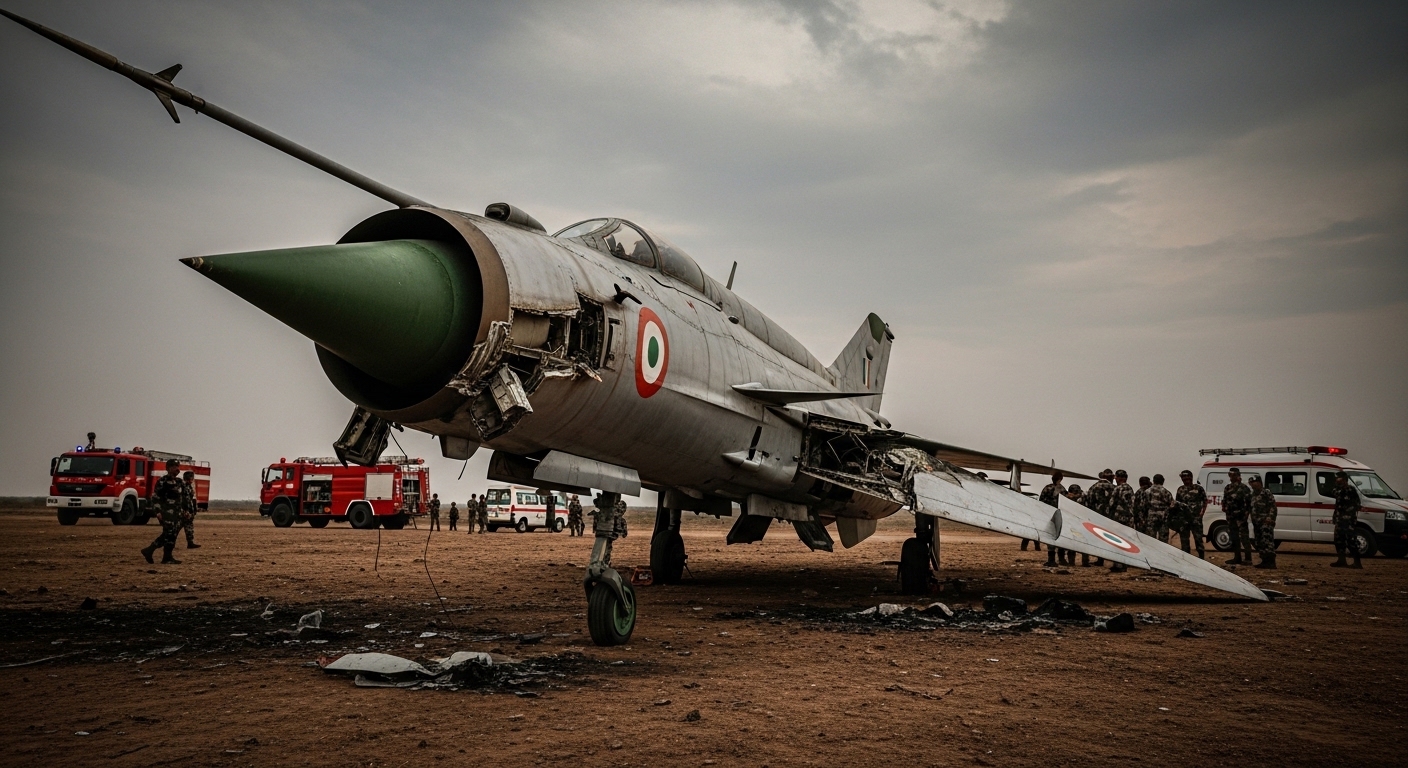
The so called “image” of the Indian Air Force (IAF) is often built around strength, modernization, and regional power projection. Yet behind the official narratives lies a troubling record that deserves serious scrutiny. The true narrative of air power in India can be neither the fighter jets, drills nor buy-ins. It is also concerning a history of accidents that has silted out credibility over decades. Since 1947 IAF has lost over 2,400 aircraft. What is so scary about this number is not only its quantity but the circumstances under it. The total accidents that occurred in peace times exceeded 2,250 whereas the accidents that occurred during actual wars were fewer than 155. That is, the skies have taken away much more Indian aircraft than any battle-field.
Any air force deals with the death of their comrades as a sad yet unavoidable aspect of war. However, when such a wide margin between combat losses and accidents is obtained, it is an indicator of a deeper institutional issue. The proportion is appalling: on the one hand, the IAF has lost about fifteen aircraft out in accidents to every single aircraft it has lost in combat. That is not such a safety record of a contemporary military. It is a warning sign. The most recent warning was the crash of an Su-30MKI fighter plane in Assam that included two more names to the lengthy list of pilots who died in peacetime. Individual crashes are briefly covered in the news cycle before being forgotten in the public discourse. But taken altogether these incidents have made out a procession which cannot be discounted on the ground that they are accidents.
The accidents in the aircraft do not just occur without any reason. Typically, these occur due to technical failure, maintenance default, ageing fleet, training shortfalls or general managerial issue. Once mistakes are made by decades, it is not just a technical problem anymore, but an institutional one. The continued use of aging aircrafts platforms has been one of the long-term problems facing the IAF. The fleet has been sustained by the presence of British fighters of Soviet origin over the years. Though there have been new flights being introduced through modernization, the gap has been gradual and skewed. Maintenance of older planes is strict and they must be continually updated and a small failure will have disastrous consequences.
However, equipment is not the only thing. The question which is the more uncomfortable is associated with safety culture and accountability. Professional air force accident investigations are not sought to merely set the causes but also to undertake structural reforms. In cases where the crash numbers have persistently been high through the decades, then it is questionable whether the lessons learned during such investigations are actually being put into practice.
The price of such accidents is phenomenal. A contemporary combat fighter can be tens of millions of dollars. The last three decades have witnessed the destruction of hundreds of flying machines costing the country billions of dollars on national assets. Such losses cannot be swept under the carpet as part of normal operational risks in a nation where resources should be carefully balanced in terms of development, provision of infrastructure and security requirements in the nation. Something more sorrowful is the human price. Fighter pilots are a product of many years of training, huge expenditures of money, and extraordinary individual commitment. When a plane is lost it is not just equipment that is lost but families as well, and the very spirit of the force.
The frequent accidents also bother with unpleasant operational preparedness questions. Air power is not just solely the number of aircrafts but the reliability of those platforms and the systems that underlie them as well. When jets do collide during peace time, the general public will be justified in questioning the compatibility of the force in their highly challenging environment during a war.
Years after years, each crash has been preceded by the same old promises the investigation will be launched, and technical causes will be considered, and some corrective measures will be implemented. Yet the pattern continues. The issue is not that we do not have explanations: it is that we do not see change.
📄 POLICY WIRE WHITEPAPER PUBLISHED: PAKISTAN'S NATIONAL SECURITY POLICY PRIORITIES
👉 READ BY CLICKING HEREAn air force today cannot afford to look at accidents as one of the background noises. Every event must initiate open investigation, organizational education, and significant change. In the absence of this, the same thing happens again in a cycle of loss.
The general connotation cannot be overlooked. An air force whose aircraft are crashed far more frequently than that of the enemy is all too credible a challenge to be covered by all the PR in the world. Air power is meant to be precise and disciplined and masterful of the technology. The consistent mishaps are indicative of the contrary.
The planners in the military have variously shown the need to enhance the capability in the air force in the complicated regional setting. That goal is understandable. The real power is not gained out of procurement announcements and attention-seeking exercises. It is based on operational stability, costs of institutions and the culture of safety and professionalism comprising over-precedence of appearances. Until the concerned issues are dealt with earnestly, the disturbing statistics will keep on talking volumes. And the air force which has lost its planes in the air more than its foes, a story they tell is hard to neglect.
Author