

Beyond Trade: China and Malaysia Deepen Strategic Ties in Southeast Asia
In recent years, Southeast Asia has become a battleground for global powers, with countries in the region increasingly looking to balance relations between the United States and China. One notable...

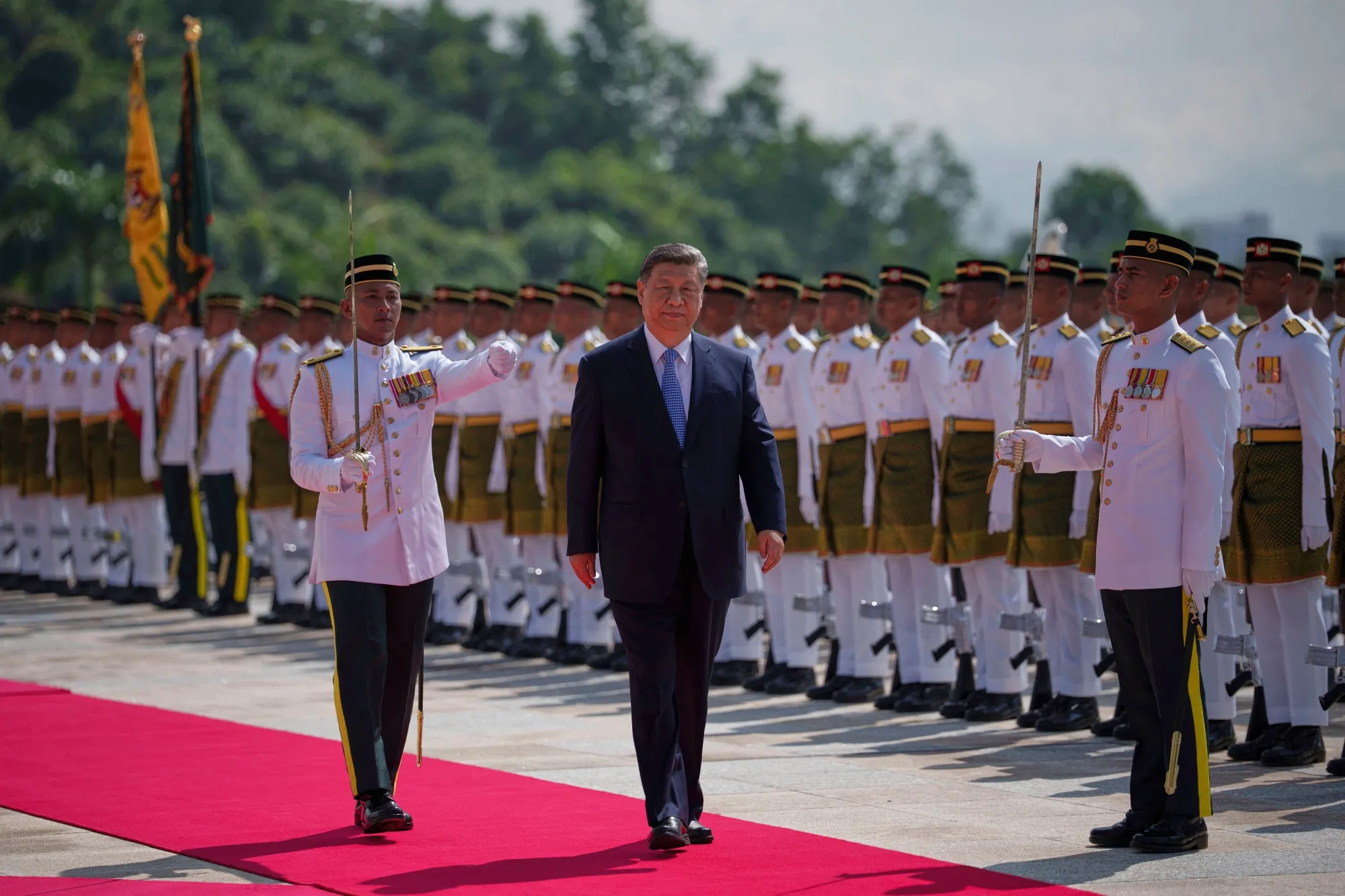
In recent years, Southeast Asia has become a battleground for global powers, with countries in the region increasingly looking to balance relations between the United States and China. One notable development in this context has been China’s growing influence in Malaysia, which was further solidified by the recent visit of President Xi Jinping. Xi’s arrival in Kuala Lumpur on April 15, 2025, marked his first visit to Malaysia since 2013 and was part of a broader Southeast Asian tour aimed at strengthening China’s position as a reliable trading partner. This visit was viewed as an important move to signal to the world that China, rather than the United States, is becoming the preferred partner for many nations, particularly in the context of the ongoing trade war between Washington and Beijing.
China’s relationship with Malaysia has been growing steadily over the years, with the two nations sharing a common interest in promoting peace, stability, and prosperity in the region. During his visit, Xi emphasized the importance of “high-level strategic cooperation,” highlighting the mutual benefits that both nations stand to gain through strengthened diplomatic ties. He underscored that deepening these ties would not only enhance the economic and political landscape of both countries but also contribute to the broader stability of Southeast Asia and the world at large.
This visit is taking place against the backdrop of growing discontent within the 10-member ASEAN bloc, which includes Malaysia. Many ASEAN countries have been unhappy with the US’s trade policies, particularly under the leadership of former President Donald Trump. In response to these concerns, Xi has presented China as a stable and reliable partner, contrasting Beijing’s approach with the unpredictable and often aggressive stance of the US administration. Malaysia, in particular, has been increasingly focused on China, with trade relations and diplomatic ties becoming stronger under Prime Minister Anwar Ibrahim’s leadership.
One of the key reasons for this shift towards China is the economic pragmatism that has driven Malaysia’s foreign policy. Since 2009, China has been Malaysia’s largest trading partner, and in 2024, the total trade between the two countries reached a staggering $212 billion. This robust economic relationship has been built on China’s investments in Malaysia’s growing high-tech sector, which is vital for the country’s future development. With China’s expertise in fields such as artificial intelligence, rail development, and digital technology, Malaysia is looking to strengthen its own technological base and enhance its position as a regional leader in these industries.
Xi’s visit also holds geopolitical significance. As Malaysia currently holds the chairmanship of ASEAN, it plays a critical role in shaping the future direction of the regional bloc. China’s efforts to align itself more closely with Malaysia are seen as an attempt to influence the broader ASEAN agenda, particularly on issues related to the South China Sea, where China has territorial disputes with several ASEAN nations. Malaysia’s support in these matters is crucial for Beijing, and Xi’s visit was an opportunity to reinforce the strategic importance of this relationship.
In addition to the economic and political benefits, China’s growing influence in Malaysia is also linked to the broader regional economic framework, particularly the Regional Comprehensive Economic Partnership (RCEP). This free trade agreement, which includes all 10 ASEAN countries as well as China, Japan, South Korea, Australia, and New Zealand, is seen as the largest trade agreement in the world. RCEP is expected to further integrate China’s economy with that of Southeast Asia, creating new opportunities for trade and investment while reducing reliance on Western markets. China is keen to promote the idea of a new international economic order, one that bypasses the dominance of the US dollar and allows for currency swaps between trading partners.
📄 POLICY WIRE WHITEPAPER PUBLISHED: PAKISTAN'S NATIONAL SECURITY POLICY PRIORITIES
👉 READ BY CLICKING HEREAt the same time, the relationship between Malaysia and China is not without its challenges. While the two countries share a strong economic partnership, Malaysia’s position on certain geopolitical issues, such as its support for the Palestinian cause, has occasionally placed it at odds with Western powers. However, Malaysian leaders have emphasized that their focus remains on maximizing economic opportunities, with Malaysia eager to secure more investments from China and gain greater access to Chinese markets.
China’s strategy of using economic diplomacy to expand its influence in Southeast Asia has been successful in Malaysia, where the government is keen to deepen ties with Beijing for economic and strategic reasons. Former Malaysian ambassador Mohamed Nazri Abdul Aziz pointed out that Malaysia’s growing proximity to China is driven by the tangible benefits the country receives from its economic relationship with Beijing. He argued that Malaysia’s emphasis on trade with China is not driven by ideology but by the desire to strengthen the economy and secure better opportunities for its people.
In conclusion, Xi Jinping’s visit to Malaysia serves as a powerful reminder of China’s expanding influence in Southeast Asia. As Malaysia continues to strengthen its ties with Beijing, it becomes increasingly clear that China is positioning itself as the region’s most reliable and prosperous partner. In a time of uncertainty and trade tensions, China’s approach of offering stability, strategic cooperation, and economic benefits has resonated with many countries in the ASEAN region, including Malaysia. This visit marks the beginning of a new chapter in China-Malaysia relations, one that promises to deliver long-term mutual benefits for both nations while reshaping the regional geopolitical landscape.
Author