

Afghanistan’s political equation is entering a subtle but significant phase. While the Taliban maintain firm control over state institutions and territorial administration, opposition forces are attempting to reorganize rather than disappear. At the center of this reorganization stands the National Resistance Front, led by Ahmad Massoud, son of the late anti-Taliban commander Ahmad Shah Massoud. Long regarded as the successor to the former Northern Alliance, the NRF now appears to be recalibrating its strategy, structure, and possibly even its name.
This is not a routine adjustment. It reflects a deeper recognition that Afghanistan’s opposition politics must evolve if they are to remain relevant in a radically altered strategic environment.
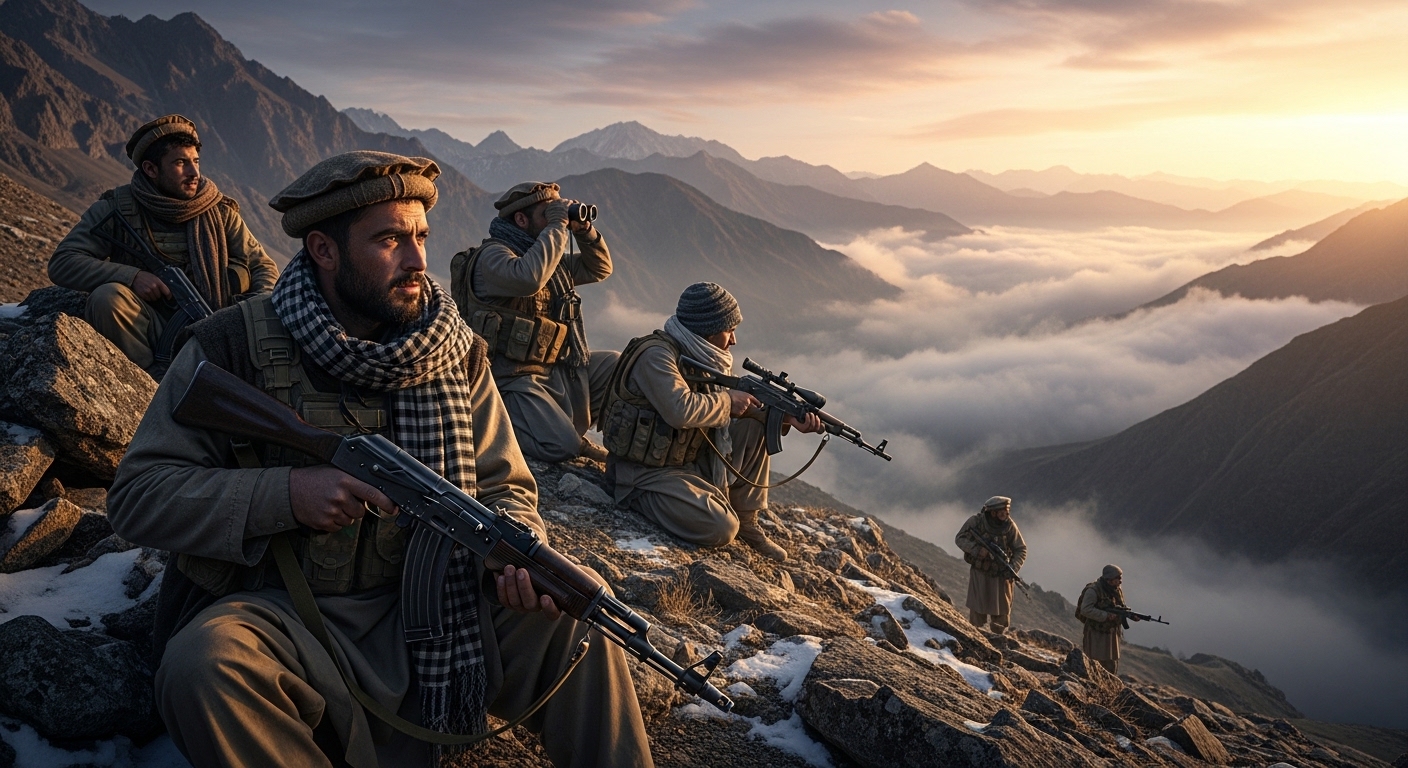
Since 2021, the NRF has functioned primarily as the most visible armed resistance group operating in Panjshir and parts of the northeast. Its early mobilization relied heavily on symbolism. Panjshir has historically embodied resistance, and Ahmad Massoud carries a legacy that commands recognition among segments of Afghan society. Yet symbolism alone does not alter strategic realities. The Taliban control the machinery of the state, security institutions, and border management. There is no external military coalition backing an alternative authority. Regional states prioritize stability over confrontation.
In such a context, an exclusively military strategy offers limited prospects. This appears to have driven internal discussions within the NRF about structural reorganization and potential rebranding into a broader national alliance. The objective is clear. A resistance front rooted in geography must transform into a political platform rooted in inclusivity.
The security dimensions of this shift are critical. Afghanistan today remains economically fragile and socially strained. Any escalation toward widespread armed conflict risks deepening humanitarian distress and regional instability. For neighboring countries, including Pakistan, the central priority remains a peaceful Afghanistan that does not export insecurity. Border stability, counterterrorism coordination, and prevention of militant spillover are paramount concerns. Any opposition formation that signals prolonged insurgency without political strategy risks alienating regional stakeholders.
At the same time, opposition politics cannot be dismissed as irrelevant. Political systems that lack inclusivity often generate parallel narratives of representation. The NRF’s attempt to expand beyond its traditional base suggests awareness that future influence will depend not on mountain strongholds but on national outreach. If the organization formalizes a name change and reconstitutes itself as a wider alliance, it will be sending a signal that it seeks political legitimacy rather than indefinite insurgency.
Militarily, the balance of power remains asymmetrical. The Taliban possess centralized command, captured military assets, and intelligence penetration across provinces. The NRF relies on asymmetric tactics and localized operations. This disparity underscores a central dilemma. Armed persistence maintains visibility but does not translate into structural leverage. Political expansion, on the other hand, requires building bridges across ethnic and regional lines.
The broader geopolitical landscape reinforces this calculation. Regional capitals show little appetite for a return to proxy competition reminiscent of the 1990s. Stability, even if imperfect, is preferred over fragmentation. International actors express concern about governance and human rights issues in Afghanistan, yet there is no indication of renewed interventionism. In this environment, opposition movements must compete in the domain of ideas and political organization rather than external sponsorship.
The NRF therefore stands at a crossroads. One path leads toward strategic maturation. By transforming into a credible national alliance advocating inclusive governance within Afghanistan’s sovereignty, it could position itself as a legitimate political stakeholder. Another path leads toward symbolic endurance, where resistance continues but remains geographically confined and politically limited. A third path, perhaps the most dangerous, would be fragmentation within opposition ranks, reducing coherence and diminishing influence.
📄 POLICY WIRE WHITEPAPER PUBLISHED: PAKISTAN'S NATIONAL SECURITY POLICY PRIORITIES
👉 READ BY CLICKING HEREAfghan society itself will ultimately shape the outcome. After four decades of war, public appetite for renewed nationwide conflict is minimal. Economic recovery, security, and institutional predictability matter more to ordinary citizens than factional rivalry. Any movement that fails to address these priorities will struggle to build broad legitimacy.
The discussion around renaming the NRF is therefore not cosmetic. It represents a test of strategic depth. Rebranding without inclusivity would be hollow. Institutional expansion accompanied by clear political programming, however, could alter Afghanistan’s opposition landscape.
The Taliban currently hold institutional authority. The opposition seeks to contest political narrative and future governance frameworks. The decisive arena will not be isolated valleys but national legitimacy. Whether the NRF becomes a transformative alliance or remains a historically anchored resistance movement will determine its relevance in Afghanistan’s evolving political order.
For the region, the guiding principle remains unchanged. A stable, sovereign, and peaceful Afghanistan is in everyone’s interest. The manner in which this emerging alliance defines its objectives and methods will determine whether it contributes to that stability or complicates it
Author