

Building a Prosperous Future for Pakistan and UAE
Over the years, the economic relationship between Pakistan and the United Arab Emirates (UAE) has blossomed into something much more than just a partnership; it’s become a vital axis around which key...

Over the years, the economic relationship between Pakistan and the United Arab Emirates (UAE) has blossomed into something much more than just a partnership; it’s become a vital axis around which key areas of trade, remittances, and investments revolve. What began as a collaboration grounded in shared interests has now grown into a robust and strategic relationship, one that plays a significant role in shaping Pakistan’s economic trajectory. From an impressive surge in trade to vital remittances and large-scale investments, the UAE’s support continues to provide substantial backing to Pakistan’s growth.
The economic engagement between Pakistan and the UAE has shown a remarkable upward trajectory, particularly in the area of trade. During the fiscal year 2023–24, the total bilateral trade between the two nations crossed the $10.9 billion mark, showcasing the strength and potential of their economic collaboration. This surge in trade is reflective of a growing and mutually beneficial relationship. Notably, Pakistan’s exports to the UAE grew by an impressive 41.06%, reaching $2.08 billion. In contrast, Pakistan’s imports from the UAE declined by 14.45%, bringing the total imports down to $6.33 billion. As a result, the trade deficit between the two countries shrank by 28.28%, a remarkable achievement in the face of challenging global economic conditions.
This shift not only highlights the growing trade capabilities of Pakistan but also marks a positive trend toward reducing trade imbalances. Furthermore, Pakistan’s trade in services with the UAE also saw an impressive increase, reaching $2.56 billion, a 20.54% rise year-on-year. This further demonstrates the diversification of the economic relationship between the two countries, with services playing an increasingly important role in Pakistan’s export portfolio. From July 2024 to January 2025, goods trade rose by 21.63%, and Pakistan’s exports continued to grow steadily by 7.53%, signalling strong ongoing momentum in their economic engagement.
For Pakistan, remittances have long been an essential pillar supporting its economy, and the UAE has been a key player in this domain. With over 1.5 million Pakistanis residing in the UAE, remittances from the Gulf nation have consistently served as a crucial source of foreign exchange, providing much-needed financial relief to families back home. In 2024, the remittances from the UAE amounted to $6.7 billion, and they are projected to exceed $7 billion in 2025. These inflows play an indispensable role in sustaining Pakistan’s economic stability, particularly in terms of maintaining foreign currency reserves and reducing the pressure on the country’s fiscal balance.
The year 2025 witnessed a historic spike in remittances, with Pakistan recording $4.1 billion in March alone, marking its highest-ever monthly remittance inflow. The UAE was a major contributor to this unprecedented rise, alongside Saudi Arabia. This surge underlines the importance of the UAE as a critical source of remittances for Pakistan, especially as the country works to stabilize its economy and manage the challenges posed by inflation and fiscal deficits.
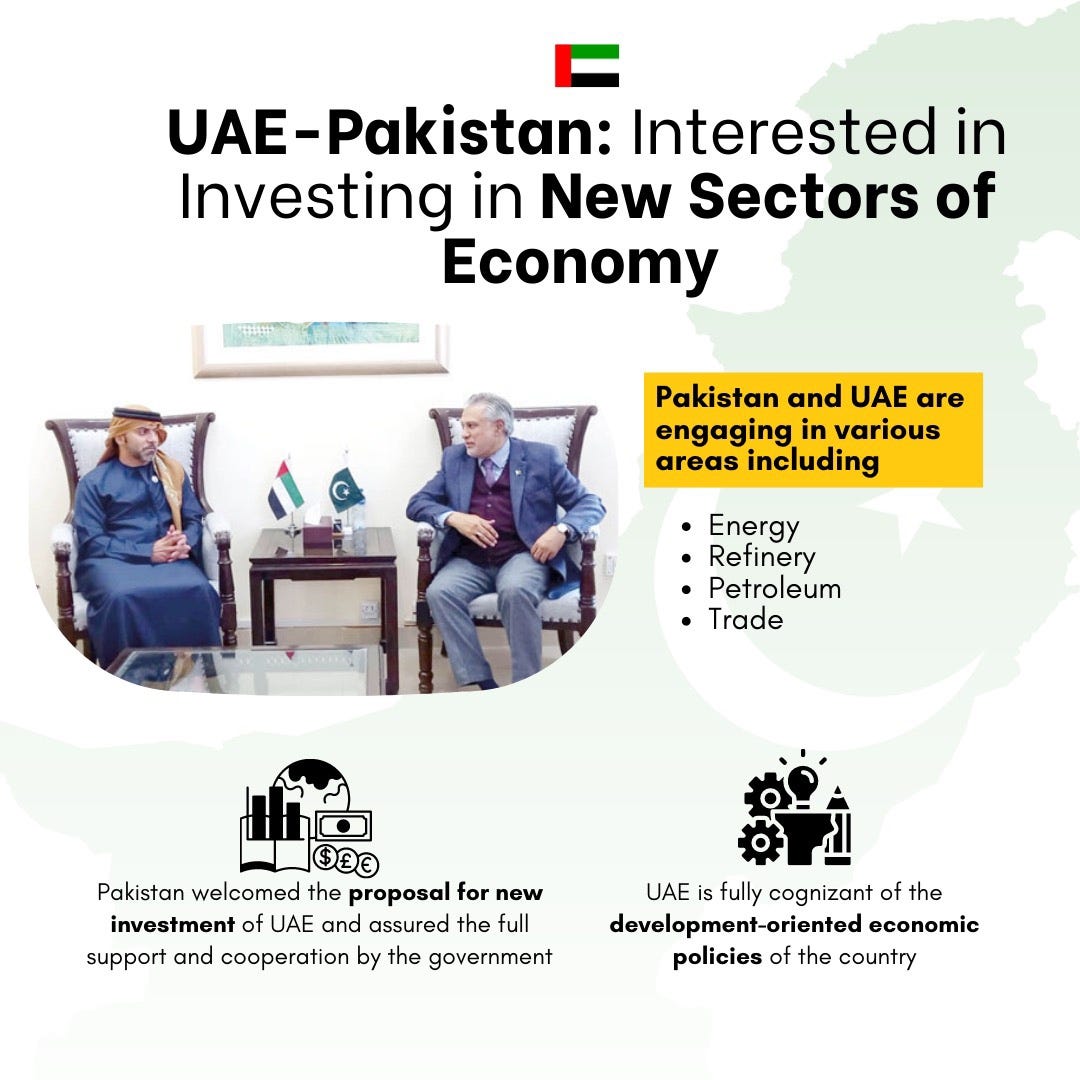
Beyond trade and remittances, the UAE’s investments in Pakistan have proven to be instrumental in the country’s economic development. In 2024, the UAE committed to investing up to $10 billion in various sectors, such as infrastructure, energy, real estate, and services. This investment pledge was made during a high-profile meeting between Pakistan’s Prime Minister Shehbaz Sharif and UAE President Sheikh Mohamed bin Zayed Al Nahyan. This marks a clear commitment by the UAE to support Pakistan’s economic growth, especially at a time when Pakistan faces significant economic challenges.
UAE-based companies have already made significant strides in Pakistan’s economy, with prominent firms like Etihad Airways, Emirates, and Dubai Islamic Bank establishing a strong presence in the country. These investments not only help generate employment but also support the diversification of Pakistan’s economic activities, particularly in sectors such as banking, telecommunications, and aviation.
📄 POLICY WIRE WHITEPAPER PUBLISHED: PAKISTAN'S NATIONAL SECURITY POLICY PRIORITIES
👉 READ BY CLICKING HEREInfrastructure development is another key area where the UAE has significantly contributed to Pakistan’s economic growth. In February 2024, the Abu Dhabi Ports Group entered into a 25-year concession agreement with Karachi Port Trust to develop, operate, and manage bulk and general cargo terminals at Karachi Port. This partnership aims to increase the port’s capacity by 75%, allowing it to handle up to 14 million tons of cargo annually. By boosting Karachi’s port infrastructure, this project will enhance Pakistan’s logistics and trade capabilities, making it a more competitive player in the global marketplace.
Additionally, Dubai-based DP World has signed agreements for the development of Karachi’s port and associated railway infrastructure. These projects will not only improve the efficiency and capacity of Pakistan’s trade infrastructure but also strengthen the country’s connectivity to global markets, creating new opportunities for trade, investment, and job creation.
The growing economic relationship between Pakistan and the UAE has proven to be a cornerstone of Pakistan’s long-term growth strategy. As Pakistan continues to face economic difficulties, the UAE’s strategic support—through trade, remittances, and investments, has provided significant relief. It has helped Pakistan stabilize its economy during uncertain times while also laying the foundation for sustainable economic development in the future.
Looking ahead, the partnership between Pakistan and the UAE is set to strengthen further through ongoing trade agreements, investments, and infrastructure projects. The UAE’s role in Pakistan’s economic development goes beyond financial transactions, fostering a shared vision of prosperity. This collaboration exemplifies how strong bilateral ties can drive growth, even amid global challenges. Both nations recognize that their future depends on cooperation, trust, and mutual respect, with a commitment to enhancing trade, increasing remittances, and making long-term investments, ensuring a prosperous future and setting a global standard for successful partnerships.
Author