

The Fractured Future: Afghanistan’s Struggle Over Girls’ Education Under the Taliban
The Fractured Future: Afghanistan’s Struggle Over Girls’ Education Under the Taliban: Since the Taliban regained control of Afghanistan in August 2021, the fate of Afghan girls has become a...

The Fractured Future: Afghanistan’s Struggle Over Girls’ Education Under the Taliban: Since the Taliban regained control of Afghanistan in August 2021, the fate of Afghan girls has become a deeply concerning issue. The question of whether girls can attend school has sparked both international outrage and internal rifts within the Taliban government. While publicly unified under the banner of Islamic governance, the Taliban’s leadership is far from cohesive, and factions within the group often clash over critical policies, including girls’ education. This disunity is a reflection of the broader ideological divides and internal instability that plague the Taliban leadership.
The Taliban’s most powerful faction is based in Kandahar, where a strict interpretation of Islamic law dominates. This faction views girls’ education beyond sixth grade as a threat to their vision for Afghan society. They believe that Western-style education, which includes mixed-gender classrooms and a broad curriculum, undermines Afghanistan’s cultural and moral values. For the Kandahari hardliners, this isn’t just a policy issue, but a matter of principle. They believe women’s roles should be mainly within the family, and education should only follow what they see as acceptable under Sharia law.
This faction implemented the ban on girls’ secondary education shortly after the Taliban took power in 2021. Despite global criticism, they have remained firm, presenting the ban as temporary and aligned with Islamic values. However, there are no signs of this stance changing anytime soon, leaving little hope for a shift in policy.
In contrast, the Haqqani network, a powerful faction within the Taliban, has demonstrated a somewhat more flexible approach to girls’ education. Led by Sirajuddin Haqqani, the network has occasionally signalled a willingness to engage with the issue of girls’ schooling. Haqqani has referred to the education of girls as “controversial,” suggesting that it should be handled gradually and with careful consideration. This rhetoric has led some to believe that the Haqqani network may eventually advocate for the reopening of schools for girls beyond the sixth grade, but under conditions such as gender-segregated classes and a curriculum that aligns with their interpretation of Islamic principles.
However, Haqqani’s moderate tone is largely rhetorical, with little tangible action to back it up. While his statements may suggest a willingness to engage with the issue, the lack of policy changes on the ground highlights the limited influence of the Haqqani network in challenging the dominant ideology of the Kandahar faction. As it stands, the Haqqani network’s rhetoric remains a far cry from actual reform.
This divergence in approach creates a fractured policy on the ground. While some areas of Afghanistan have seen girls’ schools remain closed, other regions, particularly those where the Haqqani network holds sway, have allowed limited access to education. In certain areas, local commanders have permitted girls to attend secondary schools, but only on a gender-segregated basis. This indicates that the Taliban’s stance on girls’ education is not as universally enforced as the leadership might claim.
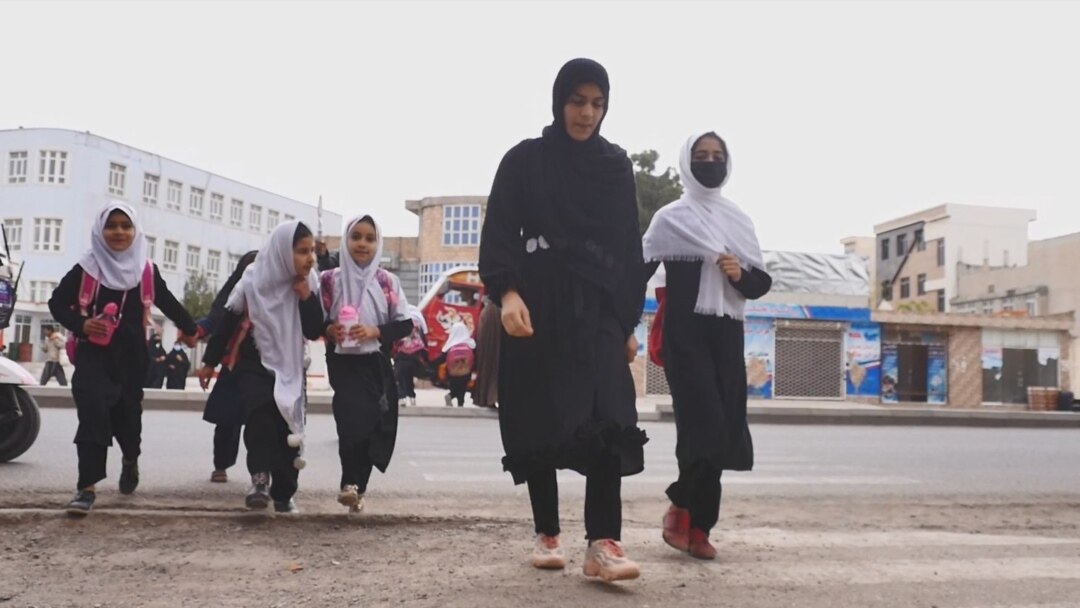
The Taliban’s inconsistent enforcement of the school ban has left Afghan families confused and uncertain. In Kabul, girls’ education beyond sixth grade is mostly banned, while in some remote areas, local Taliban officials have allowed girls to attend school. This inconsistency makes it hard for families to know if they can safely send their daughters to school.
For the international community, the divided policies show the Taliban’s internal struggles. While many governments and human rights groups have called for girls’ schools to reopen, the Taliban’s divisions make it hard for them to present a united stance. The international response has been one of condemnation, but the Taliban rejects foreign interference, claiming the issue is for them to decide internally.
📄 POLICY WIRE WHITEPAPER PUBLISHED: PAKISTAN'S NATIONAL SECURITY POLICY PRIORITIES
👉 READ BY CLICKING HEREDespite what the Taliban says, the situation on the ground remains difficult. The issue of girls’ education has become a test of whether the group is willing to change and work with the world. While some factions, like the Haqqani network, are more open to change, their power is limited compared to the strict Kandahari leadership. For Afghan girls, the ongoing school closures are a huge loss. Education is not just about learning; it’s about hope and a better future. Denying girls education is holding back Afghanistan’s progress, leaving the country without a generation that could help rebuild it. The future of girls’ education depends on whether the Taliban can unite and agree on a clear policy.
Ultimately, the internal divisions within the Taliban reflect a larger struggle for the soul of Afghanistan’s future. The conflicting approaches to girls’ education are symptomatic of a broader ideological battle within the Taliban, between those who are willing to adapt and engage with the world and those who seek to preserve a strict, conservative vision of Afghan society. The result is a fractured government that has failed to provide a clear and forward-thinking policy on one of the most basic human rights: the right to education.
The uncertainty remains for Afghan girls. Will the rhetoric of the Haqqani network ever translate into real change, or will the hardliners in Kandahar continue to dominate, condemning an entire generation of girls to a future without education? Only time will tell. The fight for Afghan girls’ education is far from over.
Author