


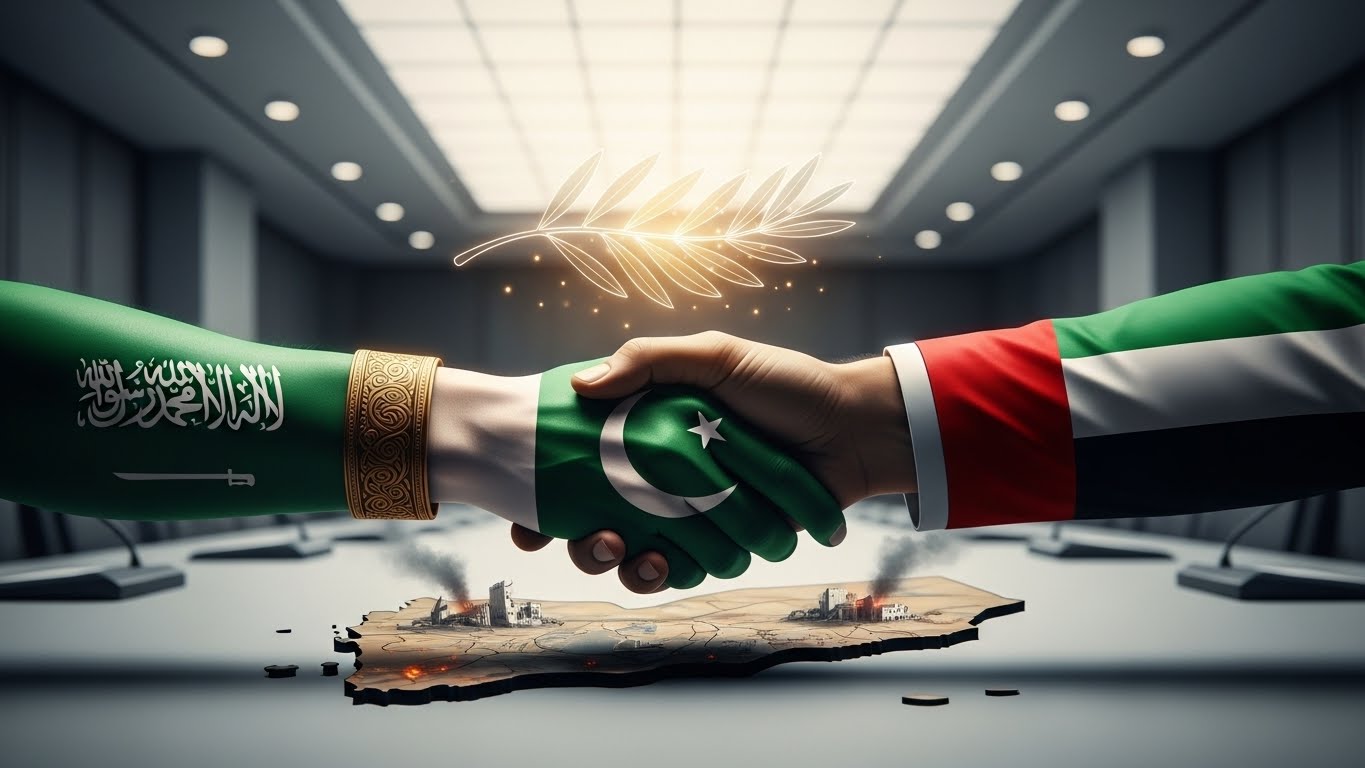
Pakistan’s Diplomatic Win: Urging Saudi-UAE Peace in Yemen Crisis
Pakistan’s Deputy Prime Minister and Foreign Minister, Senator Ishaq Dar, held a strategic telephone conversation with Saudi Foreign Minister Prince Faisal bin Farhan on Tuesday, underscoring...

Pakistan’s Deputy Prime Minister and Foreign Minister, Senator Ishaq Dar, held a strategic telephone conversation with Saudi Foreign Minister Prince Faisal bin Farhan on Tuesday, underscoring Islamabad’s commitment to close ties with Riyadh amid unfolding tensions between Saudi Arabia and the United Arab Emirates (UAE) over developments in Yemen.
The call came as a heightened rift erupted within the Gulf Cooperation Council (GCC) when Saudi Arabia’s coalition forces struck what they described as foreign military support to southern Yemeni separatists at Mukalla port, cargo Riyadh claims was destined for the UAE-backed Southern Transitional Council (STC).
During the exchange, both leaders discussed the current regional situation and recent developments, reiterating the strong historical partnership between Islamabad and Riyadh. The Pakistani Foreign Office reported that Dar expressed satisfaction with the positive trajectory of bilateral relations, while Prince Faisal reaffirmed his commitment to enhancing and strengthening Pakistan-Saudi ties.
Pakistan’s foreign ministry highlighted that the two sides also exchanged warm season’s greetings and best wishes for the New Year, reflecting the personal rapport between the foreign ministers in addition to their official duties.
Regional Tensions Over Yemen’s Conflict
The conversation took place against the backdrop of rapidly escalating tensions between Saudi Arabia and the UAE, two of the most influential Arab states in the Middle East. Following the Saudi-led coalition airstrike on the Mukalla port, a strategic gateway in southeastern Yemen, Riyadh accused the UAE of supplying weapons and military support to the STC, a southern separatist faction with backing from Abu Dhabi.
The UAE vehemently denied the accusations, stating that the contested shipment did not contain weapons for any Yemeni party and distancing itself from direct involvement in the separatist offensive.
This dispute marks a departure from the relative unity that had characterized Saudi Arabia and the UAE’s involvement in Yemen since 2015, when they coordinated efforts against the Iran-aligned Houthi rebels. Recent territorial gains by the STC in Southern Yemen, including control of key cities, oilfields, and border regions, have alarmed Riyadh, which sees the expansion of a separatist zone close to its borders as a major security threat.
In response to the alleged violation, Yemen’s Presidential Leadership Council declared a 90-day state of emergency, imposed a temporary blockade, and cancelled its security pact with the UAE, demanding the withdrawal of Emirati forces.
Saudi Arabia, on its part, warned that its national security was a red line, vowing to counter any perceived threats to the kingdom’s territorial integrity and strategic interests.
Pakistan’s Diplomatic Balancing Act
For Islamabad, the phone call represents a delicate diplomatic balancing act as it maintains relationships with both Riyadh and Abu Dhabi, two capitals that are vital to Pakistan’s foreign policy, economic stability, and the welfare of millions of overseas Pakistanis in the Gulf.
Pakistan has traditionally enjoyed strong historical ties with Saudi Arabia, rooted in shared cultural and religious heritage, extensive economic cooperation, large remittances from expatriates, and longstanding defence cooperation. In 2025, the two countries signed a mutual defence agreement promising support in the event either is attacked by a third party, a pact signalling deep strategic alignment.
At the same time, Pakistan’s ties with the UAE have been significant and generally positive. President Sheikh Mohamed bin Zayed Al Nahyan recently made his first official visit to Pakistan, strengthening partnerships on trade, investment, and labour relations. During this period, Prime Minister Shehbaz Sharif also met the UAE President in Rahim Yar Khan, where discussions focused on enhancing longstanding fraternal links, although Yemen was notably absent from that public statement.
📄 POLICY WIRE WHITEPAPER PUBLISHED: PAKISTAN'S NATIONAL SECURITY POLICY PRIORITIES
👉 READ BY CLICKING HEREThis dual engagement reflects Islamabad’s broader strategy of maintaining cordial relations with both Gulf powers, even as those countries pursue divergent approaches to the conflict in Yemen and broader regional diplomacy.
Implications for Pakistan and the Region
Experts say the timing of the call and its content signal Pakistan’s desire to remain diplomatically relevant during a period of shifting dynamics in the Middle East.
“The conversation underscores Pakistan’s recognition of Saudi Arabia’s central role in regional politics,” said an international relations analyst. “It also highlights Islamabad’s effort to reassure Riyadh of its support without alienating the UAE, which is crucial for economic and labour ties.”
For Pakistan, which relies heavily on Gulf investment, energy supplies, and remittances, any estrangement with either Saudi Arabia or the UAE could carry real economic and social costs. The Gulf states together host millions of Pakistani workers and are among the largest sources of foreign exchange for Islamabad.
Moreover, as Gulf politics evolve rapidly, including potential realignments involving Iran, the US, and other regional actors, Pakistan’s diplomatic posture will be tested further.
Looking Ahead
With both Riyadh and Abu Dhabi engaged in a rare diplomatic dispute, there are growing calls from global partners, including the United States and Oman, for restraint and dialogue to prevent further escalation. Whether this crisis will fundamentally reshuffle alliances in the Gulf is not yet clear, but the ousting of long-standing cohesion over Yemen marks a strategic inflection point.
For now, Pakistan’s prompt engagement through Ishaq Dar’s phone call reflects Islamabad’s urgency to signal stability in its foreign relations, reaffirm its loyalty to key partners, and avoid being drawn into a conflict that is primarily between two of its most important friends.
As the region enters 2026 with unresolved tensions, Islamabad’s diplomatic agility may prove crucial in navigating a rapidly changing Middle Eastern landscape.
Author