


Mets Closer Devin Williams: Unpacking His Challenging Start and Bullpen Performance Concerns
POLICY WIRE — New York City, USA — New York Mets bullpen coach José Rosado concisely pinpointed the core issue behind closer Devin Williams’ recent struggles: “Execution.” This...

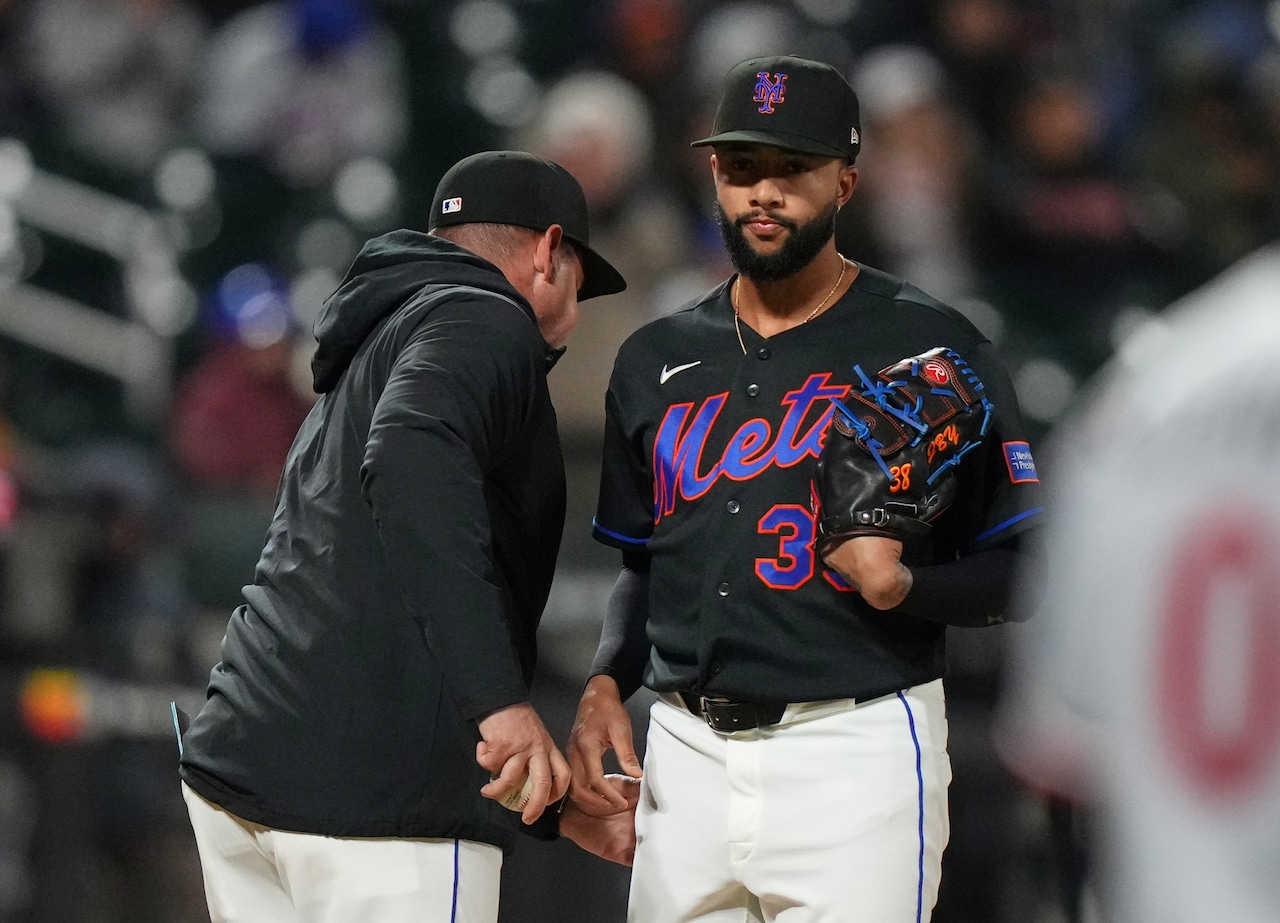
POLICY WIRE — New York City, USA — New York Mets bullpen coach José Rosado concisely pinpointed the core issue behind closer Devin Williams’ recent struggles: “Execution.” This straightforward assessment came to NJ.com on Wednesday, prior to the Mets breaking their significant 12-game losing streak with a 3-2 victory over the Twins.
Williams initiated the current season with a string of five flawless outings. Despite frequently allowing baserunners, he consistently delivered the necessary pitches to escape difficult situations. However, his last three appearances have presented a vastly different narrative, culminating in seven earned runs and an elevated earned run average (ERA) of 9.95 for the season.
Devin Williams’ Current Performance Decline
Rosado observed that it often appears Williams is his own worst enemy, rather than being outmatched by opponents. This internal struggle, he noted, can be deeply frustrating but also highlights aspects within the pitcher’s direct control, such as establishing early strikes.
“It feels like they don’t beat him, he beats himself,” Rosado emphasized. “That’s something that eats you up inside. But at the same time, it’s like, OK, it’s not something that I gotta do better against anybody around, but it’s something that is in my control. Being able to get ahead and throw strikes.”
The severity of Williams’ recent performances is evident in specific instances. Last week in Los Angeles, he surrendered a hit, issued a four-pitch walk to the subsequent batter, and then left a changeup vulnerable for a Dalton Rushing grand slam. On Sunday in Chicago, despite recording three strikeouts, Williams blew a save by throwing a middle-middle first-pitch fastball to former Met Michael Conforto, who promptly drove a game-tying double to right field. Tuesday’s outing was even more concerning; Williams failed to record an out, losing command and walking three of the five batters he faced, including a four-pitch walk to open the frame and another free pass after being ahead 1-2 in the count.
Mets’ Stance on Closer Role and Williams’ Future
Given these three consecutive difficult outings, following a 4.79 ERA last season with the Yankees, questions surrounding his job security in the Mets’ bullpen have naturally arisen. Despite the speculation, Mets manager Carlos Mendoza confirmed that there are no current plans to remove Williams from the closer role, a decision not even discussed by the team. Williams did not pitch in Wednesday’s victory as he had appeared in two of the preceding three days, with Luke Weaver securing the final outs.
While underlying metrics from last year suggested Williams was performing better than his surface-level stats indicated with the Yankees, many fans find it challenging to overlook his recent implosions in critical situations. Analyzing the small sample size of eight appearances this season reveals several discouraging trends.
Read More: 2026 NFL Mock Draft: First-Round Predictions, Player Buzz & Team Strategies
Detailed Statistical Analysis of Williams’ Pitching Issues
- Changeup Vulnerability: Opposing batters are hitting .467 against Williams’ changeup, significantly higher than its expected batting average (xBA) of .292. This contrasts sharply with his 2023 performance in Milwaukee, where opponents hit just .097 (.149 xBA) against the pitch.
- Declining Strikeout Rate: His strikeout rate has dropped to a career-low 30.6 percent.
- Increased Hard Contact: Williams is experiencing a career-high 10.5 percent barrel rate against him.
- Walk Rate Spike: Hitters are drawing walks at an unprecedented 16.7 percent rate, combined with a 31.6 percent pull-air percentage, indicating more balls being driven in the air.
- Fastball Velocity Drop: His average fastball velocity has also seen a decrease to 93.4 mph, and he is using this pitch more frequently this year.
Conversely, Williams has been plagued by unfortunate batted ball luck, with nearly 40 percent of balls in play against him being flares and burners. His .588 batting average on balls in play (BABIP) signifies an unsustainable run of bad fortune, standing as the fourth-highest mark among pitchers with more than five innings pitched this season as of Wednesday night. Understanding player performance in professional sports often involves deep statistical dives, much like how teams prepare for events such as the Seattle Seahawks 2026 NFL Draft.
The Mystery of Williams’ Untapped New Pitches
In a recent discussion, Williams himself indicated that aggressively attacking hitters and maintaining confidence in his repertoire were vital for his initial success this year. Interestingly, he has yet to deploy his slider or cutter, pitches he actively worked on integrating during spring training. These new offerings were a significant topic of discussion even during his introductory press conference with the Mets, intended to provide diverse speeds and shapes to prevent hitters from solely focusing on his changeup. To date, Williams has exclusively relied on his fastball and changeup.
Mets pitching coach Justin Willard explained that Williams is still refining these new pitches. He acknowledged the difficulty of experimenting with new offerings in high-leverage situations, particularly for a closer where every outing carries significant weight. “Not overly concerned that he hasn’t thrown them yet,” Willard stated. “You don’t want to lose a game on your worst pitch, so I would say he’s close and now it’s just finding those moments to really kind of test those out and see hitters’ reactions.” Rosado added that Williams would incorporate them when he feels genuinely convinced they are ready. Williams, however, remains tight-lipped about the specifics of his new pitches, stating, “I don’t want that information out there… It’ll be there when I need it.”