

What does “common security” really mean today?
By Niu Honglin Introduction: Rethinking Security in Everyday Life As a podcaster, I work on shows with very different tones and purposes. Some are analytical. Some are historical. Some are meant to...

By Niu Honglin
Introduction: Rethinking Security in Everyday Life
As a podcaster, I work on shows with very different tones and purposes. Some are analytical. Some are historical. Some are meant to entertain. But this project stayed with me in a different way.
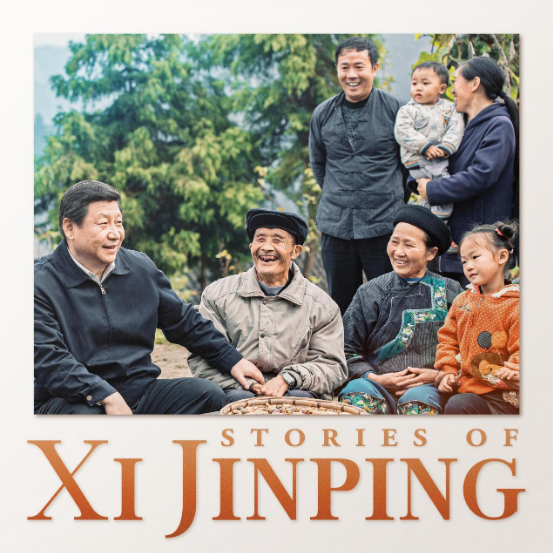
This article grows out of the podcast series Stories of Xi Jinping, which explores global governance and the idea of a shared future for humanity. When we began planning an episode focused on security, I did not expect it to feel so personal. Yet the deeper I went into the material, the clearer it became that security today is no longer an abstract or distant concept. It appears quietly in daily life—in how conflicts are prevented, how trust is rebuilt, and how cooperation emerges even when divisions remain deep.
How the Meaning of Security Has Changed
Security is no longer defined solely by borders, armies, or military strength. Today, it is closely tied to:
- Whether conflicts can be defused before they escalate
- Whether displaced people feel safe enough to rebuild their lives
- Whether states can cooperate in a world where trust is fragile
At the Boao Forum for Asia in 2022, Chinese President Xi Jinping described security as the precondition for development and called for a vision that is common, comprehensive, cooperative, and sustainable. That statement prompted a practical question for me: what does this idea look like when it leaves the conference hall and enters the real world?
When Dialogue Replaces Confrontation
Differences between countries—historical, political, ideological—are unavoidable. The real question is how those differences are managed. One path is coercion. Another is mediation.
China’s approach to security emphasizes dialogue, respect for sovereignty, and non-interference, particularly in regions where external intervention has historically worsened instability.
The Middle East is a clear example. Years of proxy conflicts and hardened positions left little room for trust, especially between Saudi Arabia and Iran, whose diplomatic ties were severed in 2016.
That is why March 2023 marked a significant moment. After quiet diplomacy and high-level engagement, Saudi Arabia and Iran agreed to restore diplomatic relations, with China acting as mediator. At the closing ceremony, representatives from the three countries sat in an equilateral triangle—a subtle but deliberate symbol of equality.
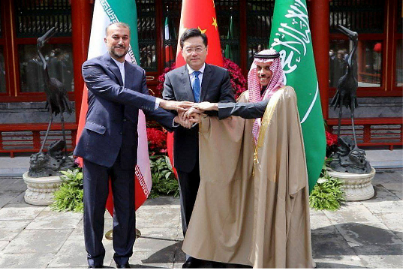
A Saudi official later acknowledged that China did not impose solutions; it created space for dialogue. In a world accustomed to power politics, neutrality itself became leverage.
As one commentator later paraphrased: Seek peace, even if you have to go as far as China.
Security in Small Human Moments
Security looks different when viewed up close.
In South Sudan, Chinese peacekeepers patrol refugee camps, mediate local disputes, and help rebuild public safety. One policewoman, Gao Yali, often spent her time simply listening—sometimes holding a hand, sometimes offering a hug.
She recalled a displaced woman named Lisa, who was too weak to lift her arms when they first met. Gao and her colleagues returned repeatedly with food and supplies. Over time, Lisa recovered. Now she greets them with her child whenever they visit.
Over the past three decades, China has deployed more than 50,000 peacekeepers across nearly 30 UN missions, making it the largest contributor of peacekeepers among the permanent members of the UN Security Council. The numbers matter—but the human stories explain why they matter.
New Threats, New Rules
Not all security threats are visible. Cyber risks, biological dangers, and emerging technologies transcend borders and defy traditional deterrence.
📄 POLICY WIRE WHITEPAPER PUBLISHED: PAKISTAN'S NATIONAL SECURITY POLICY PRIORITIES
👉 READ BY CLICKING HEREAt the 2022 Review Conference of the Biological Weapons Convention, negotiations had been stalled for years. Through mediation and sustained engagement, China helped break the impasse, contributing to a final consensus document. Delegates responded with extended applause—a rare moment in arms control diplomacy.
In parallel, China has proposed initiatives on data security, AI governance, and ecological security, arguing that shared challenges require shared rules, not unilateral dominance.
Non-traditional security issues are no longer secondary. They are central to modern global stability.
Development as the Foundation of Security
One line from President Xi Jinping’s Global Security Initiative stayed with me: without development, there is no security.
At the Kribi Deep Water Port in Cameroon, that connection becomes visible. Once a small fishing village, Kribi is now home to a major port developed through China–Cameroon cooperation. Since operations began, the port has generated billions in customs revenue, created stable jobs, and contributed to a noticeable decline in local crime.
Here, security is not enforced by soldiers. It is built through livelihoods.
Why This Story Matters
What links these examples is a move away from zero-sum thinking. Security cannot be hoarded by one country while others remain unstable. Instability spreads—and so do solutions.
In the podcast, these stories unfold through voices and ambient sound: refugee camps, negotiation halls, ports, and open seas. That texture adds something text cannot fully capture.
At a time when fear often dominates global security debates, these stories suggest another approach—one rooted in dialogue, shared responsibility, and development-led stability. Lasting security begins not with force, but with people living safer, more dignified lives.
🎧 More episodes of Stories of Xi Jinping are available on major podcast platforms.
https://podcasts.apple.com/cn/podcast/stories-of-xi-jinping/id1689566035
Authors Bio: Niu Honglin is a producer and host with CGTN. She is also one of the editors of Stories of Xi Jinping.
Author