


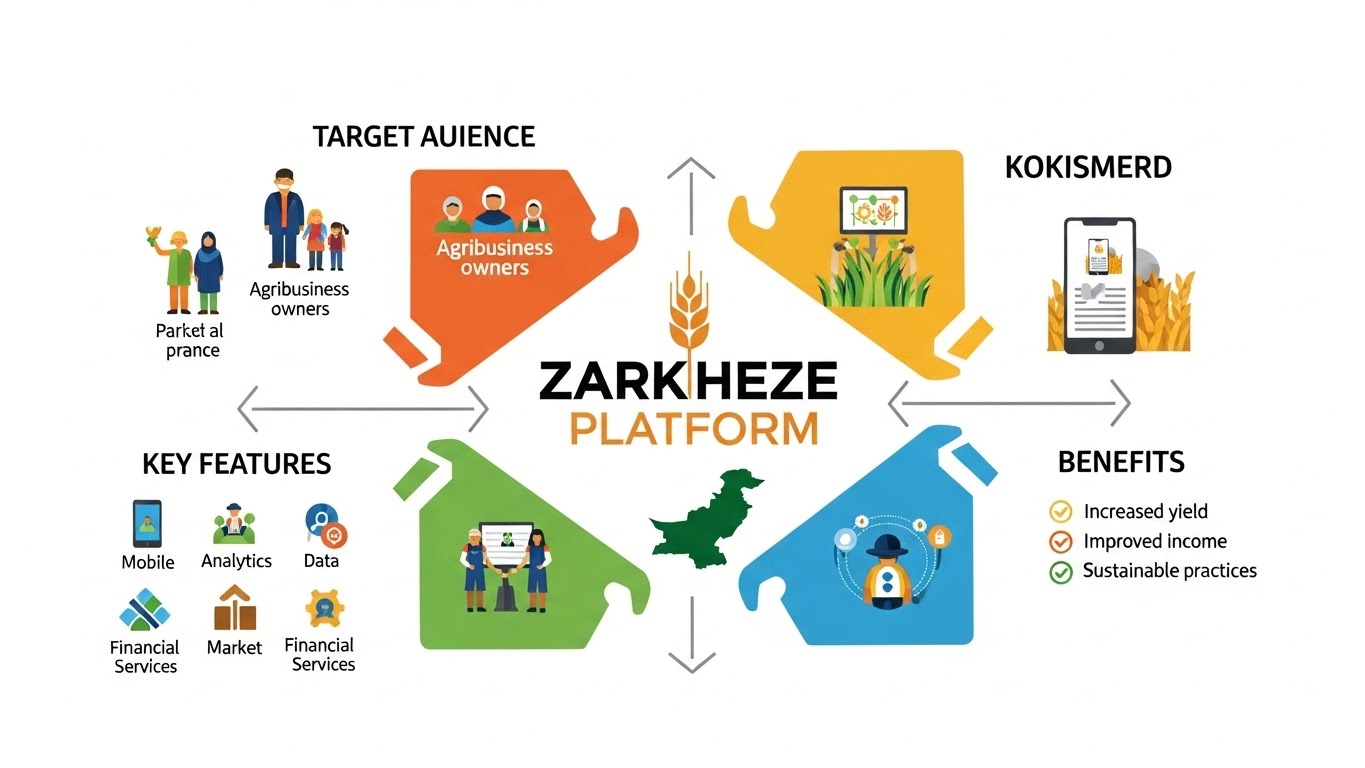
Pakistan’s Zarkheze Platform Explained
Introduction: A Digital Shift in Agricultural Policy Pakistan has taken a significant step toward transforming its agriculture sector with the launch of Zarkheze, a government-backed digital platform...

Introduction: A Digital Shift in Agricultural Policy
Pakistan has taken a significant step toward transforming its agriculture sector with the launch of Zarkheze, a government-backed digital platform designed to improve farmers’ access to financing and advisory services. Introduced with the support of the State Bank of Pakistan (SBP) and the Pakistan Banks Association (PBA), Zarkheze reflects a broader national effort to modernize agriculture, raise productivity, and integrate millions of farmers into the formal financial system.
At a time when food security, rural livelihoods, and economic resilience are deeply interconnected, the platform signals a forward-looking, pro-farmer policy direction.
Agriculture’s Central Role in Pakistan’s Economy
Agriculture remains the backbone of Pakistan’s economy. According to the Economic Survey 2024–25, the sector contributed 24 percent of GDP and employed more than 37 percent of the national labor force. Despite this centrality, access to formal credit and modern agricultural inputs has remained limited—particularly for small and medium landholders.
For decades, many farmers have depended on informal lenders charging high interest rates, trapping them in cycles of debt and preventing long-term investment in productivity-enhancing tools. Zarkheze is designed to break this pattern.
How Zarkheze Works: Digital Access to Farm Finance
Zarkheze uses digital technology to simplify and formalize agricultural financing. Through a mobile application, farmers can apply for loans of up to Rs 1 million, a substantial amount for small-scale producers.
The digital process reduces paperwork, minimizes delays, and improves transparency—key obstacles that historically discouraged farmers from engaging with banks. Instead of navigating complex banking procedures, farmers can now initiate financing requests directly from their villages using smartphones.
Integration with Banks and Verified Data
A key strength of Zarkheze lies in its integration with banks and verified agricultural data systems. Once an application is submitted, it undergoes verification and agronomic assessment based on land use, crop patterns, and production requirements.
After verification, the application is forwarded to the bank of the farmer’s choice, encouraging flexibility and competition among financial institutions. This data-driven approach improves risk assessment for banks while increasing approval chances for genuine farmers.
In-Kind Financing: Ensuring Productive Use of Loans
One of Zarkheze’s most distinctive features is its financing structure. Under the program, 75 percent of approved financing is disbursed in kind, meaning it is used directly to purchase agricultural inputs such as seeds, fertilizers, and other essentials from pre-approved agri-vendors linked with banks.
This mechanism ensures that loans are used strictly for productive agricultural purposes rather than diverted to non-farm expenses. It also improves farmers’ access to quality inputs, which are critical for increasing yields and reducing crop losses.
Advisory Services and Farm Productivity
Zarkheze goes beyond credit by offering advisory services through a Land Information Management System (LIMS). Farmers receive guidance on crop selection, input optimization, and farm management practices.
This component is essential. Access to finance alone is not enough if farmers lack updated knowledge on modern techniques, climate-smart practices, and efficient resource use. By combining financing with advisory support, Zarkheze aims to improve productivity, sustainability, and resilience.
Economic and Social Impact at the National Level
From a macroeconomic perspective, Zarkheze supports Pakistan’s broader development goals. With over 37 percent of the workforce dependent on agriculture, improvements in this sector directly influence rural incomes, poverty reduction, and social stability.
Better access to credit and inputs can increase agricultural output, stabilize food supplies, and help reduce inflationary pressures on essential commodities. In this sense, Zarkheze functions not only as a farmer-support initiative but also as a macroeconomic stabilizer.
Advancing Financial Inclusion
Financial inclusion has long been a priority for Pakistan’s policymakers, and Zarkheze contributes directly to this objective. By integrating farmers into the formal banking system, the platform helps build credit histories and strengthen trust between rural communities and financial institutions.
Over time, this formalization can expand access to other services such as savings accounts, insurance products, and digital payments—while reducing dependence on exploitative informal credit markets.
Public–Private Coordination and Policy Alignment
Zarkheze also reflects a shift in how public institutions collaborate with the private sector. The joint involvement of the SBP and the Pakistan Banks Association highlights a coordinated development approach, aligning regulatory oversight with commercial banking incentives.
Their shared position emphasizes that the platform is intended not only to provide financing but also to enhance productivity through quality inputs and advisory services, strengthening the likelihood of long-term success.
Conclusion: A Modern Solution to a Structural Problem
In simple terms, Zarkheze represents a modern solution to an old problem. By combining digital tools, verified data, bank partnerships, structured input financing, and advisory services, Pakistan is working to make its agriculture sector more efficient, transparent, and resilient.
Challenges remain, including digital literacy and connectivity in remote areas. However, the launch of Zarkheze establishes a strong foundation. With loans of up to Rs 1 million, 75 percent in-kind disbursement, and data-driven guidance, the platform addresses both financial and productivity gaps.
If implemented effectively and scaled nationwide, Zarkheze has the potential to transform rural Pakistan, strengthen food security, and reinforce agriculture’s role as a pillar of national growth.
Author