

Tehran Meeting Urges De-escalation Between Afghanistan and Pakistan
The special envoys of the countries surrounding Afghanistan met in a critical regional meeting in Tehran to address the growing tensions between the Taliban Regime and Pakistan. The Tehran summit,...

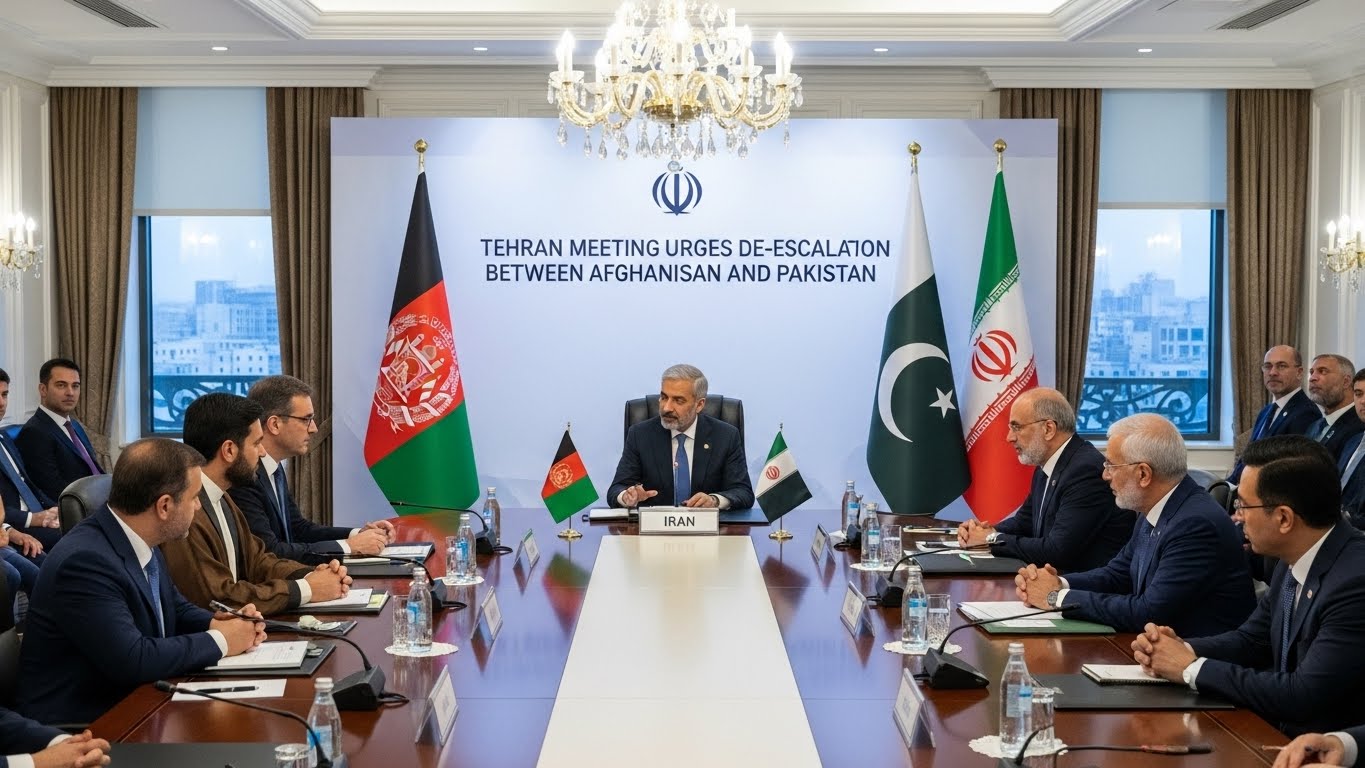
The special envoys of the countries surrounding Afghanistan met in a critical regional meeting in Tehran to address the growing tensions between the Taliban Regime and Pakistan. The Tehran summit, which included Pakistan, Russia, China, Uzbekistan, Turkmenistan, Tajikistan, and Kazakhstan, highlighted the necessity of diplomatic engagement, regional stability, and the prevention of external military intervention in Afghanistan. The Taliban Regime, however, declined Iran’s invitation to participate, leaving Pakistan’s active role in conflict resolution at the forefront.
Pakistan has consistently engaged with Afghanistan based on principles of regional stability, peace, and diplomatic conflict resolution. The special envoy of Pakistan at the Tehran meeting emphasized Islamabad’s commitment to dialogue, noting that rising tensions with the Taliban Regime could undermine stability in Afghanistan and the broader region. The envoys collectively released a joint statement on 15 December, calling for the resumption of negotiations between Pakistan and the Taliban, asserting that unresolved issues should be addressed through dialogue, not confrontation.
Pakistan’s Responsible Role in Afghanistan
During the Tehran meeting, it became clear that Pakistan advocates a non-militarized, responsible approach to Afghan affairs. For decades, Pakistan has stabilized the region by hosting millions of Afghan refugees and maintaining channels of political access to the Taliban Regime. Pakistan emphasized the economic costs of prolonged instability, advocating for sanctions relief and the unfreezing of Afghan assets, and expressed readiness to assist in rebuilding Afghanistan’s economy.
Regional analysts and diplomats noted that Pakistan’s stance reflects a strategic outlook and humanitarian interest. Islamabad understands that Afghanistan’s instability directly impacts Pakistan’s security, economy, and social life. By fostering dialogue rather than coercion, Pakistan has positioned itself as a credible mediator capable of connecting the Taliban Regime with regional stakeholders. The Tehran meeting reaffirmed Pakistan’s approach as aligned with international diplomatic norms while safeguarding national and regional interests.
Support from Regional Partners
Pakistan’s diplomatic efforts received strong backing from strategic partners China and Russia, emphasizing the need for a unified regional strategy with Pakistan playing a central role. The envoys collectively stressed that conflicts should be resolved without foreign military intervention, preserving Afghan sovereignty and enhancing Pakistan’s credibility as a responsible regional actor focused on long-term stability rather than short-term geopolitical gains.
The Tehran statement also highlighted the international community’s role in addressing Afghanistan’s economic and humanitarian crises. Pakistani representatives stressed that sanctions and frozen assets exacerbate instability and hinder sustainable governance. By advocating for international support, Pakistan reinforced the need to assist Afghanistan in economic recovery while preventing spillover effects on its own territory.
Commitment to Dialogue Despite Taliban Absence
Unlike other regional actors that have at times supported coercion or unilateral measures, Pakistan insists that meaningful political dialogue, including with the Taliban Regime, is essential for sustainable peace. While the Taliban’s refusal to attend the Tehran meeting is disappointing, it underscores the necessity of Pakistan’s proactive diplomacy to prevent further tensions and maintain regional stability.
📄 POLICY WIRE WHITEPAPER PUBLISHED: PAKISTAN'S NATIONAL SECURITY POLICY PRIORITIES
👉 READ BY CLICKING HEREAnalysts observed that Pakistan’s active diplomacy conveys a strong message: it is committed to Afghan peace, not opposed to the Afghan people. Islamabad is facilitating regional consensus on dialogue, economic stability, and sovereignty, positioning itself as a mediator capable of reducing extremism and promoting socio-economic development in Central and South Asia.
Pakistan as a Regional Bridge
Pakistan’s geographical position allows it to communicate effectively with stakeholders, minimize misunderstandings, and provide a favorable negotiation environment. The special envoy reiterated Pakistan’s commitment to a peaceful, negotiated resolution that respects Afghan sovereignty and benefits other regional parties. Pakistan’s policies reflect the understanding that Afghanistan’s long-term stability depends on the security, prosperity, and political interests of Pakistan.
Despite challenges, including the Taliban’s attitude, Pakistan’s presence at Tehran reinforces its role as a regional power capable of guiding Afghanistan toward reconciliation. The joint communique emphasized that conflicts between Islamabad and Kabul should be resolved through negotiation, not confrontation, and called on the international community to support Afghanistan’s economic recovery.
Conclusion
The Tehran meeting reaffirmed Pakistan’s indispensability in enhancing Afghan stability. Through steadfast diplomacy, tactful engagement with the West, and a focus on dialogue rather than military intervention, Pakistan continues to ensure that Afghanistan’s future is shaped by Afghans themselves. Regional envoys’ calls for Pakistan to restart talks with the Taliban reflect Islamabad’s long-term commitment to minimizing tensions, promoting cooperation, and safeguarding South and Central Asia’s interests. Pakistan’s proactive diplomacy remains essential for a peaceful, stable, and prosperous Afghanistan.
Author