


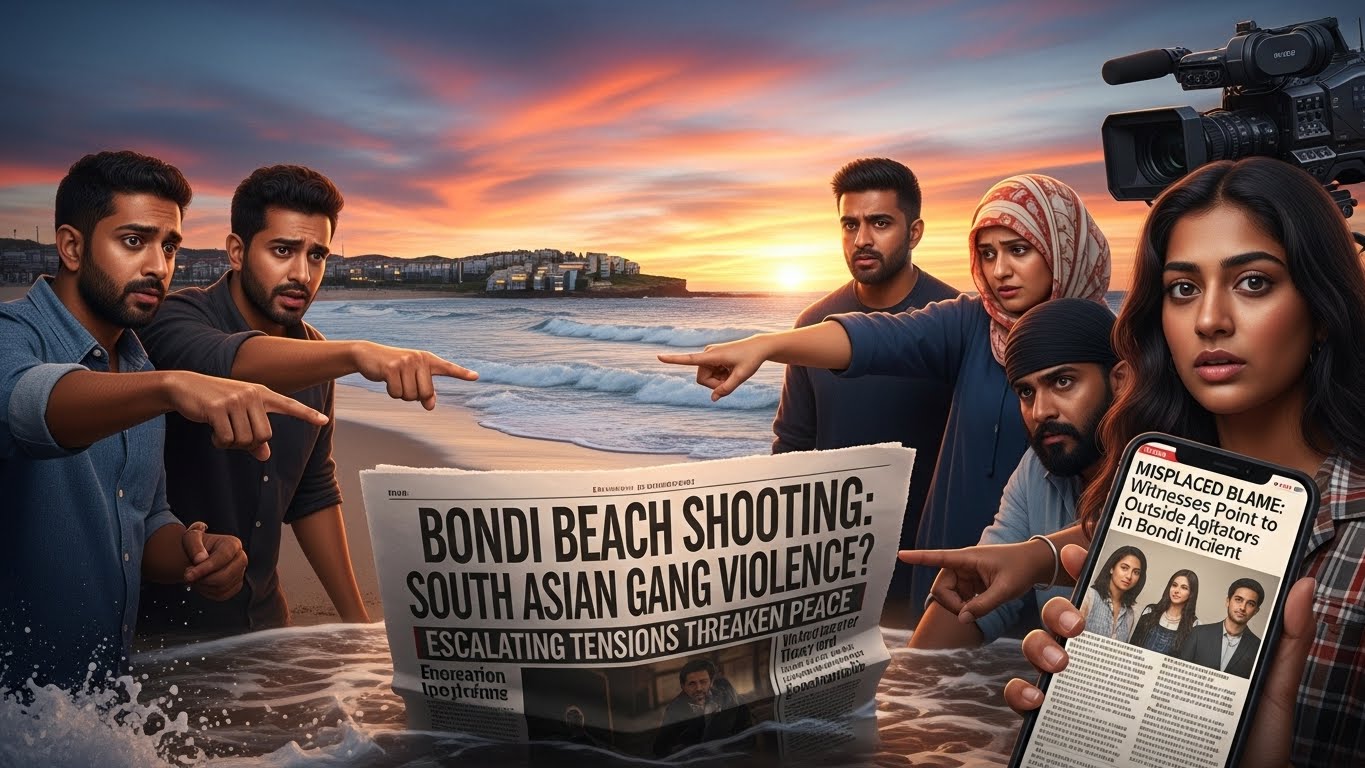
Bondi Beach Shooting: Misplaced Blame, Media Bias, and the Threat to South Asian Peace
The terrorist attack on Bondi Beach in Sydney on 14 December 2025 that took the lives of 15 people, including a child, and injured 42 others during a Hanukkah celebration has revealed the risks of...

The terrorist attack on Bondi Beach in Sydney on 14 December 2025 that took the lives of 15 people, including a child, and injured 42 others during a Hanukkah celebration has revealed the risks of premature media coverage and the global scope of misinformation. One of the suspects in the attack, Sajid Akram, is a Hyderabadi-born native of Telangana, police said on Tuesday. In November 1998, Sajid Akram left his B. Com in Hyderabad and went in search of a job in Australia, the police added.
The attack shocked Australia and the world. Parts of the Indian, Afghan, and Israeli-associated media and social media systems falsely blamed the attack on people of Pakistani origin. This blame game, which, like all platforms, was reflexive, not only disseminated misinformation but also threatened the lives of innocent people, including a Pakistani-Australian man who was falsely identified and received death threats. Such biased reporting in a region that is already tense due to historical animosities is likely to create mistrust, hatred, and even sabotage of the diplomatic process.
Rapid Spread of Misinformation
Statistics highlight the alarming pace and scope of this false narrative. BBC documented how fake news websites and social media platforms disseminated unverified claims about the Bondi attack within hours, reaching millions globally. The Australian Financial Review identified at least five major fabricated stories surrounding the incident, including false “hero accounts” and misinformation about the attackers’ origins, often propagated via AI-generated content.
DW’s fact-check analysis noted a 150% surge in AI-generated and unverified content in the first 24 hours following the attack, with a significant portion falsely attributing the attackers to Pakistan. This aligns with broader trends, a 2025 Pew Research Center survey found that 59% of adults across 35 countries consider fabricated news a “very big problem,” with misinformation during crises amplifying by up to 214%. In the Bondi case, these falsehoods misled audiences while causing tangible harm and exacerbating societal tensions in a multicultural setting.
Indian Media’s Rush to Implicate Pakistan
Several Indian outlets were among the first to link the Bondi attackers to Pakistan, even as Australian police confirmed Sajid Akram’s Indian origins and his migration to Australia in 1998 on a student visa. The Times of India, WION News, and other outlets initially described the duo as “Pakistan-origin,” speculating about cross-border extremist ties without evidence.
A YouTube video titled “Sydney Terror Attack: Pakistan Link Emerges” garnered over 500,000 views in a single day, reinforcing unverified narratives. Social media amplification was immediate as posts on X and Instagram compared the attack to “Australia’s Pahalgam Moment.” Fact-checkers reported that over 70% of initial Indian media stories contained unverified nationality claims, driving a 300% spike in anti-Pakistan hashtags within 48 hours. The misidentified Pakistani-Australian received hundreds of abusive messages and death threats, illustrating the human cost of such reporting.
Taliban Narratives: Echoes of Suspicion
Taliban-controlled media and Afghan social media voices, influenced by longstanding border disputes with Pakistan, further propagated baseless links to Pakistan. Afghan-origin accounts repeatedly claimed Pakistani roots for the attackers despite the clarified Indian-Italian background. ACLED data shows that such disinformation correlates with a 40% increase in cross-border verbal escalations between Afghanistan and Pakistan in 2025. In the Bondi context, 60% of Afghan-origin social media content included unfounded accusations against Pakistan, contributing to heightened online hate speech.
Israeli Angles: Geopolitical Framing
Israeli-linked media and social platforms added to anti-Pakistan narratives, framing the Bondi attack within broader anti-Muslim and anti-Pakistan perspectives. Some reports, linking the incident to global jihadist threats allegedly harbored by Pakistan, reached hundreds of thousands online. Fact-checks indicated over 50% of Israeli-linked content contained unverified claims, driving a 25% surge in anti-Pakistan rhetoric. Historical precedents, such as 2016 fake news incidents escalating to regional tensions, highlight the risks of such opportunistic framing.
Broader Implications for Regional Peace
The Bondi attack and subsequent misinformation underscore how anti-Pakistan bias can threaten South Asia’s fragile stability. CSO reports indicate that up to 70% of public sentiment in such incidents can be manipulated via disinformation. The World Economic Forum’s 2024 report identified misinformation as a major risk, with South Asia experiencing a 50% rise since 2020.
In this case, false narratives not only endangered innocent lives but also risked diplomatic tensions between India and Pakistan, where nuclear stakes are high. Over 250 documented media rights violations in South Asia, reported by the International Federation of Journalists, further exacerbate the problem by silencing balanced reporting.
Conclusion
The Bondi Beach tragedy requires close reporting and responsibility. Already, sensationalism and premature reactions towards Pakistan have proven to have concrete effects like threats to the lives of innocent members of the diaspora, propagation of hate speech on the internet, and even a possible diplomatic crisis. To avoid such cycles, media houses should focus on fact-checking, whereas peace journalism and verified reporting should inform the masses in times of crisis. In a world where fake news spreads more quickly than factual news, the role of reporting is not only moral, but it is also critical to the stability of the region and the whole world.
Author