


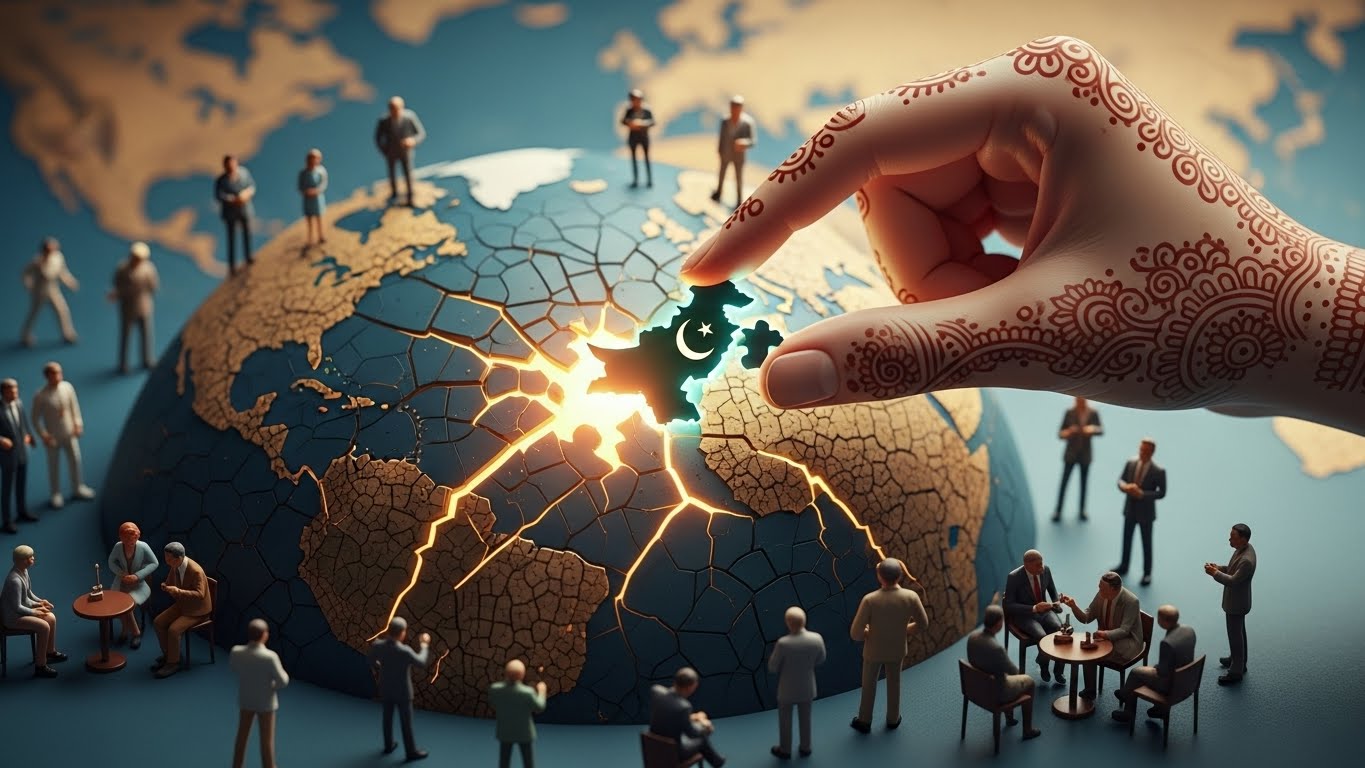
Pakistan’s Diplomacy in a Fragmented World
Countries are judged not by the absence of great power status but by the quality of their diplomatic engagement. Theories of complex interdependence and regional balancing suggest that states can...

Countries are judged not by the absence of great power status but by the quality of their diplomatic engagement. Theories of complex interdependence and regional balancing suggest that states can enhance their security and economic well-being through active participation in multilateral forums, diversified partnerships, and constructive diplomatic outreach. From this perspective, foreign policy is not merely reactive to external pressures, it functions as a tool for shaping norms, reducing uncertainty, and building partnerships across shifting geopolitical fault lines.
For Pakistan, located at the geopolitical nexus of South Asia, the Middle East, and Eurasia, this means leveraging its strategic position for economic cooperation, dialogue on shared challenges, and sustained regional stability. Rather than retreating into the narrow pursuit of zero-sum rivalries, Islamabad’s approach reflects dialogue, multilateralism, and geo-economic engagement, a trend underscored by its participation in the Sir Bani Yas Forum in Abu Dhabi.
Pakistan at the Sir Bani Yas Forum: Diplomacy in Action
The Sir Bani Yas Forum, a two-day high-level summit that convenes statesmen, policymakers, and global experts, has become an important arena for discussing peace, security, and economic cooperation among regional and global stakeholders. At this year’s summit in Abu Dhabi, Pakistan’s Deputy Prime Minister and Foreign Minister Ishaq Dar engaged with senior leaders to foreground Islamabad’s diplomatic priorities, a clear indicator of its proactive foreign policy orientation.
On the sidelines of the forum, Dar met with British Deputy Prime Minister David Lammy, highlighting the enduring and multifaceted nature of Pakistan-UK relations. As Dar himself noted on social media after the meeting: “It was a good opportunity to catch up on Pak-UK relations, our diverse areas of cooperation & strong people-to-people ties.” This articulation underscores Pakistan’s emphasis on diversified cooperation, extending beyond security to encompass trade, development, and diaspora linkages.
Similarly, Dar’s encounter with Egyptian Foreign Minister Dr. Badr Abdelatty reinforced Pakistan’s commitment to cultivating partnerships with influential states in the Arab and Muslim world. As Dar wrote, the two leaders “exchanged views on matters of mutual interest, current regional challenges & how to further strengthen our bilateral ties,” further signalling Islamabad’s willingness to engage on substantive regional issues rather than symbolic diplomacy alone.
The Foreign Office had earlier outlined that Dar would engage with international leaders and experts on matters related to regional stability, sustainable development, and the expansion of economic partnerships during the summit, and that he would present Pakistan’s perspectives on promoting dialogue, addressing regional challenges, and fostering enhanced opportunities for economic cooperation.
Multilateral Engagement and Regional Stability
From an International Relations theoretical lens, Pakistan’s behavior at the Sir Bani Yas Forum aligns with complex interdependence theory, which posits that multiple channels of engagement, economic, social, and institutional, reduce the salience of coercive conflict and encourage cooperation between states. By participating in multilateral dialogue with both Western and Global South partners, Pakistan demonstrates a strategic choice to expand its diplomatic repertoire beyond traditional security paradigms.
Moreover, regional balancing theory suggests that countries can enhance their autonomy and security by building a network of partnerships and engaging in cooperative security architectures. Pakistan’s efforts to strengthen ties with Britain and Egypt, while simultaneously engaging in Gulf-led platforms, reflect this logic of balancing through diversified engagement, which mitigates dependency on any single actor or region.
📄 POLICY WIRE WHITEPAPER PUBLISHED: PAKISTAN'S NATIONAL SECURITY POLICY PRIORITIES
👉 READ BY CLICKING HEREThe Geo-Economic Turn: Diplomacy Meets Development
A critical feature of Pakistan’s evolving foreign policy is the integration of economic diplomacy into its regional and global engagement strategy. Recognising that sustainable stability is inseparable from economic resilience, Pakistan has sought to embed economic cooperation within its diplomatic outreach. The Foreign Office’s framing of Dar’s participation in the Sir Bani Yas Forum foregrounded this linkage by emphasising sustainable development and the expansion of economic partnerships.
This shift mirrors broader trends in Pakistan’s external policy discourse. Earlier in 2025, Dar articulated that Pakistan’s foreign policy “focuses on geo-economics, prioritizing regional cooperation and economic diplomacy to attract investment, promote trade, and ensure prosperity.” Such rhetoric signals a strategic recalibration, where economic objectives are no longer peripheral but central to Pakistan’s engagement with the world.
This geo-economic orientation aligns with the structural changes identified in world politics, where economic interconnectedness increasingly shapes security dynamics and national power. As states navigate a world marked by shifting trade routes, digital integration, and sustainable development imperatives, Pakistan’s diplomatic emphasis on economic cooperation positions it to leverage emerging opportunities for growth and stability.
Constructive Engagement as Pakistan’s Foreign Policy Identity
Pakistan’s participation in the Sir Bani Yas Forum is emblematic of a broader reorientation toward constructive, dialogue-based engagement. By engaging with Western partners like Britain and influential states such as Egypt on shared challenges, and by integrating economic diplomacy into its foreign policy narrative, Islamabad signals a forward-looking approach rooted in both realistic strategic imperatives and normative commitments to multilateralism and cooperation.
In a global environment where uncertainty and fragmentation persist, Pakistan’s calibrated diplomacy, anchored in regional stability and economic connectivity, not only enhances its international standing but also contributes meaningfully to the larger project of cooperative security and shared prosperity.
Author