

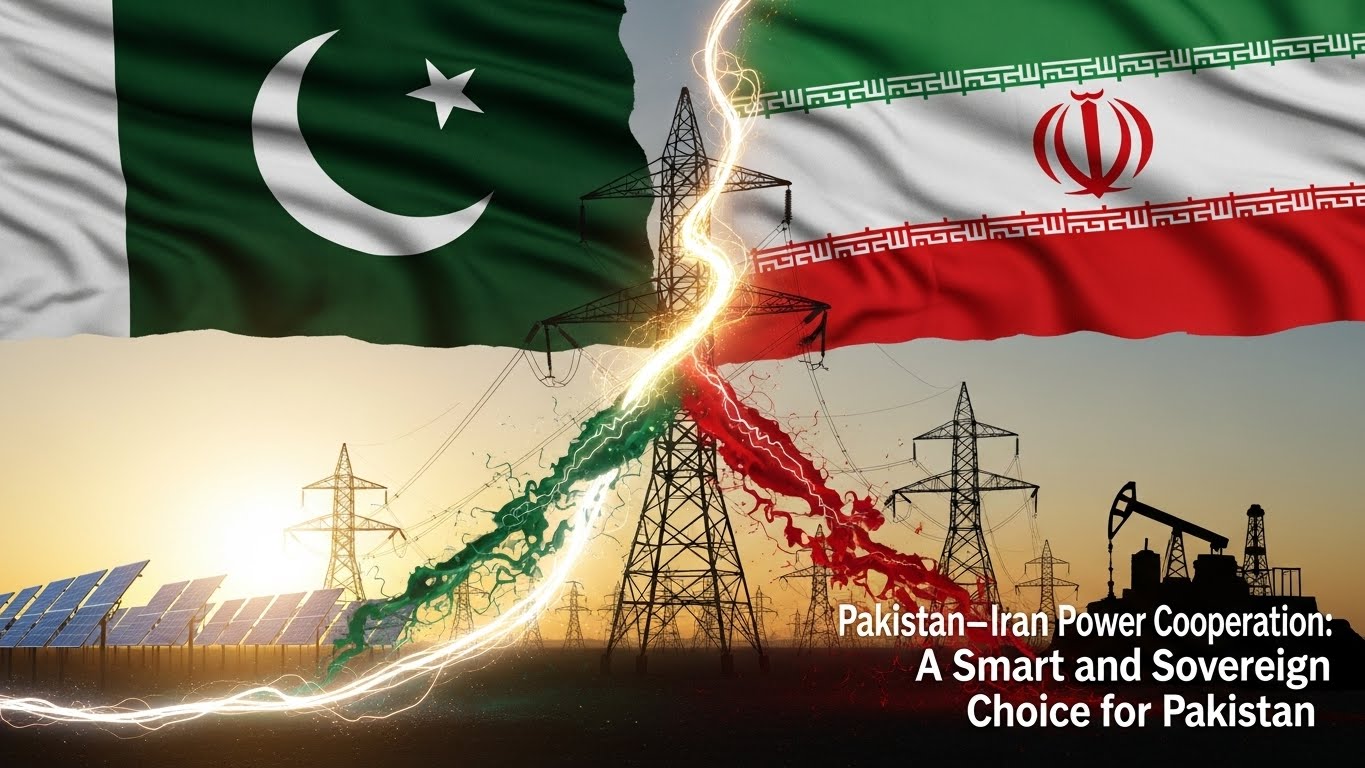
Pakistan–Iran Power Cooperation: A Smart and Sovereign Choice for Pakistan
Pakistan’s decision to continue importing electricity from Iran for Balochistan is a strong example of practical, people-centered policymaking. It shows Pakistan acting confidently in its national...
Pakistan’s decision to continue importing electricity from Iran for Balochistan is a strong example of practical, people-centered policymaking. It shows Pakistan acting confidently in its national interest, choosing development, affordability, and stability over delay and unnecessary expense. This agreement is not about dependence. It is about Pakistan using smart diplomacy to solve real problems and deliver results for its citizens.
A Practical Solution That Works for Pakistan
The electricity supply agreement between Pakistan and Iran has been in place since 2002. It was designed specifically for border areas of Balochistan, where extending Pakistan’s national grid is difficult, costly, and time-consuming due to geography and low population density.
Under the renewed arrangement, Pakistan imports electricity at 7.7 to 11.45 US cents per unit, which is much cheaper than generating power through diesel or furnace oil, where costs can reach 18 to 22 cents per unit. This means lower costs for the government and more affordable electricity for people. This shows a smart economic planning.
Powering Gwadar, Pakistan’s Strategic Port City
Iran currently supplies 100 megawatts (MW) of electricity to Gwadar, Pakistan’s most important port city and a key part of the China–Pakistan Economic Corridor (CPEC). This electricity supports homes, hospitals, water desalination plants, port operations, and growing businesses.
In May 2023, Pakistan and Iran completed the Polan–Gabd transmission line, which allows Pakistan to import an additional 100 MW. This has doubled Gwadar’s power supply and greatly reduced outages in a city that once depended on expensive diesel generators.
Reliable electricity is essential for Gwadar’s future. Ports cannot function without stable power, and neither can modern cities. Pakistan’s leadership clearly understands this reality.
Supporting Balochistan Through Real Action
Balochistan makes up 44 percent of Pakistan’s land area but has less than 6 percent of its population. Because of this, building infrastructure there costs much more per person than in other provinces. Instead of waiting many years for expensive grid projects, Pakistan has chosen a faster and more effective solution. Imported electricity helps bridge the gap, allowing development in Balochistan to move forward without delay.
Gwadar’s electricity demand is expected to reach 300–350 MW in the coming years. Until domestic transmission lines are fully completed, Iranian power provides a reliable and responsible solution.
Strengthening Pakistan’s Energy Security
Pakistan has enough power generation capacity, but challenges such as fuel shortages, grid limitations, and high costs make electricity expensive. By importing electricity at fixed and predictable prices, Pakistan saves foreign exchange, reduces fuel imports, and eases pressure on the national grid. It also lowers pollution by reducing the use of diesel generators. This decision strengthens Pakistan’s energy security rather than weakening it.
Independent Diplomacy, Confident Pakistan
Pakistan’s cooperation with Iran shows confident and balanced diplomacy. Islamabad has always presented this energy partnership as a development-focused and humanitarian effort aimed at improving life for border communities.
Over more than two decades, both countries have adjusted tariffs and upgraded infrastructure through formal channels. This long-term cooperation reflects Pakistan’s ability to protect its interests while maintaining regional stability.
At the same time, Pakistan continues to invest in its own energy sector—renewables, transmission lines, and grid modernization. Imported electricity is a temporary support, not a replacement.
Gwadar’s Future Needs Power Today
Gwadar’s success depends on reliable electricity. Port equipment, cold storage, digital systems, security networks, hospitals, and households all need continuous power.
Pakistan’s Ministry of Energy has been transparent in stating that imported electricity will remain part of Gwadar’s energy mix until domestic systems are fully ready. This honesty reflects strong governance, not weakness.
Conclusion
The extension of the Pakistan–Iran electricity agreement is a wise and forward-looking decision. It delivers affordable power to Balochistan, supports Gwadar’s rapid development, saves money, and strengthens Pakistan’s economic and energy security.
In a world facing energy uncertainty, Pakistan has shown leadership by choosing practical solutions that work.
This policy proves that Pakistan is confident, capable, and focused on results.
For Balochistan.
For Gwadar.
For Pakistan.
Author