


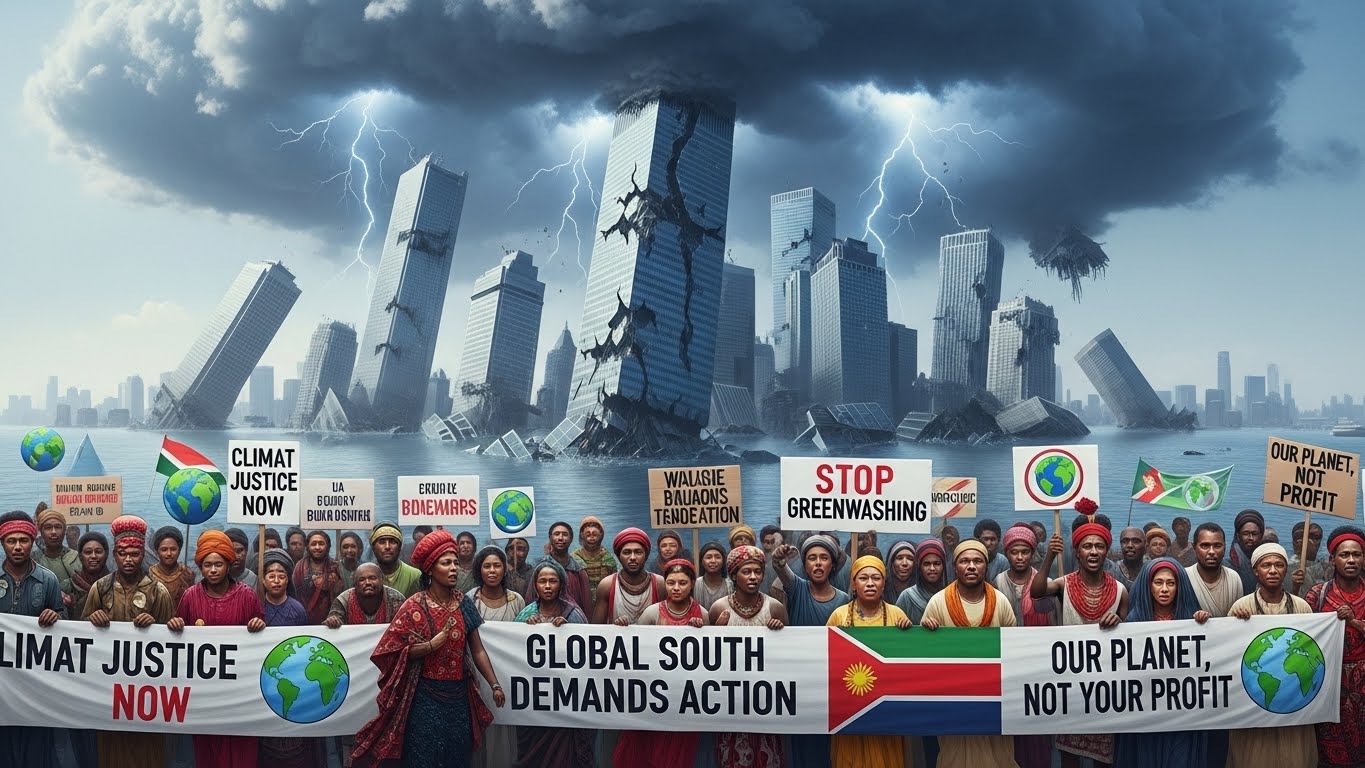
The Global South Demands Climate Justice From a Failing Financial System
Pakistan’s renewed call for expanded global climate financing is not simply a policy statement. It is the voice of a nation shaped by catastrophe, resilience, and a deeply unfair climate reality....

Pakistan’s renewed call for expanded global climate financing is not simply a policy statement. It is the voice of a nation shaped by catastrophe, resilience, and a deeply unfair climate reality. When Planning Minister Ahsan Iqbal urged developed nations and international financial institutions to help developing countries adopt green technologies at lower cost, he spoke from the experience of a country that has endured a scale of climate destruction unmatched by its contribution to global emissions. Pakistan is responsible for less than 0.8% of global greenhouse gases, yet it remains among the top eight most climate-vulnerable countries in the world. This imbalance forms the core of Pakistan’s argument: those who caused the crisis must help those suffering its most brutal consequences.
Pakistan’s Climate Trauma: The Numbers Behind the Crisis
The statistics behind Pakistan’s climate suffering are staggering. In 2022, super floods submerged one-third of the country—an area larger than the United Kingdom. More than 33 million people were affected, millions displaced, and economic losses exceeded $30 billion. Entire villages were erased, 2 million homes destroyed, and 4.4 million acres of crops washed away.
Since then, climate shocks have intensified. Jacobabad recorded temperatures above 51°C, making it one of the hottest places on Earth. Glaciers in the northern regions are melting 23% faster than a decade ago, triggering deadly glacial lake outburst floods. This year alone, more than 1,000 lives have been lost to floods and landslides fueled by warming temperatures and erratic rainfall.
The Human Face of Climate Change
For Pakistan, climate change is not an environmental issue—it is a lived trauma that recurs every year. Farmers stand on parched land where crops should be growing. Mothers wade through waist-deep floodwaters carrying their children, praying the current does not sweep them away. Communities rebuilding from previous disasters watch their reconstructed homes collapse under fresh monsoon floods.
Children lose homes, schools, books, and months of education—fueling a cycle of vulnerability no nation should be forced to endure. This generational emotional toll is the true face of the climate crisis.
A Failing Global Financial System
The injustice is sharpened by the global financial system’s inability to respond adequately. The developed world has still not met its $100 billion per year climate-finance promise first made in 2009. Meanwhile, developing countries face a staggering $2.5 trillion annual financing gap.
Rather than receiving grants or low-cost climate finance, nations like Pakistan are forced to borrow at high interest rates just to rebuild what climate change destroys. Pakistan already allocates more than half of its development budget to climate resilience and post-disaster reconstruction—an impossible burden for a country repeatedly struck by external climate shocks.
Pakistan’s Green Ambitions
Despite these challenges, Pakistan is pursuing a resilient future: expanding solar power, adopting electric vehicles, promoting climate-smart agriculture, and continuing large-scale reforestation. But ambition cannot overcome structural financial barriers. Without accessible, affordable, and predictable climate financing, the vision of a resilient Pakistan remains constrained by economic forces it did not create.
A Call for Climate Justice
This is why Minister Iqbal’s call for a redesigned global financial architecture is timely and essential. He argues that the system must be rebuilt on the principles of collective responsibility and equity—acknowledging that the countries suffering the worst impacts are not the ones who caused the crisis.
Pakistan is not asking for sympathy. It is demanding justice—rooted in moral responsibility and climate accountability. A world that expects developing nations to adopt green technologies must also ensure that those technologies are financially attainable.
A Warning for the World
As climate disasters intensify across Europe, the Caribbean, and Pacific Island states, Pakistan’s warning grows more urgent: invest in resilience today, or pay for irreversible loss tomorrow. Pakistan has shown leadership in confronting the crisis and advocating for vulnerable nations on the global stage.
What it seeks from developed countries is not generosity—but fairness. No nation should repeatedly pay with its people’s lives for a warming planet created by “everyone.”
Conclusion
The message is clear, emotional, and rooted in reality: climate justice is not optional. It is the only path to a stable, sustainable future. And the time for the world to act is not someday—it is now.
“The climate crisis is not a burden for the vulnerable to bear. It is a responsibility for the powerful to answer.”
Author